Author: The Professor

  • 5 Creative Ways for New Teachers to Make Extra Money (Without Losing Your Sanity)

    5 Creative Ways for New Teachers to Make Extra Money (Without Losing Your Sanity)

    Ah, the joys of being a new teacher. The smell of freshly sharpened pencils, the sound of 25 little angels giggling in unison, and the ever-present mystery of where all your red pens went. But let’s be real, the modest paycheck that comes with the job can make you feel like you’re moonlighting as a professional ramen noodle chef. Fear not, fellow educators! Here are five fun and creative ways to earn extra money without straying too far from your teacher roots.

    1. Tutoring Services: Sharing Your Brainpower

    So you’ve spent years becoming a master of calculus or a whiz at grammar. Why not put that brainpower to extra use? Offering tutoring services is a no-brainer (pun intended).

    tutoring allows you to use your current skill set

    Why It’s Awesome:

    • Flexible Hours: You get to decide when you want to work. No more 7 AM alarm clocks unless you’re into that kind of torture.
    • Instant Expert Status: Students and parents will think you’re a genius. And let’s be honest, you are.
    • Extra Connections: You might end up as the town’s beloved math wizard or grammar guru. Fame at last!

    Tips for Success:

    • Local Ads: Channel your inner 90s kid and post flyers at community centers, libraries, and coffee shops. You’ll feel just like you’re promoting your garage band.
    • Online Platforms: Websites like Wyzant and Tutor.com can help you reach a wider audience without ever leaving your couch.

    2. Selling Educational Resources: The Etsy of Education

    Remember those brilliant lesson plans, worksheets, and activities you spent hours crafting? Well, it’s time to let them shine in the spotlight and make you some money on the side.

    Why It’s Awesome:

    • Passive Income: You do the work once, and then just watch the dollars (okay, maybe cents) roll in.
    • Creative Outlet: Unleash your inner Picasso on those PowerPoints and worksheets.
    • Helping Others: Sharing your resources with other teachers makes you a hero in the teaching community.

    Tips for Success:

    • Join the Party: Sign up on Teachers Pay Teachers, Etsy, or Gumroad. It’s like a giant swap meet for educational resources.
    • Show Off: Use social media to flaunt your creations. Don’t be shy – humblebragging is encouraged here.

    selling your hard work online takes time up front, but then can be a steady income stream in perpetuity.

    3. Online Teaching and Course Creation: Your Ticket to Internet Fame

    Why limit your teaching brilliance to the four walls of your classroom? The internet is a vast, untamed wilderness waiting for your educational expertise.

    Why It’s Awesome:

    • Global Reach: Teach students from Timbuktu to Toronto.
    • Flexible Delivery: Live sessions, recorded lessons, interactive activities – the choice is yours.
    • Subject Variety: Teach whatever tickles your fancy. Always wanted to run a course on the history of memes? Now you can.

    Tips for Success:

    • Pick a Platform: Sites like Udemy, Teachable, and Skillshare are your friends. They provide the tools, you bring the talent.
    • Engage Like a Pro: Use quizzes, discussions, and live Q&A sessions to keep your students hooked.

    4. Summer and After-School Programs: Keeping the Fun Going

    Sure, summer vacation is great, but what if you could make money while still having fun? Many schools and organizations run summer and after-school programs and they need rockstar teachers like you.

    Why It’s Awesome:

    • Extra Pay: These gigs pay hourly, meaning more cash in your pocket.
    • Skill Building: Gain experience and new skills that you can brag about in the teachers’ lounge.
    • Balanced Schedule: These opportunities often fit nicely into your teaching schedule without making you feel like a hamster on a wheel.

    after school programs allow your creativity to shine

    Tips for Success:

    • Scout Locally: Check with local schools, community centers, and non-profits for available positions. Who knows, they might be looking for someone exactly like you.
    • Network: Use your connections. Ask colleagues and administrators for leads – someone always knows someone who needs someone.

    5. Freelance Writing and Blogging: Teacher by Day, Wordsmith by Night

    Got a knack for storytelling or a passion for sharing your teaching adventures? Channel your inner Shakespeare (or BuzzFeed writer) and dive into the world of freelance writing and blogging.


    Why It’s Awesome:

    • Variety: Write curriculum, educational articles, or even start your own blog. The world (wide web) is your oyster.
    • Creative Freedom: Let your creativity run wild. Write about anything from your classroom hacks to that time a student brought a chicken to class (true story).
    • Potential Growth: A successful blog, much like this one, can bring in revenue through ads, sponsored posts, and affiliate marketing. Plus, you get to say you’re a professional blogger – how cool is that?

    Tips for Success:

    • Build Your Portfolio: Start with smaller publications or create sample articles. Show the world you’ve got the chops.
    • Join Writing Communities: Connect with other teacher-writers for job opportunities and feedback. You’ll find your tribe and probably some hilarious stories along the way.
    • Be Consistent: Whether it’s freelancing or blogging, regular content is key. It’s like watering a plant – nurture it and watch it grow.

    Conclusion

    Teaching is a labor of love, but that doesn’t mean you have to settle for a ramen-only diet. With these creative side gigs, you can boost your income while staying true to your passion for education. Plus, you might just discover new talents and interests along the way. So go forth, fellow educators, and conquer the world (and your bank account) with your skills and creativity. And if you have any other ideas on ways new teachers can make extra income, please let us know in the comments below! In the meantime, Keep Stackin!

    you don’t have to live on ramen alone!

  • 2024 MN Legislature Devastates Teachers with Pathetic TRA Pension Reform

    2024 MN Legislature Devastates Teachers with Pathetic TRA Pension Reform

    Another Minnesota legislative session has come to an end and it’s another MAJOR disappointment for members looking for the drastic improvement needed in our TRA pension. The only change of substance was what I had mentioned in my earlier update. For members who were active as of May 24, 2023 they will be able to retire at age 65 with no penalty starting July 1, 2024. WOO HOO! Oh, and we are paying for this one ourselves! Our contribution rates are slated to go up another .25% next July. Now instead of teaching 9 years longer than our former colleagues, we only have to teach 8 more years. All that with higher than ever contributions on our end!

    So is there any hope? I’m really not sure at this point. I have contacted legislators and spoke to as many people as I can about it, but there is never any movement. They wouldn’t even entertain a bill by Representative Nadeau that would have allowed us to retire at 62 years of age and 30 years experience and pay for it OURSELVES. Still rejected. That one really pissed me off. Funny that they let us pay for the ability to retire at 65, but NOT at 62. Hmm. I wonder why that is. They allowed the St. Paul TRA to do that after last session. I am holding out hope that Ted Seidle’s investigation into the fund gives us some kind of yarn to pull, but I’m really not going to hold my breath on that. I’m afraid he will find decisions that may be “unethical” but completely legal so we will have no recourse. There’s been talk in Facebook groups about trying to organize a state-wide strike to show legislators that the time for action is now, but apparently it is against state law to organize a state-wide walk out. I’m also not sure it would help us. It could end up backfiring, but they really don’t have anyone to replace us. I remember Reagan ending the air traffic controller strike in the 80’s by firing them all. Ha! Good luck firing all the teachers that join the walkout! You can’t find anyone to replace the ones that are lucky enough to be retiring. Maybe the people calling for a state-wide walkout are onto something.

    Sorry to be such a Debbie Downer, but this is the hand that we are currently being dealt. It’s also looking more and more like we will not have much of a budget surplus during the next biennium, so the chances of major changes seem to be disappearing. So much for having a “teacher governor” and democratic control of both houses. Hopefully next year I will be able to give you better news. As always, Keep Stackin!

  • 2024 MN Legislative Update and How It Affects Your Teacher Pension

    2024 MN Legislative Update and How It Affects Your Teacher Pension

    Another Minnesota legislative session is upon us, and it seems it’s going to be ANOTHER major disappointment for Minnesota’s Tier 2 teachers. Minnesota has an every other year bonding cycle, so this year is not a year for adding much in new monies. This meant it was always a long shot to get meaningful reform this year. After yesterday’s Legislative Commission on Pension Reform meeting, the only change to TRA pension was to move the change from Normal Retirement Age (NRA) of 66 to 65 from starting in 2025 to 2024. This is “technically” an improvement, but not really and here’s why…

    The movement of NRA is the most expensive improvement that can be made to the pension, but hey, at least we can now say we have the same NRA as our neighboring states. What Tier 2 teachers are really lacking are career and mid-career rules. Currently, the legislature and TRA are considering teaching until 65 a “career”. I’ve known a few teachers in my 20+ years of teaching that did teach until their mid-60s. I even knew one that stayed into their 70s. The difference is that they were there because they wanted to be. Contrast that with a school filled with teachers in their early to mid-60s who HAVE to be there or they lose 20-30% of their pension. It will NOT be an ideal situation for students. I know that I have gotten more cynical as I’ve gotten older. I wonder how cynical I’ll be after 15 more years in the classroom!

    Typical Staff Development Day in 2035

    The only rule Tier 2 teachers currently have is 62/30. This means you can retire IF you are at least 62 years old and have taught for 30 years. You would THINK that would be considered a career, but no. You still forfeit 14% of your pension (10.4% when NRA moves to 65). None of our neighboring states penalize their teachers for putting in a FULL CAREER! In fact, St. Paul’s Teacher Retirement Association got their 62/30 approved in last year’s session and it took effect this year. Why can’t it work for the rest of the state??

    What most Tier 2 teachers are looking for is a career rule like 62/30 or even 60/30 that is penalty FREE! We also believe there is a need for a mid-career rule for someone who started teaching later in life where they can retire and still receive a penalty free pension.

    It’s true that the session isn’t over yet, and there could be a last second Hail Mary that could make Minnesota’s pension comparable with neighboring states. Maybe Ted Siedle’s investigation into the handling of investments will reveal wrongdoing on the state’s behalf and will force them into action. But we won’t know the final picture until the last day of the session which is May 20th. Whatever happens, I will post an update at the end of the session, but until then, KEEP STACKIN!!

  • Minnesota Teachers Are Angry!

    Minnesota Teachers Are Angry!

    Unless you’ve been living under a rock, you’ve probably heard that teaching has gotten more and more difficult in recent years. Teachers have been sounding the alarm about students causing disruption after disruption to the learning environment and parental support seriously lacking. I’ve seen a steady decline in student behavior in my small-town district over my 25 years.

    BUT, that is not why teachers in Minnesota are so upset. I’ve talked many times in the past about the inequity that lies in our Minnesota teacher pension when it comes to Tier 1 and Tier 2 teachers, so I won’t get into the specifics now. If you want to know more about that, click here. This inequity is coming to a head as the oldest of these Tier 2 teachers reach the age where their Tier 1 counterparts were able to retire. This has caused a groundswell of grassroots support for change starting with a Facebook group called MN Educators for Pension Reform. The group has grown to almost 20,000 members that are driving discussion and, hopefully, change at the legislature.

    Here are some of the concerns the group has:

    • One of the biggest concerns of the group is the lack of transparency from TRA (Teachers’ Retirement Association), the organization that is responsible for managing the teachers’ retirement accounts. 
      • Meetings are held during school hours when teachers are unable to attend.
      • Meetings are not recorded for those unable to attend to view later.
      • Questions are avoided or even unanswered when asked. 
    • Intergenerational Equity
      • Currently, teachers contribute 7.75% of their salary to their pension. That goes to 8% in 2025. Tier 1 teachers contributed between 4.5-6.5% of their salary during their working years.
      • Tier 2 teachers currently CANNOT retire without steep penalties, sorry “discounts”, to their pensions before age 65. Tier 1 teachers could retire with their full pensions when their years of service and age combined to equal 90. (If a tier 2 teacher would face upwards of a 55% penalty in their benefits if they did the same thing.)
    • Tier 2 teachers had their benefit augmentation (interest accrual if leaving the profession) stripped with the 2018 legislative changes.

    Add all of these things up, and this 20,000 strong group decided it was time to take a big step forward. The leaders, I’d call them that, contacted Ted Siedle, a public pension auditor, who has conducted numerous investigations into public pensions and their possible mismanagement. This experience doesn’t come cheap as it cost over $75,000 + fees for him to look into MN TRA. The leaders created a GoFundMe page that raised the total cost in about 19 days. I’m proud to say that I donated some money to this cause!

    My contribution?

    Recently, two of these leaders participated in a Podcast with John MacGregor on The Rich Dad Channel to discuss the outcomes they are hoping for when it comes to this audit. Ted Siedle joined along with the president of the Ohio Teachers’ Association, whom Ted recently did an audit for and found that they should have TWICE the amount of money in their account as they currently do.

    The audit will start soon with Mr. Siedle doing a public records request to begin gathering the necessary paperwork to dig deep into the financials of TRA. What will this investigation yield? Only time will tell. But it will finally give Tier 2 teachers in Minnesota an idea as to whether TRA officials are being completely truthful with the answers that they have given when questioned about the fund. It will also clear up whether there has been mismanagement of fund assets and the unfunded actuarial liability over the years that Tier 2 teachers alone are saddled with paying. 

    Over my 50 years, Minnesota has been known as an “education-friendly” state. Things changed in 1989 for the worse for career teachers in the state, and every other change since then has made it WORSE for Tier 2 teachers while Tier 1 teachers have been held harmless. The legislature has moved the goalposts and changed the rules for many of us in the middle of our careers. As Ted stated in the podcast, “Promises made. Promises kept.”

    Agree or disagree with the actions being taken? Let us know in the comments below, and as always, KEEP STACKIN!!

    2 responses to “Minnesota Teachers Are Angry!”

    1. Hairstyles Avatar

      Thanks for the update, is there any way I can receive an email every time you publish a new update?

      1. The Professor Avatar
        The Professor

        Sure is! Just become a stacker, and you will receive updates whenever we publish a post.

    Leave a Reply

  • Advice For Someone Starting a New Teaching Career In Minnesota

    Advice For Someone Starting a New Teaching Career In Minnesota

    A few weeks ago, I had the honor of presenting to a class at a local university. These students had just finished their student teaching, making this their last class before entering the “real world.” I met the professor while mentoring a student teacher, and she invited me to give a presentation on Minnesota TRA and teacher pensions/retirement in general.

    Here are a few key points I shared, which I believe are crucial for anyone entering the teaching profession. These topics aren’t typically covered in teaching classes, but they will significantly impact your life and future.

    1. SET UP YOUR RETIREMENT ACCOUNTS

    Typical 403(b) reps

    As a new teacher, it’s essential to visit your business office immediately and set up your 403(b) or 457(b) accounts. This is crucial because the earlier you start, the more time your investments have to grow. Time is your friend when investing. While most districts provide information, it’s up to you to learn about these accounts on your own. Talk to other teachers in your district; often, there’s someone who is the “go-to” person for financial advice.

    Avoid financial “advisors” who come to your school to present their products. Many of these products are designed to benefit the advisors more than you. Remember Matthew McConaughey’s character in “The Wolf of Wall Street” saying, “The name of the game, moving the money from the client’s pocket to your pocket.” This is how most of these products are designed. Research the vendors your school provides and ask a lot of questions, especially about their fees.

    2. SET UP YOUR HEALTH CARE ACCOUNTS

    Learn about your school’s health care accounts and your options. Like retirement accounts, schools usually don’t offer advice on which health care plan to select. Check if your school offers an HCSP or HSA plan and take the initiative to elect your investments. Some career teachers missed out on thousands of dollars in gains because they didn’t do this early in their careers.

    hospital bills add up as you get older. start preparing for them early!

    3. BE PICKY!

    Teachers coming into the profession today have a much more wide open job market. When I applied to my current job 25 years ago, I was one of 300 applicants for the position. Today, most schools are lucky to get a handful of applicants, if any! This means that new teachers can be more picky in the jobs that they look for. I strongly recommend looking for jobs in communities that are growing. A growing community usually means a growing school district. This means more money coming into the district and it also means you are less likely to be “cut”, or laid off, due to declining enrollment, cutting of programs, or lack of funding. This is a huge concern in many rural schools in the state. 

    4. BE WILLING TO TALK ABOUT MONEY

    Even today, talking about money is often considered taboo. However, wealthy people do talk about money. Many people are embarrassed about their financial decisions or their financial status. Don’t be embarrassed about your financial situation and don’t be jealous of others who may have more. Be open to discussing money, saving strategies, and ways to earn more. I learned at almost 50 that starting an LLC can help you write off many expenses and save on taxes, all perfectly legally!

    These are some of the tasks you need to complete as you start your teaching career. Address them right away because once the students arrive, you’ll be swamped with teaching duties. Before you know it, the first year will be over, and you might realize you forgot to set up these accounts. Don’t let that happen to you. Be proactive and prepare for your future.

    I want to leave you with the final thought I shared with those college students: Nobody will care about your money or retirement as much as you do. Don’t let anyone tell you otherwise, and as always, KEEP STACKIN’!

  • Get Out of Debt Fast Using the Snowball Method!

    Get Out of Debt Fast Using the Snowball Method!

    Debt – The Facts

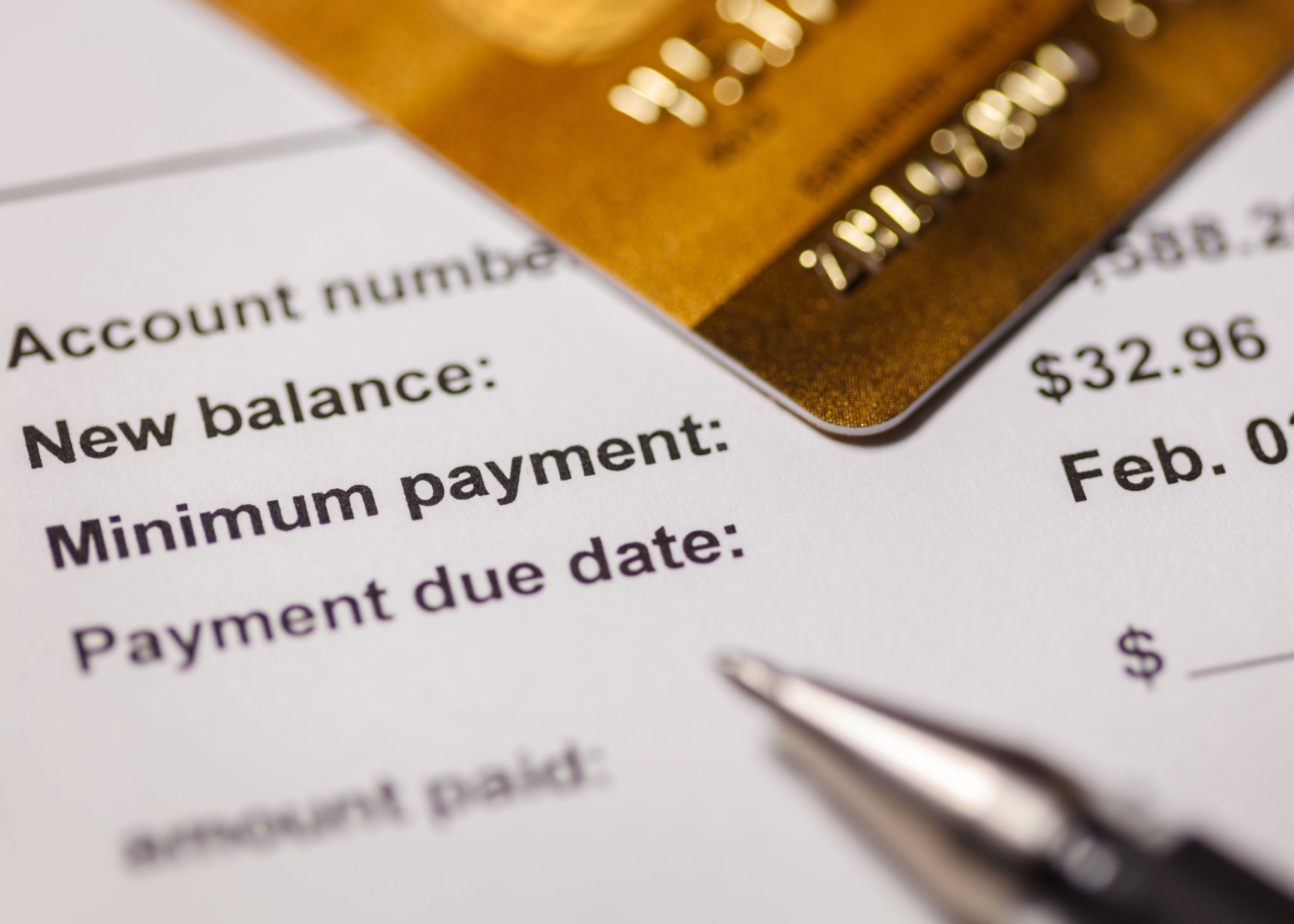
    Debt is quickly becoming a crisis in America, and not just at the federal level. Statistics show that the average American household carries a credit card balance of $14,241 at an average interest rate of 17.13%. That works out to $2,439 in just interest payments each year! No wonder American households are living paycheck to paycheck and couldn’t handle a $400 emergency bill.

    The Best AND Fastest Way to Get Out

    The best and fastest way to get out of debt is the debt snowball method. This is one of the Dave Ramsey’s baby steps. There are parts of Mr. Ramsey’s methods that I don’t necessarily agree with, but I agree that consumer debt is one of the biggest issues facing the average American. With the debt snowball method, you will erase that debt and get on your way to financial freedom!

    What is “consumer” debt?

    This is a great question. There are many kinds of debt out there. Credit cards, mortgages, student loans, car loans, RV loans, lines of credit, the list goes on and on. When banks look at consumer credit, it is anything not backed by collateral. Your mortgage for example is not considered consumer credit because it is backed with your home as collateral.

    While that is the technical meaning of consumer credit, I would like to make a couple of distinctions in that list. According to the collateral definition, your car loan or RV loan would not be considered consumer credit since they are backed by the vehicle. Here at Teachers Stacking 10s, we view vehicle loans as consumer credit because the assets they back only depreciate. Conversely, while student loans aren’t backed by any physical collateral, they are backed by your education and SHOULD increase your earning potential.

    So, for this article, we are focusing on all debt outside of mortgages and student loans. The nice thing about this though is that you could easily include those if you want.

    How Do People Get Out of Debt?

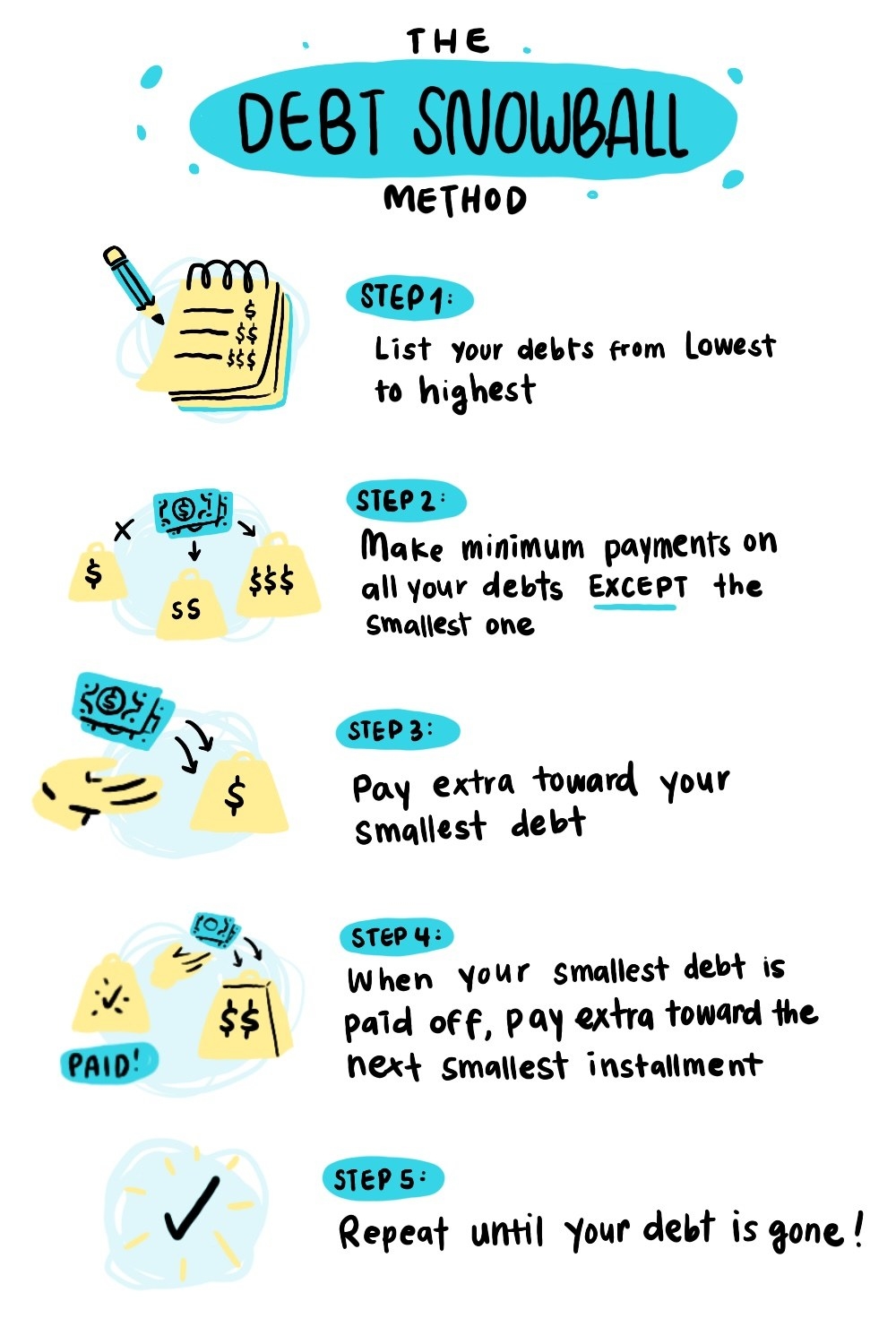
    There are two ways that people usually attempt to pay off debt. The first one is the debt avalanche method. This is when you list out all your debts and put them in order from highest interest rate to lowest interest rate and pay them off from highest to lowest. This sounds like the best method according to math. The problem is that debt isn’t a math problem. It’s a behavioral problem. We need a method that is going to work on that behavior and emotion. That’s where the debt snowball comes in. Instead of ordering the debt according to interest rate, you are going to order the debts from smallest balance to largest balance and begin paying the smallest balance first. Then you make minimum payments to all debts except the smallest balance. You throw as much as you can at that smallest one until it’s paid off. Once it is paid off, you roll everything you were paying on that paid off debt into the next smallest debt. You continue this until you have each debt paid.

    Why is This Method So Effective?

    Some of you reading this are probably swearing at me right now saying, “This method will cost you more interest than using the avalanche method!” And you would be correct, but remember I said debt isn’t a math problem, it’s a behavioral problem. If your highest interest debt is also your largest debt, it might take you months or even years to pay it off. What I want you to have is a win by getting that small balance paid off. You’ll get that emotional charge and are more likely to stick with it than if you just keep paying month after month without seeing any benefit. We are in a highly addictive and I want it now society (probably the reason you are in debt!). You need a plan that is going to give you that win and allow you to see progress towards your goal.

    Why Can’t I Just Roll All My Debts into One Larger Debt?

    This is a TERRIBLE idea, but one that many people subscribe to. There are two reasons that this is a terrible idea. The first reason goes back to that behavioral problem. By rolling everything into one larger debt, you aren’t going to see that win of getting something paid off for a long time, possibly even a VERY long time. I want you to get those wins! The second reason is even more dangerous than the first. By rolling all those debts into a new debt, you are just robbing Peter to pay Paul. Sure, those smaller debts are all taken care of, but you have opened the door to those old bad habits and you could accumulate more debts on those open cards or lines of credit, and you could end up in an even worse position!

    So, get those debts all lined up, get them in order, and start scratching and clawing your way to debt freedom. That will allow you to really get after the fun part, wealth accumulation which will be completely new to many and will allow you to KEEP STACKIN!

    The Problem:

    The average American household is $58,000 in debt.

    The Solution:

  • A Little Research Can Save You THOUSANDS Of Dollars!

    A Little Research Can Save You THOUSANDS Of Dollars!

    The Story

    Last week, my Maytag Neptune dryer started making that hideous, high-pitched squealing sound. I shouldn’t have been surprised. We have owned it for TWENTY-ONE years! It’s been a great dryer and is an extremely well-built machine. I have torn it apart before to fix this same “type” of sound, but this time replacing the support rollers in the back didn’t fix the problem. In fact, it starting making an even worse grinding sound after the repair. I thought this might be the end of the line for this stalwart of our home appliances, but I felt like I couldn’t let it go. I talked to my local appliance store where I get most of my parts and discussed the issue. (If you don’t know a local shop service guy, I STRONGLY recommend that you get to know one and NOT one of the big box stores!) My service guy said that the bearings in the motor were shot and that the only fix is to replace the motor. UGH! Not the news I wanted to hear, so I went home dejected thinking it was time to shell out some major $ to purchase a new dryer.


    As you know, we here at Teachers Stacking 10s are all about finding ways to save money, so I turned to the other source of knowledge when I’m looking for ways to save, the Internet. After some research, I found a video showing how to replace the motor in my exact type of dryer and I realized that it was actually SUPER SIMPLE to do. My local shop didn’t have this part in stock, so I checked a website, Appliance Parts Pros, where I have ordered parts in the past, and it had the exact replacement motor! I was ecstatic. The only problem was that it cost $320. This created a dilemma for me. $320 isn’t a small amount of money, BUT the alternative was to go out and purchase a new dryer. The cheapest models I could find were $600, and I’d be replacing a solidly built machine with something much lower quality. To match the same build and quality, would be $1,200 or MORE! After mulling it for a few hours (I didn’t have time to think on it much more. With two teenage girls in the house, the dryer is in HIGH DEMAND), I went ahead and ordered the replacement motor.


    The new motor arrived after just 2 days and took me about 15 minutes to get installed and put back together. I was nervous, because it was the first motor that I’ve replaced. I went down and turned the breaker on and it didn’t immediately “trip”. Test one passed! I went back to the dryer to give it a “dry” run of running with nothing inside. I reached out to hit the start button and closed my eyes. Click! The dryer kicked on and was quieter than it had been in years! Test two passed. I put in a load of clothes to dry and still quiet as a mouse. $300+ saved!!

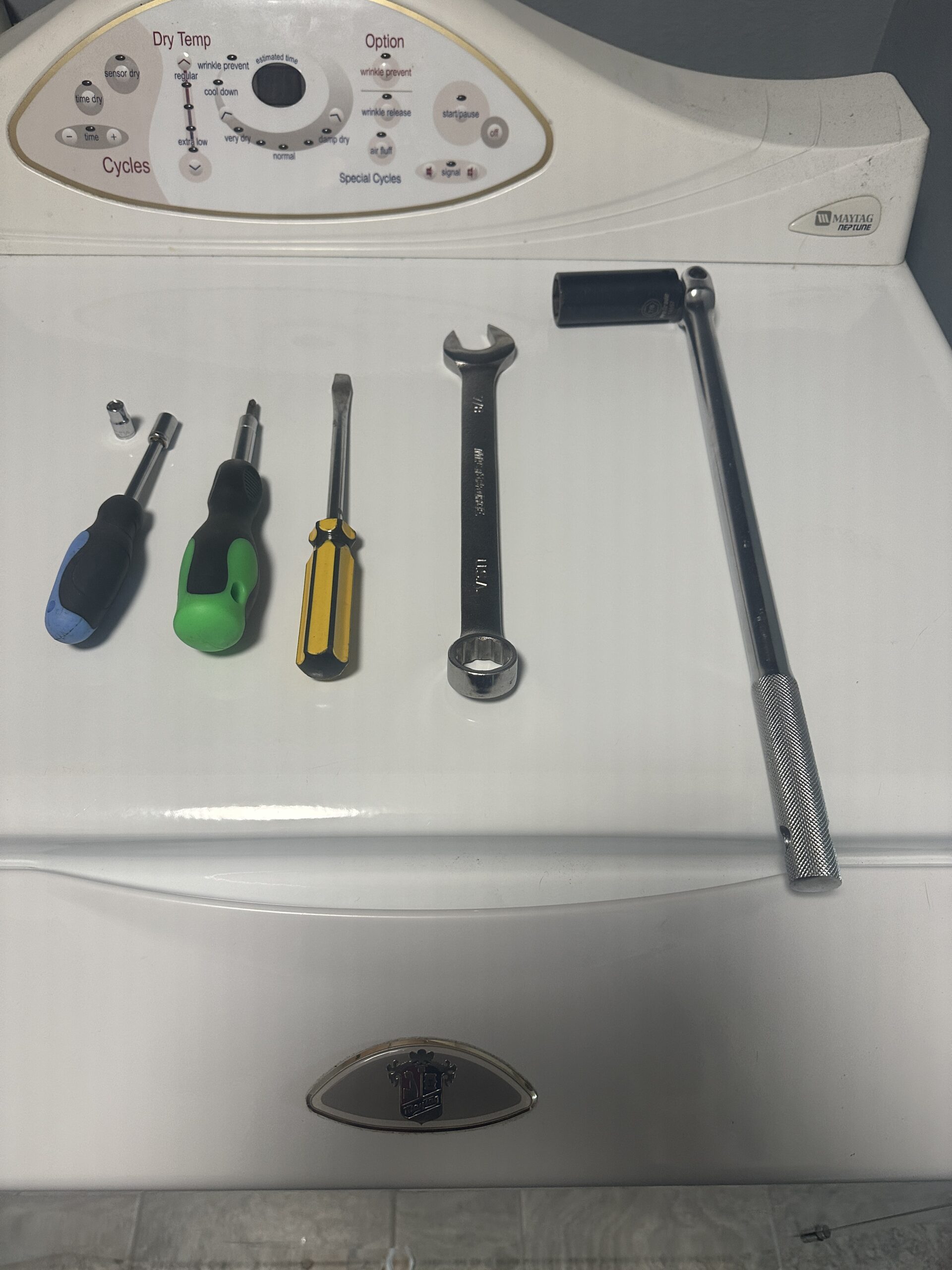
    Many of you might be saying to yourself, “But Professor, I’m not handy at all!” And you might be right. Most people would have heard that squealing sound from the dryer and just decided right then and there that they were going to go out the next day and purchase a new dryer. And there are certain repairs that are beyond even the most “handy” of homeowners, BUT the point I want to make is do some research online before you go out and spend big money on appliances that are going to break down in 6-8 years anyways. The tools required to replace this motor? A Phillips and a flathead screwdriver, two nut drivers, a 7/8″ socket and a 7/8″ wrench. That’s it!

    While you were in college, or even now if you’re renting, most appliances are the responsibility of the landlord. When you become the homeowner, these appliances are now YOUR responsibility. They are usually the biggest headache to homeowners because repairs can often require specific skills, tools, or knowledge. But that isn’t always the case. A service call is usually a minimum charge of $100 and that’s before ANY work is even done. Over the last 10 years, I’ve replaced the ignitor in my oven 3 times, fixed my dryer now 2 times, replaced the valves on 2 toilets, and jetted out my sewer lines 4-5 times (that’s a whole different story). Add up the savings on all of these repairs, and it’s in the thousands of dollars!! Even the T.A. has saved money fixing his hot water heater. Does this mean we can do ANY repair? Of course not, certain appliances like a refrigerator have compressors that require special equipment that cost well beyond what it would save a typical homeowner. 


    So before you call for that service tech to come to your house, take a deep breath, do a little research, and see if you can’t save yourself a little money. As always, KEEP STACKIN!

    The Problem:

    Appliances are often the biggest headache for new and long-time homeowners who have never had to repair any of these types of machines.

    The Solution:

    Before you jump the gun and call in an expensive service tech, or, worse yet, go out and buy a new machine, do a little research. In today’s age of YouTube, you can find videos on just about anything. See if it is a problem that you can fix yourself and save some money that you can KEEP STACKIN!

  • Am I DUMB For Creating This Side Business as a Teacher?

    Am I DUMB For Creating This Side Business as a Teacher?

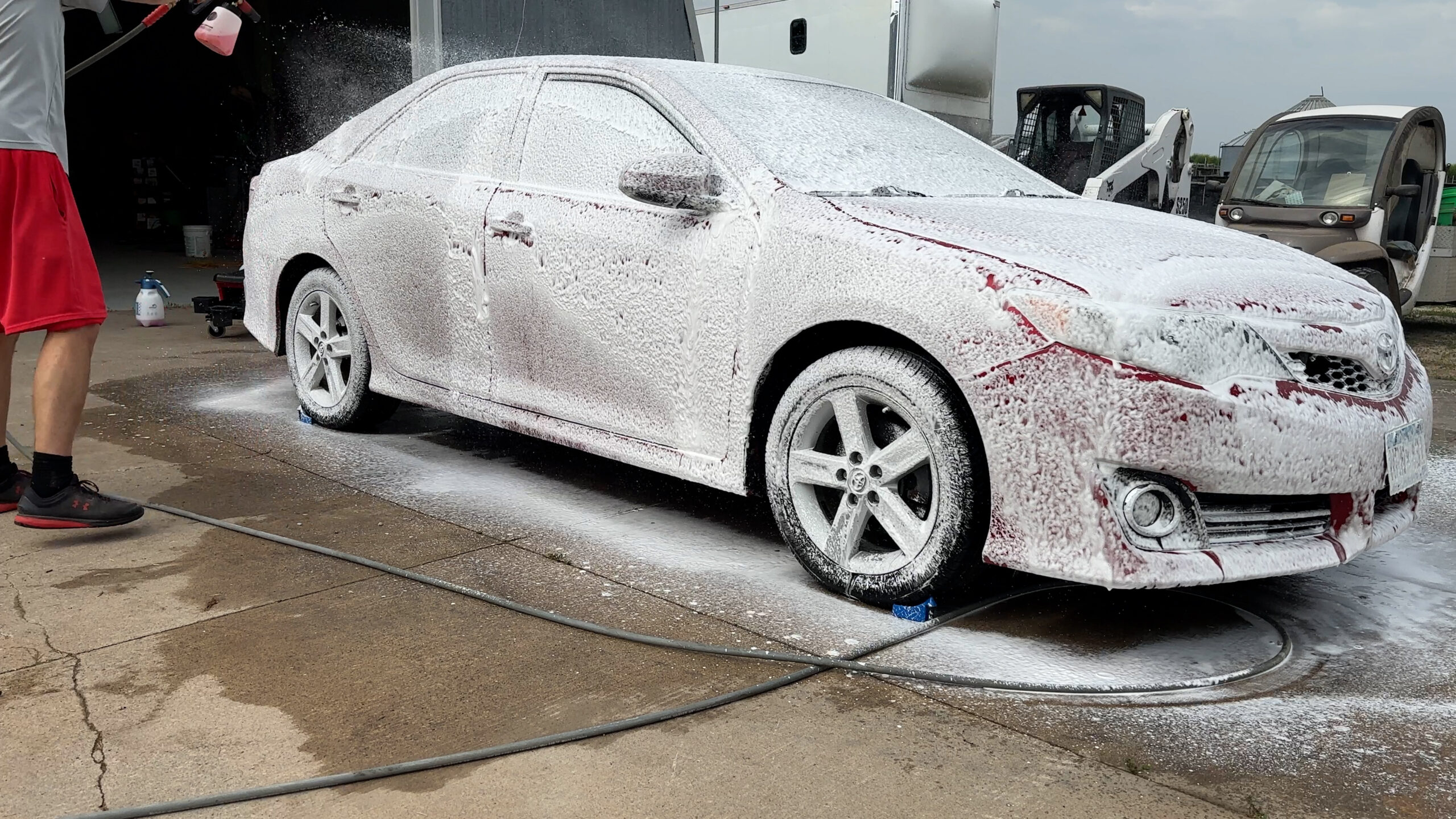
    In my previous post, I said that I was going to talk about a side business that I started to increase my income as I head towards retirement. The side business I chose is DEFINITELY not the easiest one because it is considered a very physically demanding job. I started an auto detailing side business! At first, I wanted to create a product to sell that wouldn’t require me to do any “physical” work, but I quickly realized that I didn’t really know what to offer. What I did know was that I had the tools, space, and desire for working with vehicles AND a little bit of OCD that makes cleaning things soothing to me. It also pays a decent amount for the work that I do. 

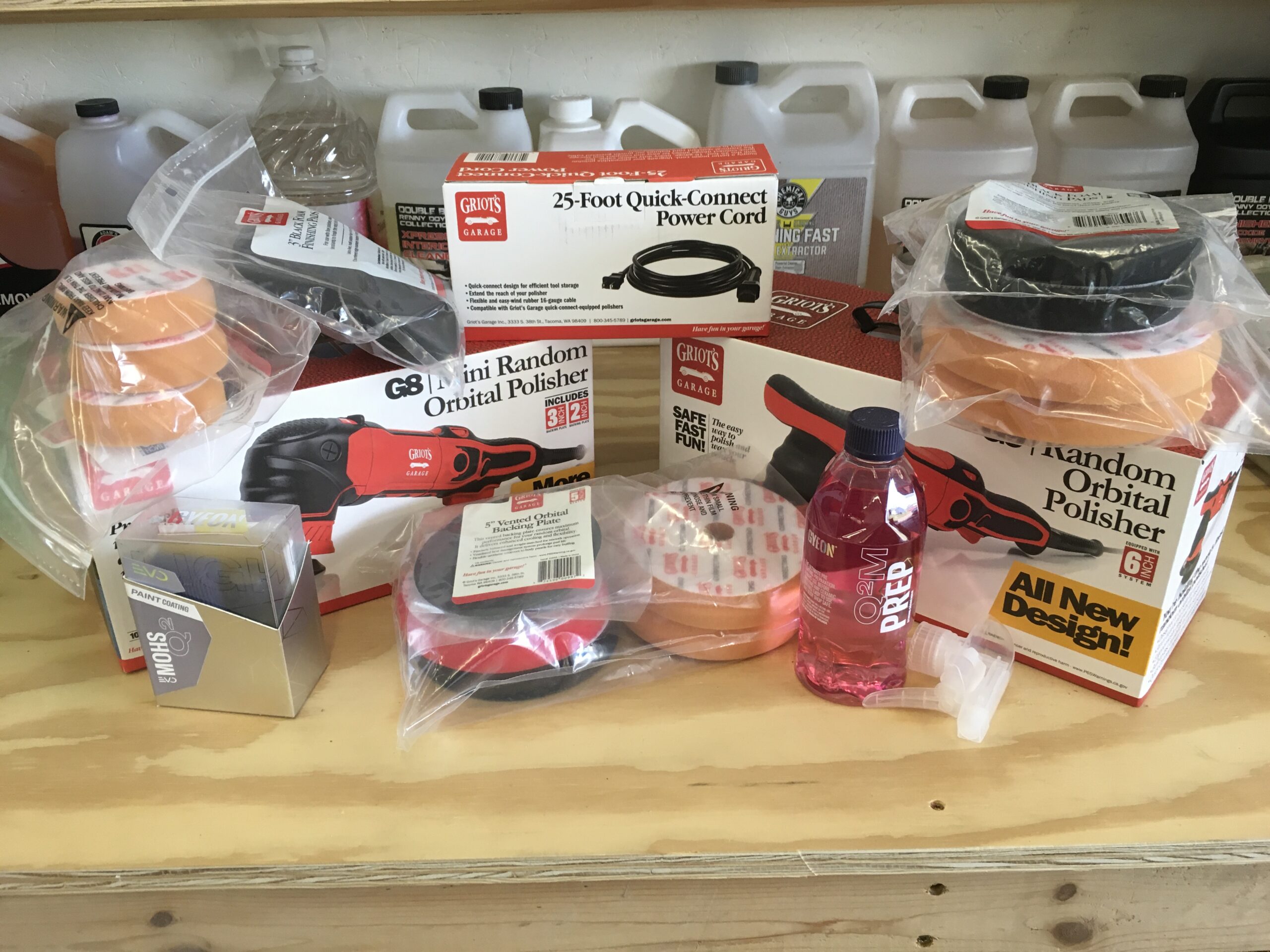
    These are just SOME of the pieces of equipment that  I had to buy.

    Like any business, there were some up-front costs that I had to pay for. I had to purchase some equipment and supplies to allow me to handle the dirtiest vehicles. I had to set up an LLC with the state to make it an official business. I spent roughly $1,500 to buy all the the equipment to start. This was drag to go backwards financially, but sometimes you have to take one step back to go two steps forward. When I first started, I was charging a minimal amount to get vehicles scheduled, but after a year of working, I am now able to up my prices to make these details worth my time. That was a very tough lesson for me to learn. I didn’t want to overcharge, but I also needed to realize that by undercharging, some people actually believed it wasn’t a service that was worth paying for. Now that I am charging more, I actually have MORE people calling to schedule details.

    Detailing is an enjoyable but physically demanding side-hustle.

    The other part of this journey that I want to mention is that I have had to do a LOT of learning as I go. There are many different procedures and machines and chemicals that can be used in the process, so I turned to the greatest teaching tool available, YouTube. Not only did I turn to YouTube to LEARN, but I also turned to YouTube to EARN. You see, there are many YouTube channels dedicated to detailing cars, so I created one of my own to document my progress. Some detailing channels are teaching channels that show you how to detail cars. Others are considered entertainment channels that just show the process of taking a car from filthy to fabulous. I would consider myself an entertaining channel with a little bit of teaching mixed in. The YouTube journey has been far more difficult than the detailing journey. YouTube is a VERY tough place to break into. I’ve been uploading videos for about a year, and I just met the requirements to actually earn any money just about one month ago. After one month, I’ve earned a whopping $21. That might sound like a lot of work for $21, and it is, but YouTube is a long game. It can take 3-5 years for a channel to really take off and earn a decent income. I will create a post in the future about what I’ve done to create my videos. If you’re interested in checking out the channel and the videos, it is linked here.

    So, has it been worth it? At this point, I would say absolutely yes. Have I made a decent amount of money to save and invest for the future? No. I have probably broken even at this point, but now that I have an established base and equipment set up, going forward any money that I bring in past my expenses for cleaning supplies will go right into my investment accounts, specifically index funds and dividend stocks because like we always say on this channel… KEEP STACKIN!

  • 2023 MN Legislative Final Update and How It Impacts Your TRA Pension

    2023 MN Legislative Final Update and How It Impacts Your TRA Pension

    Hey everyone. Well, here is the final update from the 2023 MN Legislative session. As I said in my last post, I wish I had better news, but this was NOT a great session for our pensions. The only major change was for the St. Paul Teacher’s Association. They are now able to receive full retirement with no early retirement penalty under the “62-30” rule. TRA has this rule, but there is still a penalty. One positive that did happen for us in the last moments of the session came from the tax committee. The normal retirement age has been reduced from 66 to 65 which means that people will get one less “penalty” year if they qualify for the “62-30” rule. This provision does NOT take effect until July of 2025, so I’m not sure how it will affect people that would like to retire after next year. Hopefully TRA will give us a little more clarity on that in the coming months.

    One massive change that doesn’t help teachers, but does help school staff is now hourly school employees will be able to file for unemployment benefits in the summer. This is HUGE for employees in smaller districts who often-times pay only $13-14/hour to these employees. The biggest question mark for this moving forward is how will it affect school district budgets because their unemployment insurance will definitely see a hit in 2-3 years when these benefit payouts are calculated. The legislature appropriated one-time money for this, but we all know that they aren’t known for full funding any of their mandates.

    This legislative session did not achieve the move towards equalizing the benefits of Tier I and Tier II teachers in Minnesota. Those that qualified under Tier I still receive their benefits 8-10 years before someone in Tier II can receive them and didn’t have to pay in as much in contributions. Hopefully next year’s session can produce another step in the right direction, BUT since it’s an even year, it’s not a bonding year, so money isn’t usually appropriated in those sessions, so it’ll be difficult to see much change.

    Wish I had better news, but as always, KEEP STACKIN!

  • 2023 MN Legislative Update and How It Impacts your TRA Pension

    2023 MN Legislative Update and How It Impacts your TRA Pension

    Hey everyone! It’s been quite a while since I’ve posted anything on the site. Lots of things happening in my world right now. A big one which I will plan on posting about in the coming weeks. The purpose of this post is to talk about what is happening at the MN Legislature in regards to TRA and how it will affect our pensions.

    Coming into the 2023 session, a big push was to improve pensions for current TRA members.  Most current teachers don’t realize that they can’t retire without any kind of penalty until they are 66 years old! There is a “62/30” rule in place where you can retire at 62 years of age with at least 30 years of experience, but that only gives you a “reduced” penalty. I have posted on that before here. There were a couple of bills proposed to fix our current retirement which is the 3rd worst in all of the country! One of the bills which TRA supported was to change to a “60/30” model which would have allowed someone to retire and age 60 and at least 30 years of experience with no penalty. The other bill was supported by Education Minnesota and was a “62/35” bill. This would have allowed someone 62 years old OR 35 years of experience to retire with no penalty. Either bill would have been far better than our current system.

    Unfortunately, Governor Walz only designated $600 million to fix public pensions. This money had to be split among ALL the pension groups in Minnesota; police, firefighters, judges, public employees, etc… AND it had to cover a COLA (cost of living adjustment) for all current retirees. Obviously, this was not NEARLY enough money to cover all of these areas, and unfortunately neither bill made it into the Pension Omnibus bill that came out of committee. The bill HF 3100 has passed the House and is now in Senate committee. The bill appropriates $176 million to TRA as a one-time state aid to the fund. This will help with unfunded liabilities that the fund currently has. The bill also reduces the actuarial assumed rate of return from 7.5% to 7%. One BIG change in the bill affect the St. Paul Teacher’s Retirement Association. This bill DOES include a provision for a “62/30” rule with NO early retirement penalty.

    None of these changes help current teachers in any way. We still have to teach until 66 to receive the full pension that current retirees received at age 56. Coming into the session, I was feeling very positive about the possibility of good changes coming to our pension. We had a MASSIVE surplus, a DFL-controlled government, and yet here we are. I wish I had better news to share, but I am only reporting on what has actually happened. There are still about 3 weeks left in the 2023 session, but if a bill hasn’t made it out of committee by this point, its chances are slim to none of passing this session. Next year’s session most likely won’t produce much in change as it’s an even year, and bonding (the money) occurs in odd-year sessions.

    Keep contacting your legislators to let them know that fixing Minnesota’s BROKEN teacher pension system is of huge importance in attracting people into the profession. We all are seeing first-hand the massive shortages of available teachers out there. And as always, Keep Stackin!