Category: Career & Income Strategy

Guidance on maximizing teacher income, advanced degrees, side opportunities, and long-term career decisions that impact retirement outcomes.

  • Teacher’s Guide: When to Consider Getting a Master’s Degree

    Teacher’s Guide: When to Consider Getting a Master’s Degree

    So, you’re a teacher. You’ve mastered the art of deciphering hieroglyphic handwriting, survived countless PTA meetings, and you can spot a kid trying to hide their phone from a mile away. But now you’re wondering, “Should I go back to school and get my master’s degree?” Before you dive back into the world of late-night studying and caffeine overdoses, let’s take a humorous yet honest look at when it might be the right time to pursue that advanced degree.

    1. Assessing Your Career Goals (or Lack Thereof)

    First things first, where do you see yourself in the grand scheme of your teaching career? Do you dream of being the school principal, ruling the roost with an iron (but fair) fist? Or perhaps you want to be the go-to person for special education or reading interventions?

    When to Go Back:

    • Career Advancement: If you’re eyeing a leadership role or a specialized position, a master’s degree is often your golden ticket. Plus, think of the bragging rights!
    • Specialization: Want to be the Sherlock Holmes of reading problems or the Yoda of special education? A master’s degree will give you the street cred you need.

    2. Evaluating Your Financial Situation (AKA Counting Your Pennies)

    Let’s talk money. Pursuing a master’s degree isn’t exactly cheap. It’s a significant investment, and unless you’ve found a secret stash of gold under the gym floor, you need to consider your financial situation carefully.

    When to Go Back:

    • Financial Stability: If you’re not drowning in student loans or eating ramen for every meal (unless you love ramen, then by all means), it might be a good time to consider further education.
    • Employer Assistance: Some districts offer tuition reimbursement. If yours does, grab it like it’s the last donut in the teacher’s lounge.
    • Scholarships and Grants: There are scholarships out there just waiting for you to apply. Think of it as free money, which, let’s be honest, is the best kind of money.

    3. Considering Your Professional Experience (and Sanity)

    Your classroom experience is like seasoning in a good stew – it makes everything better. Plus, having some teaching years under your belt can make your advanced studies more relevant and less, well, theoretical.

    When to Go Back:

    • Early Career: If you’ve been teaching for a few years and feel like you’re ready to learn more (and maybe even show off a bit), it could be the right time.
    • Mid-Career: Feeling a bit stuck in a rut? A master’s degree can be the perfect way to shake things up and remind you why you love teaching in the first place.

    4. Balancing Personal Commitments (or Juggling Flaming Swords)

    Life is busy. Between grading papers, attending sports games, and, you know, having a life, fitting in a master’s program can feel like juggling flaming swords. Take a good look at your current personal commitments.

    When to Go Back:

    • Life Balance: If your personal life is somewhat calm (or at least not a total circus), it might be a good time to add graduate school to the mix.
    • Less Personal Stress: Avoid diving into a master’s program during major life upheavals like moving, having a baby, or adopting five rescue dogs. Trust me.

    5. Considering the Benefits and Rewards (AKA The Good Stuff)

    Yes, it’s hard work. Yes, it’s expensive. But a master’s degree comes with some pretty sweet perks that can make it all worth it.

    When to Go Back:

    • Salary Increase: Many districts pay more for advanced degrees. Think of all the extra classroom supplies you could buy! Or, you know, actual fun stuff.
    • Enhanced Skills: You’ll learn advanced strategies and deepen your knowledge, making you an even more awesome teacher.
    • Networking: Graduate programs are a great way to meet other educators who can share tips, offer support, and commiserate over grading woes.

    6. Exploring Alternative and Flexible Options (Because Life Happens)

    Gone are the days when you had to choose between working and studying. Thanks to the internet (and some clever academics), there are now more flexible options for getting your degree.

    When to Go Back:

    • Flexible Programs: Online and part-time programs can fit around your teaching schedule. You can work on your degree in your PJs – it’s a win-win.
    • Accelerated Programs: If you’re in a hurry to advance, look into accelerated programs that let you finish faster. Just be prepared for an intense ride!

    7. Reflecting on Your Motivation and Readiness (or Are You Crazy Enough to Do This?)

    Last but not least, take a moment to check in with yourself. Are you excited about the idea of going back to school, or does it fill you with a sense of impending doom?

    When to Go Back:

    • Passion for Learning: If you genuinely love learning and are excited about diving deeper into your field, go for it! Your enthusiasm will carry you through the tough times.
    • Readiness for Change: If you’re feeling stagnant and ready for new challenges, a master’s degree can be just the shake-up you need.

    Conclusion

    Deciding when to go back for your master’s degree is no small task. It’s a personal decision that depends on your career goals, financial situation, professional experience, personal commitments, and motivation. By considering all these factors (and maybe having a heart-to-heart with yourself), you can make the best decision for you.

    Remember, there’s no perfect time. The right time for one person might be the wrong time for another. What matters is finding the timing that works best for you and aligns with your goals and current life situation. Pursuing a master’s degree is a big step, but with careful planning and a sense of humor, it can be a rewarding and transformative experience. Let us know your thoughts about when you should pursue your Master’s degree in the comments below.

    Good luck, and Keep Stackin!
  • Am I DUMB For Creating This Side Business as a Teacher?

    Am I DUMB For Creating This Side Business as a Teacher?

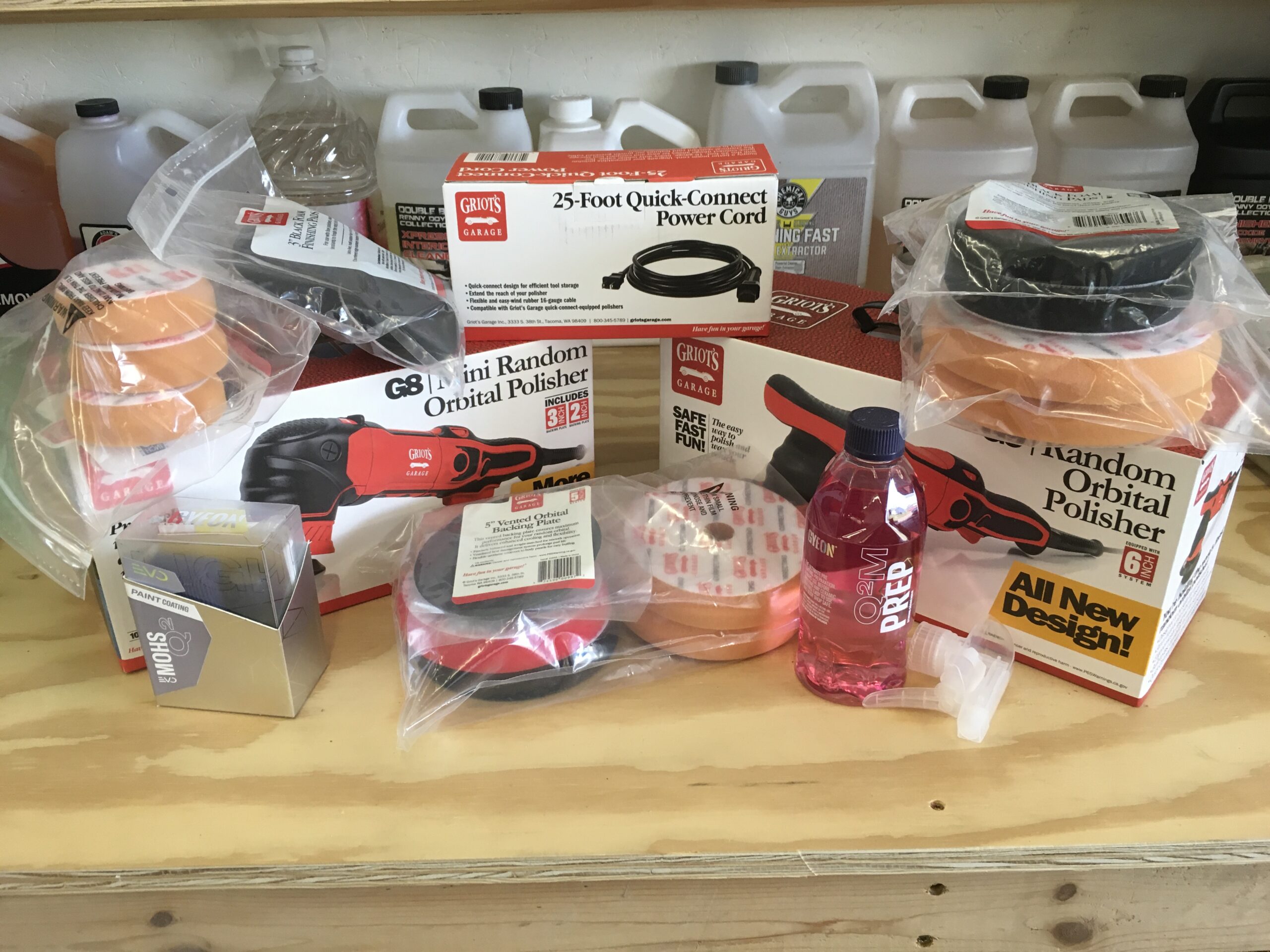
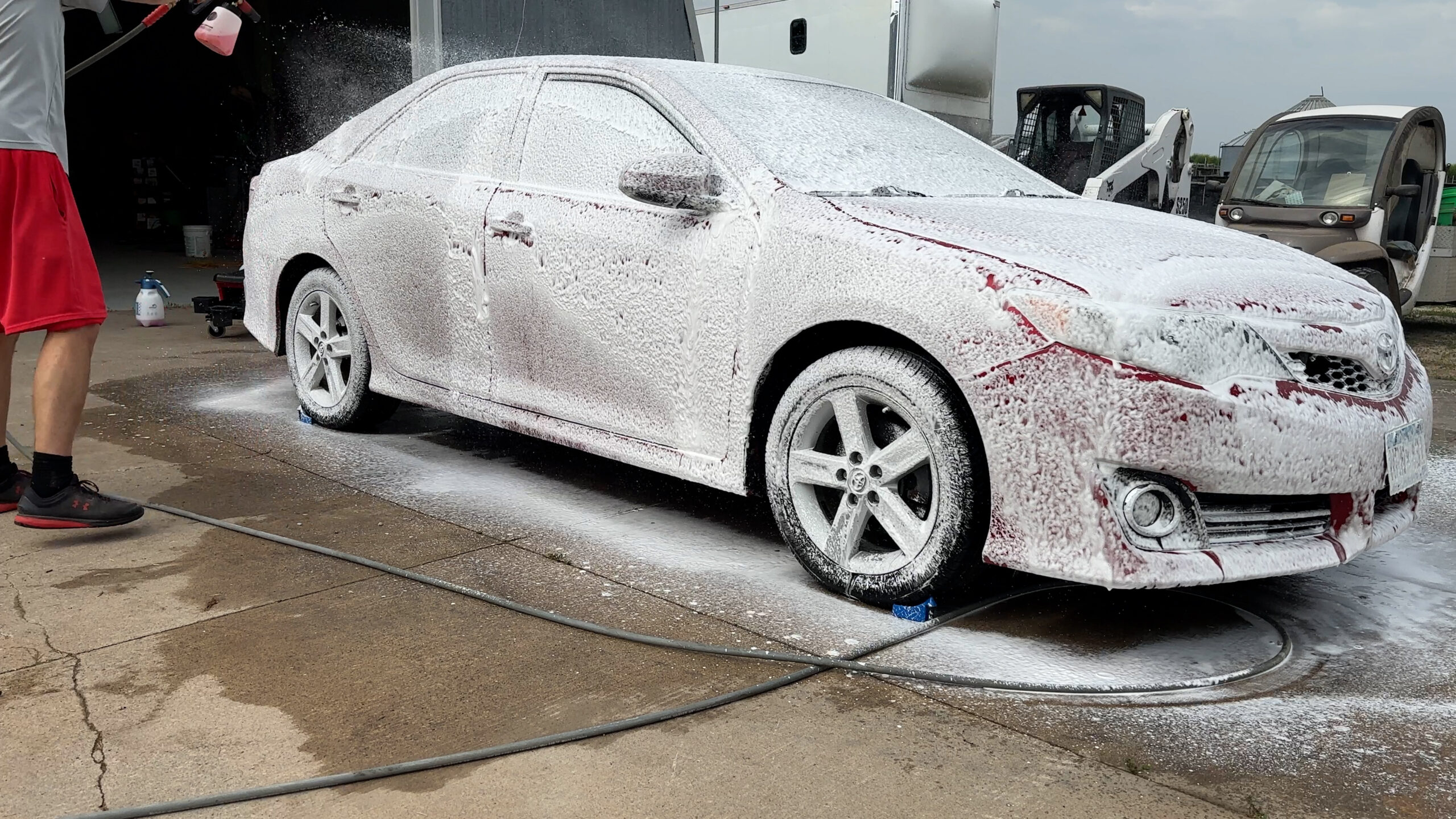
    In my previous post, I said that I was going to talk about a side business that I started to increase my income as I head towards retirement. The side business I chose is DEFINITELY not the easiest one because it is considered a very physically demanding job. I started an auto detailing side business! At first, I wanted to create a product to sell that wouldn’t require me to do any “physical” work, but I quickly realized that I didn’t really know what to offer. What I did know was that I had the tools, space, and desire for working with vehicles AND a little bit of OCD that makes cleaning things soothing to me. It also pays a decent amount for the work that I do. 

    These are just SOME of the pieces of equipment that  I had to buy.

    Like any business, there were some up-front costs that I had to pay for. I had to purchase some equipment and supplies to allow me to handle the dirtiest vehicles. I had to set up an LLC with the state to make it an official business. I spent roughly $1,500 to buy all the the equipment to start. This was drag to go backwards financially, but sometimes you have to take one step back to go two steps forward. When I first started, I was charging a minimal amount to get vehicles scheduled, but after a year of working, I am now able to up my prices to make these details worth my time. That was a very tough lesson for me to learn. I didn’t want to overcharge, but I also needed to realize that by undercharging, some people actually believed it wasn’t a service that was worth paying for. Now that I am charging more, I actually have MORE people calling to schedule details.

    Detailing is an enjoyable but physically demanding side-hustle.

    The other part of this journey that I want to mention is that I have had to do a LOT of learning as I go. There are many different procedures and machines and chemicals that can be used in the process, so I turned to the greatest teaching tool available, YouTube. Not only did I turn to YouTube to LEARN, but I also turned to YouTube to EARN. You see, there are many YouTube channels dedicated to detailing cars, so I created one of my own to document my progress. Some detailing channels are teaching channels that show you how to detail cars. Others are considered entertainment channels that just show the process of taking a car from filthy to fabulous. I would consider myself an entertaining channel with a little bit of teaching mixed in. The YouTube journey has been far more difficult than the detailing journey. YouTube is a VERY tough place to break into. I’ve been uploading videos for about a year, and I just met the requirements to actually earn any money just about one month ago. After one month, I’ve earned a whopping $21. That might sound like a lot of work for $21, and it is, but YouTube is a long game. It can take 3-5 years for a channel to really take off and earn a decent income. I will create a post in the future about what I’ve done to create my videos. If you’re interested in checking out the channel and the videos, it is linked here.

    So, has it been worth it? At this point, I would say absolutely yes. Have I made a decent amount of money to save and invest for the future? No. I have probably broken even at this point, but now that I have an established base and equipment set up, going forward any money that I bring in past my expenses for cleaning supplies will go right into my investment accounts, specifically index funds and dividend stocks because like we always say on this channel… KEEP STACKIN!

  • The Big Adventure Into Higher-Ed

    The Big Adventure Into Higher-Ed

    This summer I made the leap from public education to a private Midwest college. I hope to highlight and document the differences in finances and benefits as the year goes on.

    Like so many teachers this past year I have also chosen to leave the traditional high school classroom (mainly). Many factors lead to this change. Struggling infrastructure, lack of respect from students and adults, a corroding benefits package, and uncertainty of being able to keep grinding for 30 more years as a public school teacher pushed me to switch gears into higher-ed. Higher-ed still has it’s problems and in many ways is also not currently sustainable but it was time to see what that world is like. I just wish I could bring my colleagues and students with me.

    Things I did when I left my public education job

    1. DO NOT TOUCH THAT PENSION!
    2. Left my 403b account alone
    3. Monitor my Spending

    PENSION – Don’t touch it. It might be tempting to withdraw your contributions for some short term cash. Don’t do it. With 10 years of service I am vested in my state’s retirement and if I never contribute again I’ll be eligible for $4,000+ a year. Might not seem like a lot but with COLA once I start collecting that will be a decent little chunk of money coming in each year. And that’s guaranteed income.

    403b – My new employer uses a difference group for 403b (Thankfully they still offer vanguard funds) so I’ll be opening a new 403b account. That’ll be my 3rd 403b… It seems like a lot but after listening to everything the professor went through I’m not too eager to try to roll one into another.

    Monitor Spending – My days of building intricate full blown budgets might be over but with an impending paycut I am paying attention to where I’m spending my money. I’ll have to cut back in some areas I’m sure, I am just trying to identify these areas before they become a problem.

    Those have been my immediate steps as I anticipate a career change. There have been others, including selling my house! I’ll be covering some of those more directly as the year goes on.

    I am hoping to provide all of you some insight into the benefits and costs of the world of higher-ed to see if that’s a viable career path for you to consider. Best of luck and god-speed to teachers at the start of this upcoming school year. I hope there are positive changes on the way.

    Keep Stackin!

  • So You Just Landed Your First Teaching Gig.

    Congrats! The ink is still wet on your first contract. You are nervous and excited at the same time. You’re about to be in charge of a room full of kids who will want to push your limits on a daily basis, but that’s not why we are here. We are here to talk about the things they don’t teach you in teacher prep classes. What decisions do you have to make outside the classroom?

    Human Resources (because that’s what you are now)

    The first person you will meet after you are hired will be the district human resources person. They will be the ones to “guide” you through all of the paperwork that we will be talking about.

    Some questions that will be very important to ask:

    • What will you enter in your W-4?
    • What is the frequency of pay? Monthly? Bi-Monthly? Every 2 weeks?
    • Can you split your paycheck into multiple accounts?
    • How is summer pay handled?
    • How much are union dues?
    • How often are they deducted?

    Let’s tackle each of these questions one at a time…..

    W-4

    The W-4 is the first step in that joyous process of paying taxes. The best thing to do is to go to the IRS Withholding calculator. This site will give you the “best” idea for setting up your withholdings. I say best because with the recent changes in the tax laws, it was a point of angst this past year that the withholding calculator might not be completely accurate.

    Pay Frequency

    This question is pretty straightforward. Some school districts will pay once per month. Others will pay twice a month. Others might pay every other week. This isn’t a major concern once you get going but at the start chances are you’ll be a paycheck to paycheck person. Which is what this blog will work to correct….. The timing of your first check will surprise you. Typically, every month you get paid for the previous months work. So, say you start teaching mid August, that very first check isn’t coming until mid-September so brace yourself. Those first couple months will be financially stressful. You will also need to ask if you are paid over 10 months or over 12 months. If you are paid over 12 months, no worries. If they pay over 10 months, make sure to carefully read the next paragraph…

    Paycheck Split

    This is an important question to ask yourself. Most people will opt to have their whole paycheck deposited right into their checking account. I’ll ask that you press pause and think for a second. Automating your savings makes it much easier and more effective for you. After figuring your budget, determine how much you can afford to put into savings. Have that amount sent directly to a separate savings account you have set up. Personally, I currently send $200/month sent to a separate savings account with our teacher credit union. This account isn’t one that I can go online and transfer money. I have to physically call them and order a check withdrawal that is mailed to me. Sounds time consuming right? Well that’s the point! I want it to be a little painful to get that money out. If it is too easy, then I’ll be tempted to use that money on an impulse purchase. Something to think about…

    A live look at the T.A. working hard to collect his summer paychecks

    Summer Pay

    After my first year of teaching, I had accepted a position with another district. The district I was at thanked me for my year of service and handed me three paychecks on my last day of workshop. June. July. August. That district was one that paid us monthly. On that last day, I was given all three months of paychecks. Imagine handing an impulsive 23-year-old 25% of their yearly salary all at once! Luckily, I showed some restraint and waited to deposit each check until the first of each month.

    Union Dues

    Since the Supreme Court’s Janus Decision in 2017, union membership has become highly political. The T.A. and I are members of our union, but that is a decision that you must make for yourself. We will discuss our view of union membership in a later post. If you do decide to join, you will need to find out the total dues and how they are deducted. Each district does it differently. In our district, union dues are only deducted from our paychecks during the school year, so our checks in the summer are a little bit bigger.

    In Summary

    The last thing on your mind when you get that first job is the stuff outside the classroom, but that’s exactly where your focus needs to be. At least until all of these points are covered.

    This gives you a good start on your path to financial stability. Our next post will deal with an the first step to financial freedom… BENEFITS!

    Keep Stackin!