This is my post showing how we are saving money both in and out of retirement accounts. I always like to read blogs that give real-life examples of those people practicing what they preach. Going forward, I will try and give a quarterly update of our financial position and the thoughts that go into it. I will warn you, I don’t have huge amounts of money socked away anywhere, but I think we have done a solid job in putting money aside. Enter your text here…
3/31/2022
6/30/2022
Assets
March
June
Change
% Change
Cash – All checking and savings accounts
$ 10,600.77
$ 6,155.91
$ (4,444.86)
-41.9%
Stock Account (TD Ameritrade)
$ 1,358.10
$ 1,034.03
$ (324.07)
-23.9%
Index Fund (Vanguard)
$ 7,668.45
$ 5,892.47
$ (1,775.98)
-23.2%
Stock Account (M1 Finance)
$ 1,750.60
$ 1,839.99
$ 89.39
5.1%
Crypto Account (Coinbase)
$ 335.96
$ 111.94
$ (224.02)
-66.7%
My 403(b)
$ 91,992.85
$ 78,362.89
$ (13,629.96)
-14.8%
My IRA
$ 470.52
$ 389.97
$ (80.55)
-17.1%
Wife 401(k)
$ 223,780.85
$ 187,902.44
$ (35,878.41)
-16.0%
Wife 403(b)
$ 593.03
$ 1,048.74
$ 455.71
76.8%
My HCSP
$ 27,576.09
$ 24,107.97
$ (3,468.12)
-12.6%
Total Assets
$ 366,127.22
$ 306,846.35
$ (59,280.87)
-16.2%
Liabilities
Current Debt (Credit Cards, Etc.)
$ –
0.0%
Clinic
$ 368.60
$ 368.60
$ –
0.0%
Corolla Loan
$ –
$ –
$ –
0.0%
RAV4 Loan
$ 9,251.64
$ 8,172.31
$ (1,079.33)
-11.7%
My Student Loan
$ 5,559.16
$ 5,559.16
$ –
0.0%
PLUS Loan
$ 10,014.00
$ 20,220.00
$ 10,206.00
101.9%
Property #1 Mortgage (Primary)
$ 100,087.70
$ 98,489.51
$ (1,598.19)
-1.6%
HELOC (Primary)
$ 17,200.00
$ 17,069.00
$ (131.00)
-0.8%
Total Liabilities
$ 142,481.10
$ 149,878.58
$ 7,397.48
5.2%
Total Net Worth
$ 223,646.12
$ 156,967.77
$ (66,678.35)
-29.8%
Assets:
Cash – $6,155.91 Down $4,444.86
This includes all of our checking and savings account balances. I never was a big believer in the 3-6 months of savings, BUT some life changes forced me to rethink that. We are working our way up to about $25,000 in savings between our checking and savings accounts. I am finding it also gives me piece of mind to have this money just sitting there if a real emergency did arise.
Our goal by the end of this year was $10,000. That goal was reached, BUT then we got hit with a big storm in April and it tore off a bunch of our shingles. That was a bummer. We had that replaced at the end of May. We have insurance, but we have a $2,500 deductible. One positive was that the roof was about 20 years old and probably needed to be replaced in the next 5 years.
Another big expense is gas! We have 4 drivers in the house right now with our oldest back from college for the summer. Our gas bill each month has almost doubled with gas prices at all-time highs. This was a rough quarter on the cash reserves….
TD Ameritrade (taxable) – $1,034.03 Down $324.07
This is an account that I started so I could buy individual dividend growth stocks. I’ve sold some of my dividend stocks and put more into growth stocks. This account I am slowly selling off to be able to close and consolidate into other accounts that I have created. A common theme that you will see this quarter is DOWN!! The market is REALLY heading down right now!
Vanguard (taxable) – $5,892.47 Down $1,775.98
This is an account that I use to purchase Vanguard index funds. This was going to be my emergency fund, and it kind of is my current “secondary” emergency fund. My plan is to get between $10-15,000 in this account and let it grow and replenish as needed. We are putting in $500/month into this. The market has really crushed this account, BUT money still goes in each month.
M1 Finance (taxable) – $1,839.99
This is an account that I started so I could buy high growth tech stocks. I also added a “slice” that has dividend stocks as well. All in all, there are 98 total stocks in this portfolio now. The best thing about M1 is that it allows you to build a portfolio and put money into it and buy fractional shares instead of having to wait to save enough to build a position for each stock. This account went up because I added more money in this month. The tech stocks are getting hammered though.
Crypto Account (Coinbase) – $111.94 Down $224.02
This is the newest account that we made. It is a cryptocurrency account. Let’s not talk about this one. I knew it was a gamble when I bought it, and it has NOT paid off.
My 403(b) – $78,362.89 Down $13,629.96
This is my main retirement account. I have been paying into this since I started teaching. Our district currently matches $800 each year into this account. It is kind of small for having taught for 20 years, but my early years of putting money into this account robbed me of many gains. I was invested in annuities with heavy fees and surrender penalties. It’s just been in the last 8-10 years that I have really become more knowledgeable about these accounts.
My IRA – $389.97 Down $80.55
This is where I will roll over my 403(b) to when I retire. Another casualty of the 2022 market so far.
Wife 401(k) – $187,902.44 Down $35,878.41
My wife has a good job as a nurse. This 401(k) is from the organization that she used to work for. She switched jobs in December, so this account will no longer be receiving any contributions. With the total amount in the account though, it will definitely continue to see big growth as long as the market is doing well, AND big losses when the market tanks!
Wife 403(b) – $1,048.74 Up $455.71
This is her 403(b) from her new job. The new healthcare facility she works for also matches her contributions, but she has to be there for one year before she will see that match. Just keeping on putting in her contributions.
My Health Care Savings Plan (HCSP) – $24,107.97 Down $3,468.12
This is an account through our school that we both contribute to each month. It can only be used for medical expenses AFTER I retire. It has grown nicely the last 5 years. Another account hammered by the current market.
Liabilities:
Clinic – $0 Down $368.80
This is the last month paying on this. I have NOT had my back done for over a year. Maybe I’ll never have to do it again? I can hope…
RAV4 Loan – $8,172.31 Down $1,079.33
Just plugging along on this!
Corolla Loan – $0 Down $0
This is the loan for the vehicle to replace our previous car that was totaled. It’s a nice fuel efficient vehicle. My goal is to have it paid off in the next 12 months. ACHIEVED! Used part of our most recent stimulus check to completely pay this off! One yearly goal accomplished.
My Student Loan – $5,559 Unchanged
This is what’s left of my loan for my Master’s degree. With the pandemic, I was given forbearance on this loan.
PLUS Loan – $20,220 Up $10,206
And so it begins. This is the parent loan for our oldest daughter’s first year in college. This is a loan that we will work to pay off over time, but it will definitely go up each semester that she is in college. Kids…. I heard back from PSLF and I did NOT qualify at this point. I’m hoping it’s just because they are so back-logged and I did a consolidation. They did say qualifying payments will be updated over time.
Mortgage – $98,489.51 Down $1,589.19
This is the mortgage that we have on our home. The house currently appraises for about $207,000, so we do have some equity in it. We signed on our refinance at 15 years and 2.5%. It’s under $100k! We will have the house paid off just as I am ready to retire from teaching. Great timing!
HELOC – $17,069
Made one payment. We need to start really paying this off with rising interest rates.
Net worth (assets-liabilities) – $156,967.77 Down $66,678.35
Key Points:
You’ll notice that I don’t have assets linked for our major liabilities. I do NOT believe that you should include the value of your house or vehicles as assets for your net worth. You only realize those assets if you sell them, and I don’t plan on ever selling those things, but I DO have to pay off those loans. I think it gives a clearer picture of how much money you actually have.
Goals for 2022:
I’m going to keep a couple of goals here. I definitely want to get that clinic bill paid off (COMPLETE) and also fund a Roth IRA ($6,000) for the year. I was able to continue to grow the Vanguard Index account. I am planning to continue watching the current rental properties available in my area. If I can get one at a fair deal, I will definitely pull the trigger. I want to continue to diversify our portfolio by investing in growth stocks, dividend stocks, and crypto. Consolidating the student loans and applying for PSLF is another big step. COMPLETE
Another goal that I have for 2022 is creating another stream of income. I have plans in place to move forward with a pretty big project in the spring of 2022. As you all know, education is currently one of the areas that is seeing some major burnout, and unfortunately, I find myself in that category. I have no plans on leaving the profession currently, but I want to create something that could bring in some money and give me options. Well, I did it. I have started my side-gig to try and create another stream of income. I have created a Facebook page that talks about what this is. If you want, you can check it out at:
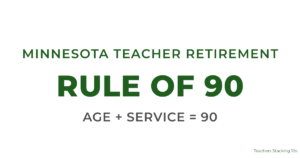
It’s definitely not a sure thing, but I’ve already put in some good work on it. Of course, like any small business, it has taken a lot more money to get it started than it’s currently bringing in. I’m hoping to turn that around this summer. It’s a side-gig that I can work at my own pace and do what I want when I want. It’s something that I would like to get started and be able to do a little bit when I retire. That’s a few years off, BUT the state legislature has at least introduced bringing back Rule of 90. It didn’t pass this year, but IF it ever does, I’ll only have 9 years left.
I’ve been able to bring in a few hundred dollars in details so far, but I still have a little ways to go. The YouTube side of it is steadily climbing, but you can’t monetize your channel until you have 1,000 subscribers. I’m at 340 as of today, so I am making steady progress towards that. You can find the YouTube channel here:
Well, the economy is pretty much moving into a recession. It’s not surprising with the massive bull market we saw for over 10 years. We were due for one. Hopefully it doesn’t last for more than a couple of years and then starts to correct. Inflation is another big problem. Our gas expense is ridiculous and we are spending more and more for food each month. What can you do other than continue to accumulate assets as much as possible?
We are STILL trying to begin saving up money for a rental property, BUT the housing market is just too damn hot right now. There are no deals out there that aren’t gobbled up before they even get on the market. I would love to have a rental property or two for the cash flow, but it’s just not in the cards at this point. Someday……
This is my post showing how we are saving money both in and out of retirement accounts. I always like to read blogs that give real-life examples of those people practicing what they preach. Going forward, I will try and give a quarterly update of our financial position and the thoughts that go into it. I will warn you, I don’t have huge amounts of money socked away anywhere, but I think we have done a solid job in putting money aside.
12/31/2021
3/31/3022
Assets
December
March
Change
% Change
Cash – All checking and savings accounts
$ 11,324.39
$ 10,600.77
$ (723.62)
-6.4%
Stock Account (TD Ameritrade)
$ 1,296.93
$ 1,358.10
$ 61.17
4.7%
Index Fund (Vanguard)
$ 7,101.68
$ 7,668.45
$ 566.77
8.0%
Stock Account (M1 Finance)
$ 1,123.88
$ 1,750.60
$ 626.72
55.8%
Crypto Account (Coinbase)
$ 598.10
$ 335.96
$ (262.14)
-43.8%
My 403(b)
$ 95,716.44
$ 91,992.85
$ (3,723.59)
-3.9%
My IRA
$ 497.36
$ 470.52
$ (26.84)
-5.4%
Wife 401(k)
$ 236,763.57
$ 223,780.85
$ (12,982.72)
-5.5%
Wife 403(b)
$ 118.32
$ 593.03
$ 474.71
401.2%
My HCSP
$ 29,441.43
$ 27,576.09
$ (1,865.34)
-6.3%
Total Assets
$ 383,982.10
$ 366,127.22
$ (17,854.88)
-4.6%
Liabilities
Current Debt (Credit Cards, Etc.)
$ –
0.0%
Clinic
$ 1,568.60
$ 368.60
$ (1,200.00)
-76.5%
Corolla Loan
$ –
$ –
$ –
0.0%
RAV4 Loan
$ 10,320.63
$ 9,251.64
$ (1,068.99)
-10.4%
My Student Loan
$ 5,559.16
$ 5,559.16
$ –
0.0%
PLUS Loan
$ 10,014.00
$ 10,014.00
$ –
0.0%
Property #1 Mortgage (Primary)
$ 101,675.96
$ 100,087.70
$ (1,588.26)
-1.6%
HELOC (Primary)
$ 17,600.00
$ 17,200.00
$ (400.00)
-2.3%
Total Liabilities
$ 146,738.35
$ 142,481.10
$ (4,257.25)
-2.9%
Total Net Worth
$ 237,243.75
$ 223,646.12
$ (13,597.63)
-5.7%
Assets:
Cash – $10,600.77 Down $723.62
This includes all of our checking and savings account balances. I never was a big believer in the 3-6 months of savings, BUT some life changes forced me to rethink that. We are working our way up to about $25,000 in savings between our checking and savings accounts. I am finding it also gives me piece of mind to have this money just sitting there if a real emergency did arise.
Our goal by the end of this year was $10,000. That goal was reached. Now our goal for 2022 is $25,000. This is a lofty goal and may be difficult to achieve, but you have to set goals to give yourself motivation to go after them.
TD Ameritrade (taxable) – $1,358.10 Up $61.17
This is an account that I started so I could buy individual dividend growth stocks. I’ve sold some of my dividend stocks and put more into growth stocks. This account I am slowly selling off to be able to close and consolidate into other accounts that I have created. One of my stocks in this account, MDP, was acquired by another company so the stock was liquidated. That sounds bad, BUT I ended up making getting about $1,600 from it. Not bad from a $500 original investment! I also sold my GME stock at its most recent high of about $225. I ended up taking about a $250 loss on this stock. Dumb move on my part.
Vanguard (taxable) – $7,668.45 Up 566.77
This is an account that I use to purchase Vanguard index funds. This was going to be my emergency fund, and it kind of is my current “secondary” emergency fund. My plan is to get between $10-15,000 in this account and let it grow and replenish as needed. We are putting in $500/month into this. The market has dropped quite a bit since December, but this goes up because $500/month goes in.
M1 Finance (taxable) – $1,750.60 Up $626.72
This is an account that I started so I could buy high growth tech stocks. I also added a “slice” that has dividend stocks as well. All in all, there are 98 total stocks in this portfolio now. The best thing about M1 is that it allows you to build a portfolio and put money into it and buy fractional shares instead of having to wait to save enough to build a position for each stock. I added another $500 into this account to get more dividend stocks.
Crypto Account (Coinbase) – $335.96 Down 262.14
This is the newest account that we made. It is a cryptocurrency account. Crypto is all the rage right now, and I thought I would put a little money in to try and diversify our portfolio. Damn crypto! Ha!
My 403(b) – $91,992.85 Down $3,723.59
This is my main retirement account. I have been paying into this since I started teaching. Our district currently matches $800 each year into this account. It is kind of small for having taught for 20 years, but my early years of putting money into this account robbed me of many gains. I was invested in annuities with heavy fees and surrender penalties. It’s just been in the last 8-10 years that I have really become more knowledgeable about these accounts.
The market absolutely has tanked in 2022 for numerous reasons. I will talk more about this in the last part of the update.
My IRA – $470.52 Down $26.84
This is where I will roll over my 403(b) to when I retire. Another casualty of the 2022 market so far.
Wife 401(k) – $223,780.85 Down $12,982.72
My wife has a good job as a nurse. This 401(k) is from the organization that she used to work for. She switched jobs in December, so this account will no longer be receiving any contributions. With the total amount in the account though, it will definitely continue to see big growth as long as the market is doing well, AND big losses when the market tanks!
Wife 403(b) – $593.03 Up $474.71
This is her 403(b) from her new job. The new healthcare facility she works for also matches her contributions, but she has to be there for one year before she will see that match. Just keeping on putting in her contributions.
My Health Care Savings Plan (HCSP) – $27,576.09 Down $1,865.34
This is an account through our school that we both contribute to each month. It can only be used for medical expenses AFTER I retire. It has grown nicely the last 5 years. Another account hammered by the current market.
Liabilities:
Clinic – $368.60 Down $1,200
This is the last month paying on this. I MIGHT have to go in to have this procedure down again though. My low back has been bother me quite a bit.
RAV4 Loan – $9,251.64 Down $1,068.99
Just plugging along on this!
Corolla Loan – $0 Down $0
This is the loan for the vehicle to replace our previous car that was totaled. It’s a nice fuel efficient vehicle. My goal is to have it paid off in the next 12 months. ACHIEVED! Used part of our most recent stimulus check to completely pay this off! One yearly goal accomplished.
My Student Loan – $5,559 Unchanged
This is what’s left of my loan for my Master’s degree. With the pandemic, I was given forbearance on this loan.
PLUS Loan – $10,014.00 Down $200
And so it begins. This is the parent loan for our oldest daughter’s first year in college. This is a loan that we will work to pay off over time, but it will definitely go up each semester that she is in college. Kids…. We will get another $10,000 added to this loan in January for the second semester. I will then be doing a consolidation of my student loan and this loan. The consolidation is done and now just waiting to hear if it qualifies for the PSLF.
Mortgage – $100,087.70 Down $1,588.26
This is the mortgage that we have on our home. The house currently appraises for about $207,000, so we do have some equity in it. We signed on our refinance at 15 years and 2.5%. We will have the house paid off just as I am ready to retire from teaching. Great timing!
HELOC – $17,200 Down $400
Made two $200 payments.
Net worth (assets-liabilities) – $237,243.75 Up $36,346.81
Key Points:
You’ll notice that I don’t have assets linked for our major liabilities. I do NOT believe that you should include the value of your house or vehicles as assets for your net worth. You only realize those assets if you sell them, and I don’t plan on ever selling those things, but I DO have to pay off those loans. I think it gives a clearer picture of how much money you actually have.
Goals for 2022:
I’m going to keep a couple of goals here. I definitely want to get that clinic bill paid off (COMPLETE) and also fund a Roth IRA ($6,000) for the year. I was able to continue to grow the Vanguard Index account. I am planning to continue watching the current rental properties available in my area. If I can get one at a fair deal, I will definitely pull the trigger. I want to continue to diversify our portfolio by investing in growth stocks, dividend stocks, and crypto. Consolidating the student loans and applying for PSLF is another big step. COMPLETE
Another goal that I have for 2022 is creating another stream of income. I have plans in place to move forward with a pretty big project in the spring of 2022. As you all know, education is currently one of the areas that is seeing some major burnout, and unfortunately, I find myself in that category. I have no plans on leaving the profession currently, but I want to create something that could bring in some money and give me options. Well, I did it. I have started my side-gig to try and create another stream of income. I have created a Facebook page that talks about what this is. If you want, you can check it out at:
It’s definitely not a sure thing, but I’ve already put in some good work on it. Of course, like any small business, it has taken a lot more money to get it started than it’s currently bringing in. I’m hoping to turn that around this summer. It’s a side-gig that I can work at my own pace and do what I want when I want. It’s something that I would like to get started and be able to do a little bit when I retire. That’s a few years off, BUT the state legislature has at least introduced bringing back Rule of 90. It won’t pass this year, but I have time. Once it passes, I only have 9 more years until retirement!
Quarterly Comments:
For all the growth in Q4 of 2021, Q1 of 2022 has started out with a complete thud. It’s not surprising. The market had been on an epic run since about 2008. It had to turn eventually. The war in Ukraine has had a serious impact on the world economy and energy market, which has really thrown our economy for a loop. Hopefully the ship gets righted a bit in Q2.
We are STILL trying to begin saving up money for a rental property, BUT the housing market is just too damn hot right now. There are no deals out there that aren’t gobbled up before they even get on the market. I would love to have a rental property or two for the cash flow, but it’s just not in the cards at this point. Someday……
So how’s your financial situation? Throw some thoughts down in the comments and as always….
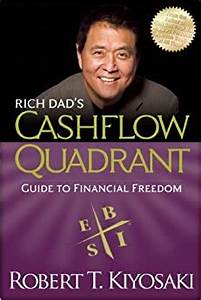
Here we have another great book on understanding you and your money. This one focuses more on the “how” of earning money and is very important for us as teachers. Rich Dad’s Cashflow Quadrant by Robert T. Kiyosaki looks at money from a different lens. We might be teachers that are currently dependent on earning our money from a school district, but we can, and should, look at moving from that “E” quadrant as much as possible! I will include a chapter summary in regular print and then my thoughts and review in italics.
This book is a must read for the teacher that doesn’t want to be trapped by the “Golden Handcuffs“ of our pension.
PART 1 – The Cashflow Quadrant
Chapter 1 – Why Don’t You Get a Job?
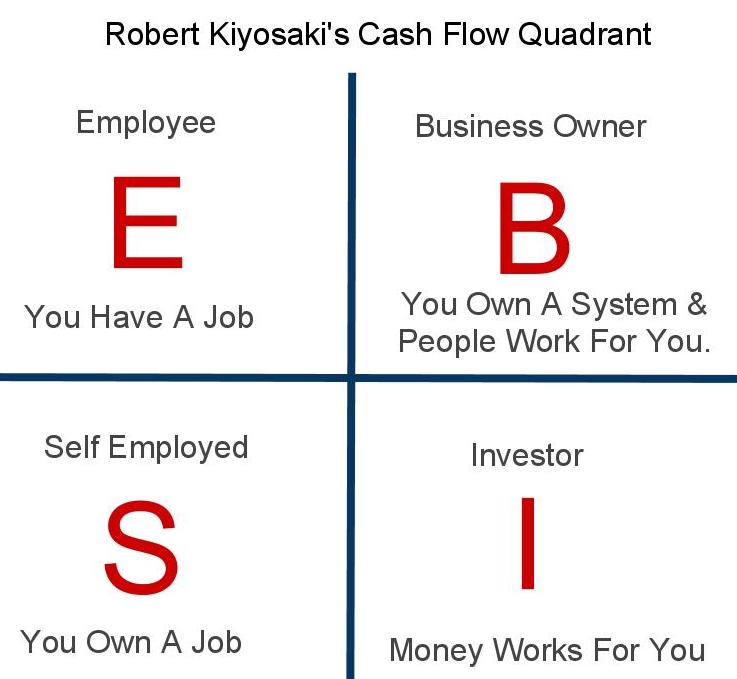
The book doesn’t start out as you might expect. Mr. Kiyosaki starts his story in 1985 when he and his wife were homeless. They did the occasional odd job to keep themselves fed and gas in the car in which they lived. People asked them why they didn’t get jobs. Both were college graduates who qualified for a variety of good-paying positions, but they had a different goal. They were not after job security, but financial freedom. They wanted to develop a successful business that would bring them money even if they stepped away. They didn’t want to be Es. This is where he introduces the Cashflow Quadrant.
The image above shows these four quadrants. He doesn’t go into detail yet, but if you bring in money, it comes from one of those four quadrants, BUT it doesn’t mean that you can’t bring in money from other quadrants as well. He says you can be rich or poor in ANY of the four quadrants. It really depends on your personal strengths and weaknesses. Mr. Kiyosaki refers back to his first and most popular book, Rich Dad, Poor Dad throughout this book. He recalled how his “poor dad” would tell him that money wasn’t important to his life, yet he spent much of his life working for it. Whereas his “rich dad” felt that money was important to him “living life” and found ways to earn money without giving up his time working for it. Mr. Kiyosaki points out that his “poor dad”, who earned his money on the left side, had to spend more time working as he made more money, but his “rich dad”, who earned his money on the right side, worked less as he made more. Mr. Kiyosaki ends the chapter stressing the point that no quadrant is better than another. Each has its strengths and weaknesses.
This first chapter doesn’t really get into the finer points of the four quadrants, but something that stuck out to me immediately when I read through it the first time was that I had always just taken for granted that ALL people work a job. Everyone gives up their time for money, and the more money you make, the more time you give up. As I’m sure many of you were told growing up, “Go to college and get a good job.” Heck, isn’t that the whole core of what we say as educators?? “Make sure you go to college so you can get a good job.” This statement is true for some people according to Mr. Kiyosaki, but not all….
Chapter 2 – Different Quadrants, Different People
This chapter introduces the idea of how people can move from one quadrant to another. Mr. Kiyosaki says that he learned from his “rich dad” that anybody can move from one quadrant to another, but it’s not as easy as just deciding to move. The quadrant you are in is really at the core of who you are. You might have the intellectual knowledge to move from one quadrant to another, but you may not have the emotional ability to handle the ups and downs typical of a different quadrant. He also can tell a person’s quadrant by the words that they use.
The E (Employee)
E-Quadrant Words – Safe, secure job, good benefits
People from the E quadrant hate the fear that comes with “economic uncertainty”. They want a steady, secure job with good benefits. For people in this quadrant, security is more important than money. Employees can be the president of a company or the janitor. It’s not really what they do, but the contractual agreement they have with who hires them.
The S (Self-employed OR small-business owner)
S-Quadrant Words – My rate is $75/hour. My commission is 6%.
People from the S quadrant are ones who want to be their own boss. They don’t like to have their income dependent on other people. People in the S quadrant are usually very independent. Whereas an E responds to fear of not having money by looking for security, an S will look to take control of the situation and do it on their own. This profession often includes educated professionals such as doctors, lawyers, and dentists. It also includes small business owners, direct-commission salespeople, and real estate agents. Many S people are perfectionists and often feel for a job to be done right that they have to do it.
The B (Business owner)
B-Quadrant Words – I’m looking for a manager to run the day-to-day operations.
People from the B quadrant are really the opposite of the S. These people like to surround themselves with people from the other categories to become more efficient. They like to delegate work to others who are more knowledgeable in that area. Bs are usually strong leaders that can inspire others, but the biggest difference between the small-business owner (S) and business owner (B) is that the B can leave their business for a year and return and the business is more profitable and running better than they left it. If an S leaves their business, it usually disappears. So the S owns a job, the B owns a system.
The I (Investor)
I-Quadrant Words – Is my cash flow based on an internal or net rate of return?
The I quadrant is where the wealthy exist. No matter which quadrant you are in now, if you want to become rich, you MUST eventually move into the I quadrant. This is where money turns into wealth. In this quadrant, your money actually works instead of you! I quadrant people invest in many things. Stocks, businesses, real estate, start-ups, etc.. Mr. Kiyosaki states that most Es do spend time in the I quadrant through their retirement accounts, but he believes this is more like saving than investing. He states that I’s make their income through the investments and not from a job. One of the biggest benefits of this quadrant is that money earned in the I quadrant is taxed differently, and usually more favorably, than money earned in the other quadrants, the E and S quadrants especially!
Mr. Kiyosaki ends the chapter by really going after pension plans. He believes that pension plans are a relic of the Industrial Age where you worked for one company your whole career. We are in the new Information Age, and people need to plan for retirement differently. People should be very careful with their 401(k) plans and make sure they take the reins of their own personal finances and not hope that the government will save them when they retire.
This chapter held a TON of information. I hope I did it justice with my explanation. As teachers, we definitely fit right into that E quadrant. Most teachers really count on that security of holding a job for their entire career. But we are fortunate to still possess one of those pension plans that Mr. Kiyosaki kind of beats down at the end of the chapter. I think an important takeaway from that is that teachers should NOT plan on their pension and social security being their only source of income in retirement. You MUST put money into your 403(b) account and truly INVEST that money. This will require you to learn about your 403(b) company and the agent you work with. Do NOT let them just have full “control”. They definitely do not have YOUR best interests in mind. Their interests will ALWAYS come first.
Chapter 3 – Why People Choose Security Over Freedom
Mr. Kiyosaki gives a very simple answer to this question. It’s because that is what people are taught from the time they enter school. They are told to go to college, get a degree, get a good job with benefits. This leads them on a path to the left side of the CASHFLOW quadrant. This is where the job security is, but the financial security exists on the right side. He states, “The main reason that 90 percent of the population is working on the left side is because that’s the side they learned about at school. After leaving school, they often end up with lots of expenses and may fall into debt. This means they must cling ever tighter to a job, or to professional security, just to pay the bills.” He goes into various scenarios people find themselves trapped on the left side of the CASHFLOW quadrant. The success trap on the left side is that getting more money usually means more work which requires more time. On the right side, getting more money involves bringing in more people or deploying more capital, NOT necessarily more of your time. Financial freedom and security are rarely found on the left side. They are only found on the right side. One common pattern is someone moving from E to S. This is the person that the author feels the most sorry for. By moving from the E to the S, they often find themselves working harder and more hours in their pursuit of freedom. Mr. Kiyosaki then goes into detail about how most of the tax advantages that exist in America today live on the right side. It’s all about where a person earns their money. He ends this chapter discussing how people can expand their lives and exist in more than one quadrant at a time. He suggests that the E develop or create a B or spend time in the I quadrant by truly learning about investing and not blindly turning their money over to a financial advisor. In fact, he states that people feel much more secure if they operate in more than one of the quadrants.
This chapter really underscores what we are trying to do here at Teachers Stacking 10s. The TA and I believe that as teachers we can truly become financially free, but not solely through coming to school everyday. We can leverage the money that we make at school and use it to invest in things like stocks and real estate. Heck, this website could even push us into the B quadrant some day. (Not that we make any money on this site.) Some teachers we know also own small businesses. Some sell content that they have created through sites like Teachers Pay Teachers. Some own a rental property that they manage themselves. Moving into the B or I category doesn’t mean we need to become the president of a multi-national corporation, or stand on the New York Stock Exchange. We can all incorporate parts of these other quadrants to enhance our financial freedom and give us a chance to loosen those “Golden Handcuffs” that we all wear, known as our “Pension Date”.
Chapter 4 – The Three Kinds of Business Systems
Mr. Kiyosaki starts by reminding people that being a B means you own a system and people work that system to make money for you. He mentions 3 different types of businesses. They are:
Traditional C corporations – where you develop your own system
Franchises – where you buy an existing system
Network marketing – where you buy into and become part of an existing system.
<p “=”” style=”” tve-droppable”=””>He stresses that an important part of being a business owner is learning from your failures. He states, “Success is a poor teacher.” He give three ways you can make it to the B-quadrant quickly. <p “=”” style=”” tve-droppable”=””>1. Find a mentor. <p “=”” style=”” tve-droppable”=””>This is what Mr. Kiyosaki did in his early life. His “rich dad” taught him the ins and outs of running a business and how to manage people. He says to remember that a mentor is someone who has already done what you want to do. You don’t want an advisor. These are people that tell you what you should do. Most advisors are actually from the S-quadrant. He thinks that if you are working as an E for a large corporation, you can learn from them and it is like being paid by a mentor. Once you have spent time learning the various systems in a big company, you will be ready to leave and start your own company. <p “=”” style=”” tve-droppable”=””>2. Buy a Franchise <p “=”” style=”” tve-droppable”=””>By buying a franchise, you are buying a company’s system and using it as your own. Your focus will be managing people. He does warn against people with an S-quadrant mentality from purchasing a franchise. People from the S-quadrant like to do things their own way and that doesn’t work in a franchise. The author talks about his “poor dad” that failed when he bought a famous ice cream franchise. The system was excellent but it failed because his highly educated father and his partners were all E’s and S’s who didn’t know what to do when things started to run poorly. <p “=”” style=”” tve-droppable”=””>3. Get involved in network marketing <p “=”” =””=”” style=”” tve-droppable”=””>This is another example of buying into a system. The difference is that a franchise could cost hundreds of thousands of dollars. Network marketing is more like a personal franchise. Many times the cost to buy in is just a few hundred dollars. He says an important part of network marketing is getting past your fear of rejection and learning to lead people. He thinks that you should focus on the education that a network marketing company provides over the product that they offer. He said you should do your research on any network marketing company before joining. Too often, people just look at the product and everything starts out great, but without proper mentorship and guidance, it falls apart when sales start to slow down. <p “=”” =””=”” style=”” tve-droppable”=””>He ends with the reminder that a system is the key to building your own business. This system is the bridge that can provide a path from the left to the right side of the Cashflow Quadrant. <p “=”” =””=”” style=”” tve-droppable”=””>This was an interesting chapter for me. I’ve never started my own business and haven’t even really thought of it before. Personally, I am not a fan of the network marketing businesses that Mr. Kiyosaki discusses in-depth in this chapter. I’ve always viewed network marketing as a “gimmick”. We all know someone who has jumped into one of these companies and claimed how they were going to make a bunch of money only to give up after they found out that it actually took some effort.
Chapter 5 – The Five Levels of Investors
Mr. Kiyosaki believes that all people should learn to invest. The I-quadrant is important because this is where your money is working for you. He also believes that most people really don’t have the financial knowledge to invest properly. Many people feel that investing is “risky”, but he feels that not have financial knowledge is where the real “risk” lies. He is not a fan of most 401(k) plans. He says, “The 401(k) is for people who are planning to be poor when they retire.” He feels that most advisors in 401(k) plans are not really investors, but are E-quadrant and S-quadrant employees who make their money off of your hard-earned money. He doesn’t view one type of investing as “better” than another. It all depends on the investor’s knowledge in that area. He believes there are 5 levels of investors.
Level 1: The Zero-Financial-Intelligence Level
This is the category of people who actually spend more than they earn. He claims that over 50% of the country falls into this category. These people spend their money on liabilities instead of assets that will increase in value over time. To determine if you are in this category, ask yourself if you have no assets but a high level of debt.
Level 2: The Savers-Are-Losers Level
These are people who think they are doing the right thing by socking money away into their savings’ accounts or bond markets. The problem with these areas is that they actually losing money as their gains are overtaken by inflation. These people will actually have less purchasing power with the money they accumulate than when they earned it. To determine if you are in this level, do you have a large amount of money in your savings account or a simple 401(k).
Level 3: The I’m-Too-Busy Level
This person is too busy with life to learn about investing. These are people who are highly educated and often highly compensated. This is the level that most people who invest in their 401(k) are at. They “hope” that their advisor knows the correct investments to put their money in. Sometimes they are correct. Other times they are terribly wrong….. To determine if you are in this level, ask yourself if you are still only investing only in your retirement account and paying high fees.
Level 4: The I’m-a-Professional Level
This is the DIY investor who picks a few stocks to buy and sell. If they invest in real estate, they usually do all the work themselves. Many retirees jump into this level since they have more time on their hands. If these people work on their financial education, they can move into the top level. You are at this level if you have increased your knowledge and are picking some stocks to invest in outside of your retirement accounts.
Level 5: The Capitalist Level
This is the level where the richest people in the world reside. The level 5 investor doesn’t just limit themselves to using their own money to invest. They actually use other people’s money (OPM) to grow their wealth. They leverage their real estate transactions. They use bank loans to grow their business. They use a team to invest their money in the best assets. These people are very good at raising capital by working with other people. They are not afraid to use debt as a tool to grow.
He closes the chapter with the statement that the I-quadrant is your ticket to freedom and financial security. It requires some effort on your part to learn about assets and liabilities and where you can use leverage to grow your wealth.
This is a hugely important chapter for me. I spent the first 15 years of my teaching career in level 3. I consistently contributed to my 403(b), but I really didn’t have any idea where my money was going. I can’t imagine the thousands of dollars I have lost over the years to my “advisors”. Finally about 10 years ago, I realized that I wasn’t where I wanted to be when it came to money. It struck me that I was “stuck” in the classroom until I qualify for my pension at 62. Ouch! As I learned more, I realized that I was in the same boat as most Americans. My wife and I had a pretty good chunk of money in our retirement accounts, but we were living paycheck to paycheck. We were “illiquid”. All of our money was invested in accounts that are inaccessible until we are 59.5! As I learned more, I slowly moved into level 4. I will say the TA and I are both continuing to learn in level 4 and trying to work our way into level 5. Of course, there are some hard lessons to learn in level 4. Hmmm. GME. Soon, we are both hoping to move into level 5 and start to leverage debt to grow our wealth!
Chapter 6 – You Cannot See Money With Your Eyes
At first glance, the title of this chapter seems a little weird. Of course you see physical money with your eyes, but what Mr. Kiyosaki is talking about here is the concept of making money. Too many people invest in things because of what their eyes see or their emotions tell them. These people rarely make money. They may not lose either, but they never really grow their wealth. These are the “get rich quick” people that don’t invest, but rather speculate on an investment. According to the author’s rich dad, “The average person is 95 percent eyes and only 5 percent mind when they invest. If you want to become a professional in the B and I quadrants, you need to train your eyes to be only 5 percent and your mind to see the other 95%.” An important part of this is learning the language of each quadrant. If you don’t understand the words, you will never understand if an investment is a deal or not. He says that most people obtain most of their financial knowledge at home and “most people don’t come from financially sound families.” Mr. Kiyosaki branches off in the chapter to talk more specifically about saving money and real estate. He continues into depth on mortgages and how people still cling to the fallacy that your home is an asset. Even if you completely pay off your mortgage, your house still is not an asset. It still costs you money to maintain and you will still continue to pay property taxes on it. Your savings account, on the other hand, truly is an asset. It is earning you money each month in interest. The problem is that to the bank, your money is technically a liability on their financial statement. That’s why you really get no tax breaks for saving money, but you do in real estate! In his mind, it’s all about who owes who. The goal is to become the person that money is owed to instead of owing other people, including the banks! For most people, money is about survival. For the wealthy person, money is a game. A game that is much like Monopoly in that you want to control the assets and be the person to whom others are indebted. This is shown in some of the common words we see on advertisements today. Things like “low-down payment” or “easy monthly payments” are immediate signs that others are trying to put you into debt. It is your responsibility to recognize these signs and not fall into the debt trap.
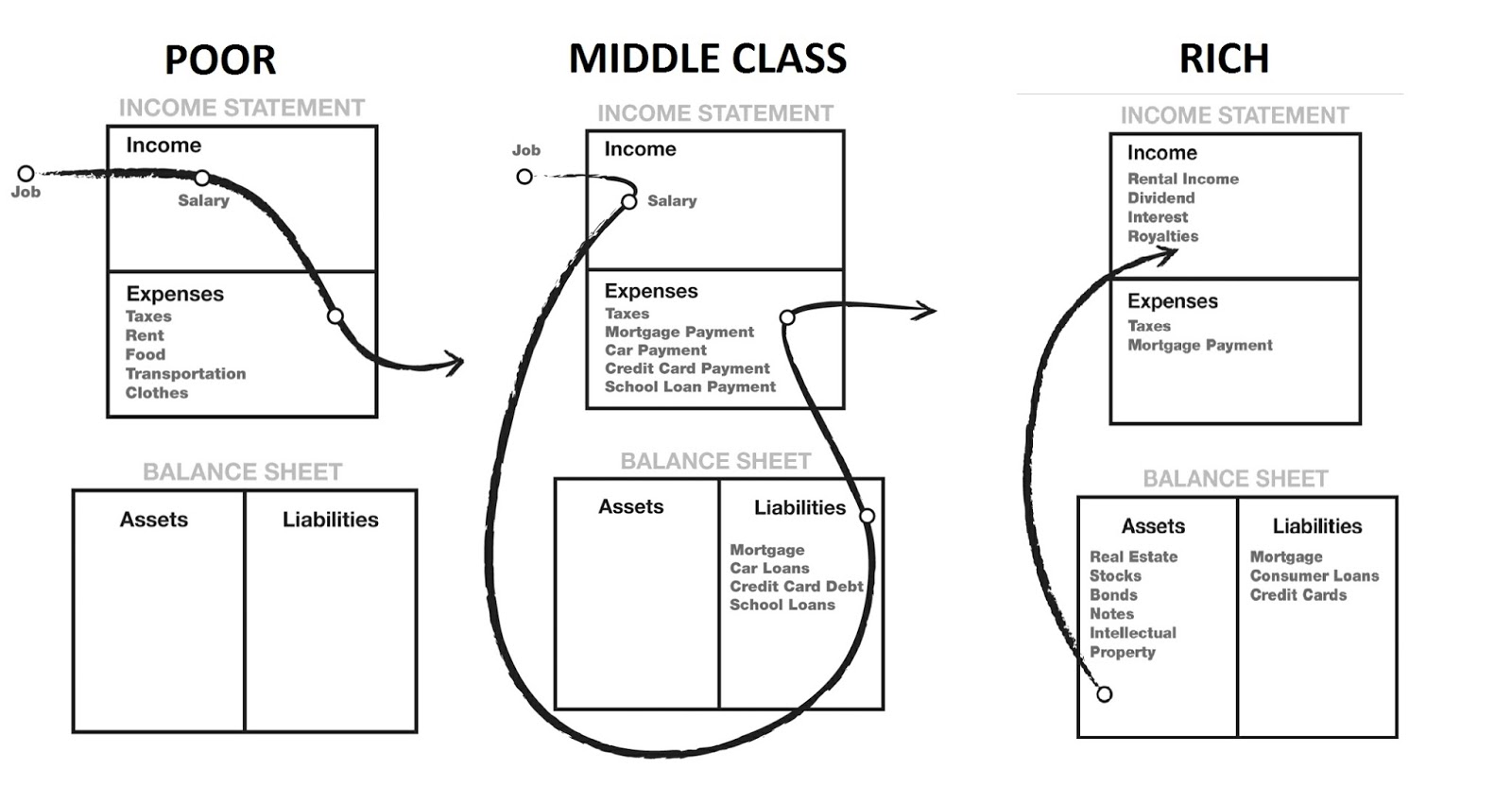
This chapter was a little tricky to follow at first because most of us have been raised on the left side of the quadrant. We see our parents and grandparents and all of our friends in debt their entire lives and assume “that’s just the way that it is..” I was in that mindset for years. “Oh, it’ll only be $199/month for that new car! That’s cheap! I can afford that.” The dealership then “owned” me for the next 5 years while I was paying that car. They got the monthly cashflow into their account each month while it left mine, never to return. The balance sheet (below middle) is how most I live month-to-month. My job pays me a salary. Then I pay my liabilities and then my expenses. “Hopefully” I have a little month after that to save. I am starting to slowly incorporate some of the things from the balance sheet (below right). I am starting to accumulate some stocks that are growing and paying some dividends. I am also looking for real estate that will pay me rental income. As this starts to happen, I will begin moving more into the I-quadrant! Remember, this does NOT happen overnight. I have definitely made my mistakes as a speculator instead of an instead. I was using my eyes and especially my EMOTIONS when making investment decisions. I am continuing to work on using my mind more consistently. It sure sounds easy, but the allure of a fast dollar is very appealing to most people!
PART 2 – The Cashflow Quadrant
Chapter 7 – Becoming Who You Are
Moving from the left side to the right side of the Cashflow Quadrant requires you to change internally. Mr. Kiyosaki believes “for some people the process is easy. For others, the journey is impossible.” This chapter focuses on what changes you must undergo to move quadrants. Rich dad always told him that money was a drug. People are addicted to the way that they EARN money. Once you have become accustomed to working at a job for money, it’s very hard to break away from that pattern. Today, money is necessary for survival. Food, shelter, and even water cost money. When you begin the process of trying to “switch sides”, the E-quadrant part of you will fight back because the part of you that wants security will fight the part of you that wants freedom. Mr. Kiyosaki continues by stating that if you are working to move to the B quadrant, you must build that system around your passion. Your passion will allow you to move past your fear. If you don’t possess the passion or lose it before your system is created, the fear part of you will drive you back to the left side of the quadrant. Most people believe that the left side of the quadrant is more secure, but that is actually not correct. On the left side, you are at the mercy of your company or profession. Your job could be cut or down-sized at any time. Your compensation is determined, not by you, but by someone else. The fact is that the right side of the quadrant is more secure, BUT it requires you to be able to read numbers and understand finances. Even during a market crash, a smart stock investor still knows how to make money. The inexperienced or uneducated person panics and loses most of their invested money.
Next, Mr. Kiyosaki points out that people on the left side pay to take risks while those on the right are paid to take risks. It sounds strange, but think about a person that invests money in a business by buying their stock. The person that pays for the stock is taking the risk of the stock going down. They are paying to take a risk. Now think of a health insurance company insuring you. They don’t pay you to take that risk, you actually pay them when they are taking the risk. Understanding numbers is the key to moving to the right side and acquiring freedom. The phrase “Get Rich Quick” is both true and false. You can move quickly on the right side to get rich, BUT you can’t take shortcuts. You must study and learn about the ideas and concepts of the right side to grow your wealth.
This chapter didn’t make much sense to me when I first read it. Like young Mr. Kiyosaki, when “Rich Dad” told him that people on the left side pay to take risks and those on the right get paid to take risks, it wasn’t clear to me. I completely fit his narrative of being afraid to move from the left to the right side of the quadrant. I have been an E for a long time (20+ years). The thought of leaving the security of my job is terrifying thinking about all of the bills and people that are dependent on me for my income. But the more I thought about it, the more I realized that I have to pay to take risks all the time! The TA and I have talked about our investing on this site quite often. I felt like we were at the Level 4 investor stage, but now I think we might be more at Level 2! When he talks about true investors make money even when the market goes down, not us… We are at the mercy of the market because we don’t truly know how to take advantage of when a market turns and starts to drop. I took this to heart and am starting to learn about how to make money in a falling market.
Maybe the toughest pill to swallow in this chapter was Mr. Kiyosaki’s points on teachers. I didn’t include these in the “official” review above, but I wanted to include them here. He feels that our current education system strongly discourages people from going into the right side of the quadrant. We stress rule following, job security, and structure in our current educational model. He strongly believes that schools should focus more on creativity, problem-solving, and cooperative tasks. I believe that we are moving in that direction, but change never comes as quickly as people would like. He even believes that teachers can be rich. YES!
So you’re saying there’s a chance….
Chapter 8 – How Do I Get Rich?
Mr. Kiyosaki really compares this to the childhood game of Monopoly. In that game, the best way to win is by building four green houses on a property and “trading up” for a red hotel. This is how he made his fortune. He bought small properties with his money and then “traded up” for a bigger property for the cash flow. He believes that doing what rich people do is easy. It’s not always the people that work the hardest that get rich. It’s about thinking independently and doing things differently than everyone else. It’s not what you do that needs to change, it’s how you think. He compares it to the idea of a person setting the goal of achieving the “perfect body”. They start out by going on a diet and going to the gym. That lasts for a few weeks and then they fall back into their old ways because they focus on what they have to do instead of changing their thinking. The answer always lies within you. People always try to change everything external instead of focusing on the internal.
Instead of working hard to “pay the bills”, work hard to accumulate assets. Too many people work hard and buy things that make them look rich, but they aren’t really rich. They are only trying to play the part. The Cashflow Quadrant is not about being, but doing. It’s about taking the action necessary to move from the left to the right side. It’s getting over the fears from the left side. An E’s biggest fear is leaving the security of a steady paycheck. For an S, it’s them needing to give up some control to others to expand their business. Fear of losing money is the biggest cause of financial struggle for most. Most people are afraid of taking any kind of financial risks because they don’t know how to manage that risk. That is why people who make mistakes and learn from them do better than people that are afraid to even make those mistakes. He claims that this is why so few teachers are rich because they work in an environment that punishes mistakes. He claims that people’s emotional intelligence overwhelms their rational side and keeps them from taking those chances that can turn into huge successes.
So moving from one quadrant to another requires you to be aware of your internal dialogue. You must make sure that you are controlling the emotional side of your brain by using your rational side to make your money decisions. You have to move past the idea of “playing it safe” and moving to the doing. There is going to be winning and losing. That’s part of life. It’s being able to handle that losing and learning from it to improve your chances next time that will help you in your journey to riches.
This was another hard chapter to swallow because again Mr. Kiyosaki points out how our current education system punishes those that take chances. He also shows how many of the most successful people in history struggled in traditional educational setting and flourished once they got into the real world. I find myself CONSTANTLY saying to play it safe and don’t take chances and then when I do finally jump in and take a chance, I do it solely on emotion and not financial intelligence and I end up getting burned! As a teacher, the biggest point most of us make about being an E is our job security. We are still fortunate enough to have a pension once we retire, and that carrot in the future makes it VERY difficult for the emotional side of our brain to let go. It’s secure. It’s safe. It’s a “can’t miss”. But is it really the thing preventing us from taking calculated risks with our money and becoming financially free? That’s a question I ask myself on a regular basis…..
Chapter 9 – Be the Bank, Not the Banker
As much as the previous chapter focused on the “be”, or mental part of building wealth, this chapter focused on the “do”. The chapter starts out talking about the Wall Street Crash of 1987. Many people forget that the lead up to that crash was the Tax Reform Act of 1986 that caused many E and S quadrant people to lose the tax breaks that they used by investing in real estate and other limited partnerships. The government took away from those quadrants, but the B and I quadrants were largely left untouched. Individuals on the left side of the quadrant were hurt badly in that crisis and many on the right gathered in much of that wealth when real estate prices plummeted and companies downsized increasing the prices on their stock. He claims it was the “best of times” for the B’s and I’s, and the “worst of times” for the E’s and S’s. Those on the left side of the quadrant reacted with their emotions and fears of not having enough money and didn’t have the financial knowledge or systems set up to take advantage of the huge opportunities.
E’s and S’s are always looking for someone to blame or conspiracies as to why they “system is rigged against them.” Yes, the system is set up in a way that does favor the right side over the left side of the Cashflow quadrant. The key idea he points out is that it’s on us to use that system the same way that a B or an I uses it to their advantage. At that time, Mr. Kiyosaki decided to invest in real estate. There are five reasons he lists, but the one that he describes in detail goes along with the title of this chapter. It gave him the chance to be the bank. It was a fairly simple process. He would find a good deal by finding a house that was for sale for $100,000 and negotiating the price to say $80,000. He would put $10,000 down and get a mortgage for the other $70,000. Then he would advertise the house for sale at its appraised price and use the magic words, “Low Down Payment. No bank qualifying. Easy monthly payments.” He would sell the house on a lease-purchase agreement and then register with a title and escrow office. They collect the payments, which are then sent to him. Now, if that customer defaults on their payments, he forecloses and then sells it to the next person who wants those “easy monthly payments.” He’s basically created $30,000 in his asset column for which he is paid interest just like a bank! The best part is that he didn’t have to save up the $30,000. He created with his mind by finding a great deal! That $30,000 was also created tax-free! How long would it take an E to save up $30,000 to earn interest on? 2 years? 3 years?
One of Mr. Kiyosaki’s biggest lessons that “Rich Dad” taught him was, “Be careful when you take on debt. If you take on debt personally, make sure it’s small. If you take on large debt, make sure someone else pays for it.” This is where real estate really shines. You invest in a property and then your tenants pay off your mortgage. He recommends that people start in the B quadrant before moving to the I quadrant. It teaches you the business sense to make smart decisions. He believes that people should start small. “The only difference between and $80,000 deal and an $800,000 deal is a zero.” It’s all about learning the process and developing your financial intelligence. Remember, the tax code is geared to favor the right side of the quadrant.
This is another gut-punch of a chapter. Basically, Mr. Kiyosaki is saying that the system IS set up to favor the right side of the quadrant. He admits that in 1986, it started the largest transfer of wealth from the poor to the rich, and it is still continuing to this day. It pisses me off, but really, the only way to fight against that system is to take advantage of those same rules to help ourselves. One of my biggest goals is to buy real estate and have tenants pay down my mortgage. I currently have my eyes on a couple of properties in my small town. I’m really stuck in that “analysis-paralysis” stage though. It’s that emotional side of my brain telling me to play it safe. I know the risks, I’ve read the books, but I have to take that step and take advantage of the tax breaks that go with owning real estate. I know that I can depreciate the houses and write off much of the income. It’s about taking action and moving myself into the right side of the quadrant.
Part 3 – How to Become a Successful B and I
Chapter 10 – Take Baby Steps
This chapter more clearly lays out Mr. Kiyosaki’s advice from Chapter 9 when he says to start small. Too many people set massive goals and then realize that it is too much and end up giving up. He believes that more important is the idea of taking small steps and working consistently in the right direction over time. This is not something that you can do in one week. It will take time. It will take emotional learning and baby steps for six months to a year. You have to learn to walk before you can run. There really isn’t a get rich quick plan outside of buying a lottery ticket!
He claims that too many people are paralyzed by the fear of making mistakes that they are trapped in their quadrant. He believes in the Nike slogan, “Just Do It!” Unfortunately in schools, we are taught to not make mistakes. This causes many highly educated people to be afraid to make mistakes and they do not take action. This is why he believes that action always beats inaction. Even if that action results in a mistake, you have learned and know what not to do next time. He also talks about setting goals. Not just setting those long-term goals, but writing them down and looking at it systematically and how you can achieve it. Look at the steps needed to move toward that goals and break them into manageable day-by-day and week-by-week steps.
Finally, he believes that everyone needs to fill out a personal financial statement. It will help you get a clear picture of where your finances are today. He believes that by understanding where you are currently, you can look to what areas you need to improve your financial position to better equip you to move forward on your path to moving to the right side of the quadrant. He closes with his financial board game CASHFLOW. This game teaches you how to move out of the day to day rat race and earn your financial freedom.
Just like in the previous chapter this one really hits me with the idea of where I am stuck in inaction. Mr. Kiyosaki even brings up the term analysis-paralysis. His idea that many highly educated people get stuck in that zone because of the fear of mistakes. I don’t think I’m a genius in any way but I do consider myself pretty financially literate, and I just feel like I’m paralyzed by fear of moving forward with one of those rental properties. I have actually played his CASHFLOW game quite a few times. You can play if for free online. It feels exactly what my day to day life is. Whenever you start to get a little bit ahead and want to take that next step, a big gut-punch in the form of say a broken water heater hits you for $2,000. And yes that just happened to me yesterday. Dammit….. Getting out of the rat race by developing other sources of cash flow would definitely relieve much of the day to day anxiety that I feel about our finances. I’m sure many of you can relate to that same feeling….
The Seven Steps to Finding Your Financial Fast Track
Step 1: It’s Time to Mind Your Own Business
Too often we are taught to mind everyone else’s business and we ignore our own. We work at jobs for employers and we make them rich. It starts in school when you are told to go to college and get a good job. People that follow this advice become E’s that make their employers rich. They become debtors that make their banks rich. They become taxpayers that make the government rich. They become consumers that make companies rich. Instead of going on their own fast track to financial freedom, they enable others to find their fast track. The first step is to fill our your personal financial statement. Use this statement to set financial goals. Set a one-year goal and a five-year goal. These goals must be realistic and attainable or you will give up easily.
I’ve definitely concerned myself with making sure that others are paid before myself. I have always been one to pay all of my bills on time. My credit score is an indicator that I am a responsible consumer. But there is the problem. I have always been a consumer! I’ve made lots of money for those companies whose bills I paid! I have done a good job of getting my financial statement written up and trying to improve my asset column and reduce my liabilities column. It’s DEFINITELY easier said than done though once you are in mid-life with kids at home.
Step 2: Take Control of Your Cash Flow
Making money will NOT solve your cash flow problems. The reason is that you were not taught cash-flow management in school. You are taught how to read, write, drive cars, how to multiply fractions, but not how to manage your cash flow. Without this knowledge, you will have cash flow problems regardless of your income level. Once you have completed your personal financial statement, you have to determine which quadrant most of your income currently comes from. Then you determine which quadrant you would like it to come from in five years. Then begin your plan. The first step is to pay yourself first. Mr. Kiyosaki says you must set aside a percentage of your income each paycheck for investments. NEVER touch that money until you are ready to invest it. Then focus on reducing your consumer debt, such as credit cards and STOP charging on them. Once you have paid them off, take any money you were using to pay them down and add that to your income you are putting into investment savings. That’s it!
I was fortunate that in my first year of teaching, one of my fellow first-year teachers got me signed up with a 403(b) rep. Even though those plans are not the best (remember, savers are losers) it was still a good step forward for me. I’ve always made sure to contribute at least up to the school match and often more than that. Just in the last 5 years, I have really focused on paying off all consumer debt. We aren’t completely debt free yet, but we are getting there. We are also putting a little money away each month for investments outside of our retirement accounts. I think this is one of the biggest problems in America. Even if you are a great contributor in your retirement accounts, you have no liquidity! You cannot take advantage of great financial opportunities that arise because all of your money is tied up in illiquid assets. Think of where most of American’s net worth is. It’s in your home and your 401(k)! More than likely, you don’t bring any income in from your home, and you can’t withdraw your 401(k) before age 59.5 without a big penalty! That’s why saving money for investments outside of those two areas is so important. I learned this by playing his CASHFLOW game online!
Step 3: Know the Difference Between Risk and Risky
One important concept mentioned to start this section is you MUST know the difference between an asset and a liability. An asset pays you. You pay a liability. You must also improve your financial literacy to realize which direction the cash flow is going. The real risk is not investing, but in not being educated in your finances. To improve in this section, Mr. Kiyosaki says you need to define what risky is to you. Is relying on a paycheck risky? Is having debt to pay each month risky? Once you have answered these questions, you need to spend five hours each week to improve your financial literacy through books, podcasts, videos, attending seminars, etc…
Learning about finance is a hugely important step for most people! Too many people just bury their heads in the sand and put money into their retirement accounts and HOPE that they will have enough money to last their retirement years. Teachers are especially guilty of this. I have news for you. Your pension WILL NOT fully fund your retirement! It won’t happen. You have to actively plan for your retirement and not just coast. You have to take responsibility for it. Remember, NOBODY will care about your money as much as YOU do!
Step 4: Decide What Kind of Investor You Want To Be
This step goes along with Part 1 of the book, but it adds another distinction to investors. Type C investors seek an “expert” to tell them what to do. These people are financially uneducated. This includes many E and S quadrant people who have been forced into investing because of changes in retirement plans. They don’t want to learn so they rely on someone else to invest for them. Type B investors seek answers. They look for answers to questions like, “What should I invest in?” or “Should I buy real estate?” These people usually make good income but don’t have time to look for investment opportunities. Type A investors seek problems. These investors look to solve problems and expect to make returns of 25% or greater on their investments. These are the Level-5 investors from part one. Mr. Kiyosaki claims that by solving problems you can get on the fast track faster, but in reality, you can be all three different types of investors at different times. If you become good at the real estate game, you might be a Type A investor there, but you will seek tax answers from a professional at tax time, so you would also be a B. If someone asked you for your best stock tip, you might say I have no idea, so you would be a Type C in that area. It all depends on where you decide to focus your learning. Mr. Kiyosaki stresses to find your strength and become an expert at solving problems in that area. It will help you reach your financial fast track more quickly. By getting on the fast track more quickly, you get the tax benefits of being on the right side of the quadrant. So to take action, start by getting educated in investing and get educated in business.
The TA and I have both really started to learn about investing and have been using this knowledge to expand on our investing. I don’t think we are quite Level-5 Type A investors yet. There is still lots to learn. I’m really learning a lot about real estate as well. My goal is to become a Type A investor in that area. Which type of investor do you see yourself being? What area will you focus on?
Step 5: Seek Mentors
Mr. Kiyosaki states that mentors can help you get on the financial fast track. The key is to find positive and not negative role models. If you want to become an expert in real estate, find someone who has done what you would like to accomplish. BUT, he said to pick your mentors wisely. He said you can learn from those that succeeded, but you can also learn from those that failed. He says that you need to take inventory on the six people you spend the most time with. He believes that these people are your future. You will end up on the same path that they are. Once you have that list, you have to list the quadrants that they operate from. Each person can have more than one quadrant listed. Then list each person’s level as an investor. Finally, place each person’s initials in the Cashflow quadrant. Then put your initials in where you are. Then put your initials in the quadrant you want to be in. If they are primarily in that same quadrant, you are probably happy, but if they are not, you need to evaluate where you are headed and if any changes need to be made.
This step really made me think. I look at who I spend most of my time with and very few of my friends have any interest in real estate and investing. I have noticed that I have become the “friend” that people come to for knowledge about investing money. Am I going to become like the 6 people I spend the most time with, or can I be the one who others turn into? The TA and I both are constantly bouncing ideas off of each other. Sometimes we are in agreement, other times we aren’t. I do have one friend, not close, who is deep into the real estate game. He has given me advice in the past, but I need to improve that friendship to get more tips and pointers. I have been to our local real estate investor’s meetings in the past, but I need to be more consistent and get more involved.
Step 6: Make Disappointment Your Strength
This is a major sticking point for people getting started. They are afraid of being disappointed or being rejected. You must expect to be disappointed. Most people turn disappointment into a liability by saying, “I’ll never do that again.” Learning from disappointment is the same as learning from our mistakes. Being prepared for disappointment allows you to prepare for the mental and emotional surprises that will arise when things don’t go your way. The key step here is to make mistakes! You learn from those mistakes, but that is also why you start small so you make small mistakes along the way. Finally, he says the biggest key is to TAKE ACTION!
I know that this is a major area of weakness for me. I am VERY afraid of making a financial mistake that could ruin my financial security. Fear consistently drives my decisions. I need to move forward with SMALL STEPS and make mistakes along the way. I think I have made some of those small mistakes with some of my investing in the market. I’ll be writing a post on that in the future!
Step 7: The Power of Faith
The final step is about looking in the mirror and telling yourself you are good enough. There are going to be doubters all along the way of your financial journey. You are going to be doing things that others are afraid to do, and they will surely question why you are doing it in an attempt to cast doubt on your ability. You must learn to believe and trust in yourself. Money does not stay with people who do not trust themselves. Take action, believe in yourself, and start today!
This chapter fits with the previous one in that I have to have confidence in the learning that I have done and take action on my thoughts. Come up with a plan and execute it!
In Conclusion
In this final chapter, Mr. Kiyosaki restates the idea of coming up with a plan, starting small, and taking action. It is not an easy process and does not happen overnight. It will take work, but by taking the time to learn, you can set up streams on income to set you up for life.
This book is an excellent read for people that want to understand why the wealthy seem to work less than the poor. Yes, the rules are set up to benefit those that can afford to influence those that create them. Instead of complaining, let’s find ways to use those rules to our advantage! While it has been a sobering experience reading through this book, I think there are a lot of positives to take away from it. Seeing the big picture of the financial system is enlightening but also disappointing. In our journey of understanding how this whole thing works, we have discovered the upper 1% are able to write a lot of their own rules ensuring the transfer of wealth from the 99% to the 1%. While this is depressing, it’s important to be educated. As we learn the rules of the financial system, it gives us understanding on how to put our own money to work for us in the future.
Hey everyone! Sorry it’s been a while since the T.A. or I have posted. This whole pandemic has really caused us to change how the way we teach and has taken a lot of time away from us working on the site. We are currently working on a couple of posts dealing specifically with teaching during a pandemic like this and how we, as teachers, can persevere and come out better on the other side. (Hopefully that is sooner rather than later!) The world has also seen some wild events over the past couple of months. We have a new presidential administration in office that saw some unprecedented events prior to the inauguration. We will also touch on this as it could affect our entire profession.
If you have any ideas on articles you would like us to post, drop us a note, and we will put in the work and do our due diligence on them. I have a post in the works detailing a small “side-hustle” that I’ve been working on this month. It’s a VERY simple side-hustle that anyone can do that has the possibility of putting a few extra dollars each month with just a little time commitment. The other “non-pandemic” post I am working on is a book review of a book I have just finished, Robert Kiyosaki’s The Cash Flow Quadrant, that I believe can help any teacher improve their financial position!
Keep pushing through this challenging time and as always….
This is my post showing how we are saving money both in and out of retirement accounts. I always like to read blogs that give real-life examples of those people practicing what they preach. Going forward, I will try and give a quarterly update of our financial position and the thoughts that go into it. I will warn you, I don’t have huge amounts of money socked away anywhere, but I think we have done a solid job in putting money aside.
This quarter was tough on us. We are to the point now where so much of our net worth is in the market, that our contributions and savings only make a small change in our net worth. This is a good problem to have actually. We also spent about $10,000 on updating our basement. I installed two egress windows and new insulation and recessed lighting. Adding one of the egress windows made one of the rooms into a legal bedroom increasing the value of our home.
*Always keep in mind, these numbers DO NOT include my teacher pension. My goal is to make that money just a part of our financial future and NOT the entire amount we will have.
6/30/2020
9/30/2020
Assets
June
September
Change
% Change
Cash – All checking and savings accounts
$ 2,818.00
$ 4,938.64
$ 2,120.64
75.3%
Stock Account (TD Ameritrade)
$ 2,144.66
$ 1,891.34
$ (253.32)
-11.8%
Index Fund (Vanguard)
$ 4,291.79
$ 3,688.47
$ (603.32)
-14.1%
My 403(b)
$ 57,218.72
$ 62,968.53
$ 5,749.81
10.0%
My IRA
$ 261.31
$ 278.84
$ 17.53
6.7%
Wife 401(k)
$ 143,217.66
$ 160,149.30
$ 16,931.64
11.8%
My HCSP
$ 19,989.80
$ 21,182.95
$ 1,193.15
6.0%
Total Assets
$ 229,941.94
$ 255,098.07
$ 25,156.13
10.9%
Liabilities
Current Debt (Credit Cards, Etc.)
$ –
0.0%
Clinic
$ –
$ 4,323.24
$ 4,323.24
0.0%
Corolla Loan
$ 8,794.60
$ 7,442.44
$ (1,352.16)
-15.4%
RAV4 Loan
$ 16,541.46
$ 15,525.02
$ (1,016.44)
-6.1%
My Student Loan
$ 5,559.16
$ 5,559.16
$ –
0.0%
Property #1 Mortgage (Primary)
$ 111,000.00
$ 109,470.15
$ (1,529.85)
-1.4%
HELOC (Primary)
$ –
$ 8,000.00
$ 8,000.00
0.0%
Total Liabilities
$ 141,895.22
$ 150,320.01
$ 8,424.79
5.9%
Total Net Worth
$ 88,046.72
$ 104,778.06
$ 16,731.34
19.0%
Assets:
Cash – $4,938 Up 2,120
This includes all of our checking and savings account balances. I’m not a big believer in carrying 3-6 month emergency fund. We have enough room on credit cards to put any emergency purchases on and then pay them off with our other accounts before those bills are due. These types of accounts just don’t return enough in interest to provide any value to me. Down here because we are currently remodleing our basement.
TD Ameritrade (taxable) – $1,891 Down $253
This is an account that I started so I could buy individual dividend growth stocks. Haven’t added any new money this quarter in this account. I am using my Vanguard account instead.
Vanguard (taxable) – $3,688 Down $603
This is an account that I use to purchase Vanguard index funds.This is where I prefer to keep my “emergency” fund. I know that I need to grow this out more in case of any significant emergency expense. My plan is to get between $10-15,000 in this account and let it grow and replenish as needed. We are putting in $500/month into this. We did withdraw $2,000 from this account to cover expenses for our basement.
My 403(b) – $62,968 Up $5,749
This is my main retirement account. I have been paying into this since I started teaching. Our district currently matches $800 each year into this account. It is kind of small for having taught for 20 years, but my early years of putting money into this account robbed me of many gains. I was invested in annuities with heavy fees and surrender penalties. It’s just been in the last 8-10 years that I have really become more knowledgeable about these accounts.
It’s continuing to climb.
Now this account is FINALLY in Vanguard. It was sold at the bottom and bought back into the market after the big climb. Too bad it missed out on over $15,000 in gains….
My IRA – $278 Up $17
This is where I will roll over my 403(b) to when I retire. Not putting anything in here at this point.
Wife 401(k) – $160,149 Up $16,931
My wife has a good job as a nurse and the organization that she works for contributes 9% of her salary each year into this account. She’s also contributing 11% of her salary so about 20% of her salary goes here each year. This is the account that I learned first-hand the power of compounding.
Massive climb with the market rebounding. Almost back to its peak.
My Health Care Savings Plan (HCSP) – $21,182 Up $1,193
This is an account through our school that we both contribute to each month. It can only be used for medical expenses AFTER I retire. It has grown nicely the last 5 years. It has also regained all its losses from the collapse.
Liabilities:
Clinic – $4,323
It sucks to have low-back pain. I just got my procedures done again. I’m paying $336/month at 0% interest until it’s gone.
RAV4 Loan – $15,525 Down $1,016
We had to add another vehicle to our “fleet” last spring due to another driver in the household. We also needed a little bit larger one with two teenage girls. Slowly working this one down.
Corolla Loan – $7,442 Down $1,352
This is the loan for the vehicle to replace our previous car that was totaled. It’s a nice fuel efficient vehicle. My goal is to have it paid off in the next 12 months. Making good progress on this.
My Student Loan – $5,559 Unchanged
This is what’s left of my loan for my Master’s degree. With the pandemic, I was given forbearance on this loan.
Mortgage – $109,470 Down $1,529
This is the mortgage that we have on our home. The house currently appraises for about $207,000, so we do have some equity in it. We are finalizing a $75,000 line of credit. I don’t plan on touching that line of credit for anything but an investment. We signed on our refinance at 15 years and 2.5%. We will have the house paid off just as I am ready to retire from teaching. Great timing!
HELOC – $8,000 Up $8,000
This is money that we pulled out to pay for the update in our basement. We pay 4.5% interest-only on this for 10 years and then we pay over the next 20 years on the loan. My goal is to pay this off within the year.
Net worth (assets-liabilities) – $104,778 Up $16,731
Key Points:
You’ll notice that I don’t have assets linked for our major liabilities. I do NOT believe that you should include the value of your house or vehicles as assets for your net worth. You only realize those assets if you sell them, and I don’t plan on ever selling those things, but I DO have to pay off those loans. I think it gives a clearer picture of how much money you actually have.
Goals for 2020:
My biggest goal for 2020 is to pay off the clinic bill. My goal is to fully fund ($6,000) my Roth IRA for the year. I’m also going to continue to grow my Vanguard Index account to use as a down payment on a rental property. Our goal is to have one cash-flowing rental property by this time next year.
So how’s your financial situation? Throw some thoughts down in the comments and as always….
There is an old saying that says if you do something for a long enough time, you will see everything. After 20 years of teaching, I thought I had seen it all, and then comes along the first pandemic to strike the U.S. since 1918, and the world is forever changed.
As a teacher sitting here pondering the changes that we’ve seen over the last few weeks, I’ve thought a lot about what I’ve learned from all of this.
Lesson #1 – You really do need an emergency fund.
With the economy just having come off of its greatest bull run in history, it’s easy to see why so many people felt like an emergency fund was unnecessary. I mean, unless you had some type of medical emergency, chances are you could have just gone out and found some extra work to cover any budget shortfall you had. Now with millions of people furloughed or laid off, we are seeing just how many people had no money set aside for this kind of situation. Fortunately for many people, the federal government has stepped in with some very good unemployment benefits. The problem is that the longer this goes on, the more likely they are to run out of money to continue funding. Fortunately, my wife and I were able to save up a couple months worth of expenses before this really hit. We’ve both also been deemed “essential” employees and continue to get our paychecks. My wife’s clinic though has seen some of her colleagues furloughed in the recent weeks which makes that emergency fund so important!
Lesson #2 – Don’t take anything for granted.
This is something that we always talk with our football players about. You never know when something is going to be taken away from you. We have now seen this happen first-hand with our spring sport athletes and especially our seniors. Last week, Minnesota’s high school league made the decision to cancel the spring season. These seniors will never again get to walk the halls of the school and finish out their high school careers like so many of us did. This whole pandemic has been hard on all of us, but I think it’s been toughest on our students who rarely feel the direct impact of so many world events.
Lesson #3 – Distance teaching is tough.
Having taught for two decades, I thought I had seen everything in education. Boy, this whole situation has proven me wrong. I have had to completely relearn how to teach my reading curriculum. I have had to learn how to use Microsoft Teams, Zoom, Seesaw, and a host of technology applications. In the long run, I believe all of these things will make me a more effective teacher, but what a crash course it’s been over the last 6 weeks!
Lesson #4 – Times like these reveal character.
Remember all those times that you said you didn’t have “time” to finish something or learn something new or start working out? Well, what’s your excuse now? Seems like “most” of us have plenty of time now to get those things done. If you still haven’t started working out or learned that new skill, maybe it wasn’t that you lacked time, but you lacked the motivation. I have found myself definitely not working out as much as I did when I had a set work schedule. There is always “something” that seems to come up to keep me from getting it done. This also applies to our students. We are really learning now who the “self-starters” are and the ones who lack the motivation to complete their work.
Lesson #5 – People really do lose their minds.
One of my favorite movie villains of all-time is Heath Ledger’s portrayal of the Joker in The Dark Knight. I thought he did a tremendous job of showing just what a little shake-up of people’s everyday lives can do. Right now, we are seeing exactly what happens to people when their “routine” is disrupted and their way of life is turned upside-down. Right now, we have people protesting in front of state capitol buildings fully armed ready to start a rebellion. We have conspiracy theorists claiming that this is some kind of changing of the world order.
In closing, eventually we will move past this pandemic. We will settle back into “normal”. Ask yourself what you are doing to improve yourself and your situation with the extra “time” you have. Make this time one where you will look back and say that is when my life changed for the better and as always…
This is my second post showing how we are saving money both in and out of retirement accounts. I always like to read blogs that give real-life examples of those people practicing what they preach. Going forward, I will try and give a quarterly update of our financial position and the thoughts that go into it. I will warn you, I don’t have huge amounts of money socked away anywhere, but I think we have done a solid job in putting money aside.
This quarter was definitely a tough one. Actually, it was really just the month of March that was tough. It took a pandemic like we’ve never seen in our lifetimes to take the economic bull run down. The numbers you’ll see below are not pretty, but I’m not panicking. We have a plan and we are sticking to it.
*Always keep in mind, these numbers DO NOT include my teacher pension. My goal is to make that money just a part of our financial future and NOT the entire amount we will have.
12/31/2019
3/31/2020
Assets
December
March
Change
% Change
Cash – All checking and savings accounts
$ 4,648.50
$ 4,296.44
$ (352.06)
-7.6%
Stock Account (TD Ameritrade)
$ 1,160.41
$ 1,335.64
$ 175.23
15.1%
Index Fund (Vanguard)
$ 2,435.15
$ 2,956.84
$ 521.69
21.4%
My 403(b)
$ 74,563.08
$ 55,796.67
$ (18,766.41)
-25.2%
My IRA
$ 269.75
$ 234.95
$ (34.80)
-12.9%
Wife 401(k)
$ 143,699.19
$ 122,374.07
$ (21,325.12)
-14.8%
My HCSP
$ 19,834.26
$ 16,410.75
$(3,423.51)
-17.3%
Total Assets
$ 246,610.34
$ 203,405.36
$ (43,204.98)
-17.5%
Liabilities
Current Debt (Credit Cards, Etc.)
$ –
$ –
0.0%
Clinic
$ 1,238.88
$ –
$ (1,238.88)
-100.0%
Corolla Loan
$ –
$ 10,133.29
$ 10,133.29
0.0%
RAV4 Loan
$ 18,549.07
$ 17,549.55
$ (999.52)
-5.4%
My Student Loan
$ 5,764.82
$ 5,559.16
$ (205.66)
-3.6%
Property #1 Mortgage (Primary)
$ 107,469.98
$ 106,845.74
$ (624.24)
-0.6%
Total Liabilities
$ 133,022.75
$ 140,087.74
$ 7,064.99
5.3%
Total Net Worth
$ 113,587.59
$ 63,317.62
$(50,269.97)
-44.3%
Assets:
Cash – $4,296 Down $352
This includes all of our checking and savings account balances. I’m not a big believer in carrying 3-6 month emergency fund. We have enough room on credit cards to put any emergency purchases on and then pay them off with our other accounts before those bills are due. These types of accounts just don’t return enough in interest to provide any value to me.
TD Ameritrade (taxable) – $1,335 Up $175
This is an account that I started so I could buy individual dividend growth stocks. Not much change here due to the fact that we added another $500 and purchased 4 shares of General Dynamics, a solid defense contractor.
Vanguard (taxable) – $2,956 Up $522
This is an account that I use to purchase Vanguard index funds.This is where I prefer to keep my “emergency” fund. I know that I need to grow this out more in case of any significant emergency expense. My plan is to get between $10-15,000 in this account and let it grow and replenish as needed. We are putting in $500/month into this.
My 403(b) – $74,563 Down $18,766
This is my main retirement account. I have been paying into this since I started teaching. Our district currently matches $800 each year into this account. It is kind of small for having taught for 20 years, but my early years of putting money into this account robbed me of many gains. I was invested in annuities with heavy fees and surrender penalties. It’s just been in the last 8-10 years that I have really become more knowledgeable about these accounts.
This is the first area of the big fall. Not much to do but ride it out. I am in the process of switching from TD to Vanguard in this account. It’s currently all cash. I just wish TD would have liquidated it about 3 weeks earlier than they did and I would have missed out on the big drop…. Oh well, you can’t time the market!
My IRA – $274 Down $35
This is where I will roll over my 403(b) to when I retire. Not putting anything in here at this point.
Wife 401(k) – $122,374 Down $21,325
My wife has a good job as a nurse and the organization that she works for contributes 9% of her salary each year into this account. She’s also contributing 11% of her salary so about 20% of her salary goes here each year. This is the account that I learned first-hand the power of compounding.
The other big fall. Again, thinking long term and just riding this downturn out and picking up shares on the cheap!
My Health Care Savings Plan (HCSP) – $16,410 Down $3,423
This is an account through our school that we both contribute to each month. It can only be used for medical expenses AFTER I retire. It has grown nicely the last 5 years, but fell hard this quarter. Think long-term…
Liabilities:
Clinic – $0 Down $1,238
It sucks to have low-back pain. I get a procedure done each spring that costs about $3,000 out of pocket. Got this all paid off. I’m hoping I won’t need the procedure this year, but we will see how that goes.
RAV4 Loan – $17,549 Down $999
We had to add another vehicle to our “fleet” last spring due to another driver in the household. We also needed a little bit larger one with two teenage girls. Slowly working this one down.
Corolla Loan – $10,133 Up $10,133
This is the loan for the vehicle to replace our previous car that was totaled. It’s a nice fuel efficient vehicle. My goal is to have it paid off in the next 12 months.
My Student Loan – $5,559 Down $205
This is what’s left of my loan for my Master’s degree.
Mortgage – $106,845 Down $624
This is the mortgage that we have on our home. The house currently appraises for about $160,000 so we do have some equity in it. I opened a $30,000 line of credit on it last spring just in case I found an investment property to purchase. I don’t plan on touching that line of credit for anything but an investment. We are currently in the process of refinancing this into a 15-year mortgage. We locked in at 2.5%, so it’ll be great to pay this off more quickly.
Net worth (assets-liabilities) – $63,317 Down $50,270 OUCH!
Key Points:
You’ll notice that I don’t have assets linked for our major liabilities. I do NOT believe that you should include the value of your house or vehicles as assets for your net worth. You only realize those assets if you sell them, and I don’t plan on ever selling those things, but I DO have to pay off those loans. I think it gives a clearer picture of how much money you actually have.
Goals for 2020:
My biggest goal for 2020 is to pay off the clinic bill DONE. My goal is to fully fund ($6,000) my Roth IRA for the year. I’m also going to continue to grow my Vanguard Index account to use as a down payment on a rental property. Our goal is to have one cash-flowing rental property by this time next year.
So how’s your financial situation? Throw some thoughts down in the comments and as always….
One of the most important aspects of improving your personal financial habits is to learn as much as you can. One of the best ways to learn is to read great books on personal finance. “The Richest Man in Babylon” by George S. Clason is one of the books most often mentioned by those who have pursued financial freedom. Even though it was written in 1920, it’s 7 rules of money acquisition still hold true today. In fact, Mr. Clason sets his story in Ancient Babylon, and the rules of money back then still hold true today! I will include a summary of each chapter in regular print and then my thoughts and review in italics.
This book is a must have for the personal finance community.
Chapter 1 – The Man Who Desired Gold
Mr. Clason’s style of writing does take a little getting used to at first. It is written in the perspective of a shield maker in Ancient Babylon named Bansir. The story starts with Bansir discussing how to get gold (their currency) with his good musician friend Kobbi. Bansir complains of having to toil every day to earn his money and then it is all soon spent and he has to go back to work to earn more. He has dreams of his purse full of gold coins that replenish themselves without him slaving at his task each day. Bansir thinks of his old friend, Arkad, who has become the richest man in all of Babylon. So rich, in fact, that Bansir thinks out loud that if he were to meet him in a dark alley, that might steal his wallet and the gold inside. Kobbi rebukes him with an important lesson, “Nonsense, a man’s wealth is not in the purse he carries. A fat purse quickly empties if there be no golden stream to refill it. Arkad has an income that constantly keeps his purse full, no matter how liberally he spends.” Bansir decides that he will bring a group of men who work an honest living but no riches to seek the counsel of Arkad to learn how they can also attain these income streams.
Doesn’t this sound like many of us? We go to our jobs day after day to earn money, but after we pay our bills, there is not much money left, so back to work to continue earning income. Don’t we all wish for other streams of income that do not require us to put time and effort into, passive income streams!
Chapter 2 – The Richest Man in Babylon
Bansir gathers a group of friends and visits with Arkad asking how he has been able accumulate such wealth. They had all shared the same teachers and played the same games as children and yet none of these other men had been able to do so. Arkad explains that these riches are there for every man to enjoy. The difference is that he learned the laws that govern the building of wealth while Bansir and his friends did not. This was something that Arkad learned from the moneylender, Algamish. Arkad tells the others of his years of learning from Algamish and how he was able to accumulate great wealth. He shares with them the 7 rules of gaining wealth. Some of the men question and doubt that it could be this easy to gain wealth.
Herein lies one of the most difficult things for many people to do; ask others for help. If you know someone else that is successful in an area you are not, ask them how they were able to achieve that success. The answer may be easy, or it may be difficult, but realize that it will probably take work on your part. If it didn’t, everyone would do it. This is one thing that I have really taken to heart. I’ve spoken to a couple of good friends that I consider much more successful in accumulating money than I have. They have been great in teaching me the principles that they have used to grow their wealth. My path may not rise as rapidly as theirs due to their main source of income being much higher than my teaching salary, but I can apply their principles on a smaller scale.
Chapter 3 – Seven Cures for a Lean Purse
Babylon became the wealthiest city in the world. Babylon conquered its enemies, but the Royal Chancellor explained to King Sargon that the people seemed unable to support themselves. All of the gold in the city had found its way to a handful of men. Not through any treachery or deceit, but because most men didn’t know the rules of accumulating gold. The king asked the richest man in the city, Arkad, to hold a class to teach the men of Babylon the ways of gold. Arkad explained to all the men in the class that he started out with very little and was able to accumulate much by following these rules of wealth.
The First Cure – Start thy purse to fattening
Arkad explained that the first step to building wealth was to keep 1/10th of what you earn for yourself. He instructed them to set aside this money before paying any bills or buying any items. Arkad explained that it might seem simple, but the truth is always simple.
The Second Cure – Control thy expenditures
Arkad explained that men are burdened with more desires than they can satisfy. He showed how some of the men in the class earned more than others but their purses were as lean as those that earned far less. Arkad told them a very true fact of life, “That what each of us calls our ‘necessary expenses’ will always grow equal to our incomes unless we protest to the contrary.” He challenged them to all list the things that they wanted to spend on and only select those that fit into their 9/10s of their income. They were NOT to touch the 1/10th that they were to keep in their purse.
The Third Cure – Make they gold multiply
As class went on, Arkad proceeded to the third cure. By this time, the men had started to “fatten their purses” by saving 1/10th of what they earned and not spending more than 9/10ths of their income. Now it was time to make that gold they had saved start to earn more money. Each of these gold coins was put to use in investments to earn more gold coins. This was done to ensure a stream of wealth coming in without work.
The Fourth Cure – Guard they treasures from loss
Arkad continued with his fourth cure by explaining that a man must learn to protect the small amount of gold in their purses before the Gods will entrust them with more. Men with gold are often tempted by investing in extravagant opportunities that will grow their wealth. Arkad explained that his first investment was foolish as he trusted a brick maker with his savings to buy rare jewels that they would share the profits in. The brick maker knew nothing of jewels and his treasure was lost. Your treasure should only be invested where you have knowledge or have sought the knowledge of those with experience. Protect your treasure from unsafe investments.
The Fifth Cure – Make of thy dwelling a profitable investment
Arkad’s fifth cure was to explain to the men that they should own their own homes instead of paying a landlord high rents for a home that is not their own. Owning your home grows your wealth.
The Sixth Cure – Insure a future income
Arkad explained that all men age and that a man should prepare for those days when he will no longer be able to perform the physical work of earning income. A man should secure investments that will provide for his family an income in his older years.
The Seventh Cure – Increase thy ability to earn
Arkad concludes his cures with one of the most vital cures of a lean purse. This lesson is not about gold but about each man themselves. Each man should improve their skills and abilities to increase their income.
This chapter is where the “meat” of this book lies. It is in these “cures” for a lean purse that show us what we need to do to improve our financial situation. All of these cures can apply to our way of earning and spending today. The only cure that some may argue against today might be owning your own home. Some people today believe that renting can be cheaper than owning a home simply because you don’t have the unexpected costs of home ownership like a broken furnace or water heater as a renter. This money is then invested into other profitable ventures. Outside of that, I believe that all of these cures, however simple or generic they may seem, can put you on a path to financial success.
Chapter 4 – Meet the Goddess of Good Luck
Arkad completes his class with the men of Babylon and continues to teach his knowledge to the people of Babylon in the Temple of Learning. One day a man comes to him to tell of a very lucky circumstance of finding a purse containing gold. He wishes to continue to be this lucky to find gold and asks Arkad how this can be so. Arkad poses the question of good luck as it applies to the gaming (gambling) tables. Surely this is where most men claim good luck to be found, yet none of the men, including Arkad, could claim to ever having found luck at these places. Arkad claimed that none of the wealthy men of Babylon could credit their success with the gaming tables. Their success came from honorable skills and trades by which they earned their gold. Arkad posed a question of how many had seen good luck within their grasp only to see it escape. Many of the men offered that they had. One man explained that when he was young his father had implored him to enter into an investment of barren land above the city which water could not reach. A friend had devised a plan to build waterwheels that would raise waters to the soil. The man being of young age instead spent his money on beautiful new robes from the East. The venture proved most profitable and the man regretted many years not joining the enterprise allowing good luck to escape him. Arkad explained that “good luck waits to come to that man who accepts opportunity.” Another man arose to speak of a disappointing return to the city after a journey in search of camels. The gates of the city were closed and the man was frustrated. An elderly farmer approached the city with a flock of sheep eager to sell and return to his wife who was sick with fever. The buyer eagerly struck a bargain with the old man but they could not count the sheep easily in the dark and the buyer refused to pay. The elderly man was desperate and asked for only two-thirds the price. The buyer was stubborn and would not pay. The next morning the gates opened and four buyers rushed out and purchased the flock at three times the price at which the elderly man had offered the buyer. Thus the buyer had good luck escape him. Arkad explained “Good luck fled from procrastination.” Arkad took both of these tales and explained to the rest that “Men of action are favored by the goddess of good luck.”
This chapter seems to fit perfectly with what I’ve seen in the world. We all know people who we believe are “lucky”, but do we really notice the action that they took that we were not willing to take? The people I know who seem to have all the “luck” in the world are those who have taken some risks and took action to make their dreams reality. All of us can probably look back at some opportunity that was there for the taking, but for some reason, many times fear, we hesistated and the opportunity was gone. Be a person of action!
Chapter 5 – The Five Laws of Gold
Kalabab tells a story on the laws of gold by posing a question of which you would choose, a bag heavy with gold or a tablet carved with words of wisdom. All of the men of course choose the bag of gold. Arkad says it is true of most men. They ignore the wisdom and take the gold, and in a matter of time the gold is gone and they is no wisdom. “Gold is reserved for those who know it’s laws and abide by them.” He tells of Arkad, the richest man of Babylon, whom Kalabab knew through his son Nomasir, who had also earned his own riches in the city of Nineveh. Arkad did not believe in the custom of passing your estate to your sons. Arkad explained to Nomasir that he would have to show his father that he was capable of handling his estate and not wasting it. He gave Nomasir a bag of gold and a tablet with the five laws of gold. Nomasir was to leave and return in 10 years to prove that he was worthy of his father’s estate. Ten years passed and Nomasir returned to his father. Nomasir explained that he learned a difficult lesson soon after he was leaving his father as he was cheated in a bet on a horse race. His next lesson was when he went into business with a man from Babylon who proved to be a foolish buyer and lost their money. It was at this point that Nomasir read the five laws of gold and put them to heart. The laws were as follows:
The Five Laws of Gold
1. Gold cometh gladly and in increasing quantity to any man who will put by not less than one-tenth of his earnings to create an estate for his future and that of his family.
2. Gold laboreth diligently and contentedly for the wise owner who finds for it profitable employment, multiplying even as the flocks of the field.
3. Gold clingeth to the protection of the cautious owner who invests it under the advice of men wise in its handling.
4. Gold slippeth away from the man who invests it in businesses or purposes with which he is not familiar or which are not approved by those skills in its keep.
5. Gold flees the man who would force it to impossible earnings or who followeth the alluring advice of trickster and schemers or who trusts it to his own inexperience and romantic desires in investment.
Nomasir then got a job managing a crew of slaves at the city walls. He diligently saved one-tenth of his income and this came to the attention of one of the master. The master made an offer of a business opportunity to Nomasir that could prove profitable. Nomasir jumped at the investment and was able to become of a part of this group of men in their investments. This led to Nomasir increasing his wealth and opportunities and he was able to show his father his ability to manage his father’s estate wisely. Thus, Nomasir received his father’s estate.
This chapter gives us an the early beginnings of the 7 cures. They started as the 5 rules of gold and progressed into the cures. Nomasir’s example is a good one of someone who ignored the rules at first and lost everything and once they learned and respected the rules, they were able to turn their fortunes around.
Chapter 6 – The Gold Lender of Babylon
Rodan was a spear maker of Babylon who had just come into some money. The king had been pleased with his new design for spear tips for the Royal Guard. The king rewarded him with 50 gold pieces, but Rodan had no idea what to do with his newfound wealth. He went to the gold lender not to borrow money, but to ask for his advice on lending his gold. Mathon, the money lender, was quite pleased. Usually, men came to him only when they were in need of money. Nobody had come to him for advice. Rodan’s sister’s husband had asked Rodan to borrow money to start a business to become a rich merchant. Mathon asked if her husband had any knowledge of items or trade. Rodan said he did not. Mathon gave him strong advice that he should not lend money to anyone that does not appear to have the ability to repay. Rodan fretted as to how he should tell his sister that he would not lend her husband the gold. Mathon asked Rodan how many pieces of gold he had saved during his three years of spear making. Rodan answered three pieces. Mathon said surely his sister would not expect Rodan to give away 50 years of his savings to her husband, which is what the 50 gold pieces represented. Rodan had learned to be cautious with his hard earned gold.
This chapter goes back to the idea of only investing your money into investments that you are familiar with or with people who are knowledgeable in such areas. I have experienced this firsthand. Once I had a couple thousand dollars saved away, I decided I was going to invest in the next up-and-coming business, pot stocks. I took that $2,000 and invested in a Canadian company that seemed to be the one that was going to come out on top. That stock today is worth about $300. A tough first lesson…
Chapter 7 – The Walls of Babylon
Banzar was an old guard of the Walls of Babylon. An army had besieged Babylon and was trying with all their might to get in. Each day, people would stop and ask if the walls of the city would hold. To each, Banzar would tell them that the Walls of Babylon would protect them. Finally after three weeks, the attacking army realized that victory was impossible and retreated from the battlefield. The citizens of Babylon celebrated in the streets rejoicing in their victory.
The lesson from this chapter was to show that we need adequate protection from people that would try to take what is ours. There is nobody in life that will care more about your money than you!
Chapter 8 – The Camel Trader of Babylon
Tarkad was a starving. Food was everywhere, yet he had no gold to purchase any. He came across Dabasir, a friend of his fathers that had loaned him money. Dabasir asked for repayment of the loan, but Tarkad claimed that ill fortune had prevented him from being able to repay. Dabasir rebuked him but told Tarkad to come with him so he could tell Tarkad a tale. Dabasir proceeded to tell a tale of being a young man that saw the world through a different color. As a young man, Dabasir had borrowed much money and could not repay it, so he fled Babylon, but he was captured and taken as a slave some time later. During his time as a slave, he learned the value of hard work and was able to convince the daughter of his master that he was a good man. She believed him and allowed him to flee across the desert. For many days he rode in the direction of Babylon until he was on the brink of dehydration. He realized at this time that he had viewed the world in the wrong color. He vowed from that point on that he would repay every person that he had borrowed money from. With this new determination, he continued on with renewed vigor to change his life. Tarkad learned as Dabasir ordered the inn keeper to bring food for his young friend, that “where there is determination, the way can be found.”
Too many times in life, people give up at the first sign of adversity. Living life this way prevents us from living our best life. It’s up to us to stay focused and determined to work for what we want in life.
Chapter 9 – The Clay Tablets from Babylon
Alfred Shrewsbury was an archaeologist studying some clay tablets that had been found in Mesopotamia. The tablets spoke of a man named Dabasir who learned the lessons of money accumulation that used these lessons to pay off all his debts and amass a great amount of wealth. Alfred, who had much debt, took these lessons and applied them to his own life. Over a period of time, he was able to repay his debt and accumulate enough wealth to live a comfortable life. The lessons that applied in Ancient Babylon still apply today.
This chapter really stresses the idea of debt being the barrier to growing your wealth. This especially applies today with all of our easy credit that is available to everyone. The majority of Americans today have some form of consumer debt; car loans, lines of credit, credit cards. Ask anybody with this kind of debt, and it can seem insurmountable.
Chapter 10 – The Luckiest Man in Babylon
Sharru Nada was the merchant prince of Babylon who was travelling with the grandson of his long-time business partner, Arad Gula. Sharru felt that he owed a great debt to Arad and wanted to help his grandson, Hadan, but he was disturbed by the young man’s attitude toward work. Hadan believed that all manual labor was reserved for slaves, not for someone of his place in life. Sharru decided on a plan to show the young man the value of hard work. Sharru recounted to Hadan his beginnings as a slave who learned that the better a slave worked, the better the master treated them. Sharru worked hard enough that he became friends with another hard-working slave, none other than Hadan’s grandfather, Arad. Arad had earned enough money through his hard work that he was able to buy his freedom. Some years later, Arad purchased Sharru and freed him to make him his partner. Hadan was shocked at his grandfather’s beginnings and realized that he earned his high status through his hard work.
This chapter shows us that no matter where you start in life, you must respect the value of hard work. Work is what gives life meaning and earns the respect of others.
Mr. Clason’s book gives us an outline of how each of us can accumulate wealth. The rules are simple, but they are difficult to follow. Our society has stressed the importance of consumer spending, and we fall into the trap. The key is to take the first step. Try to pay yourself first. That first step could be the first step on a path to financial freedom! And as always…
This will be my first post showing how I am saving money both in and out of retirement accounts. I always like to read blogs that give real-life examples of those people practicing what they preach. Going forward, I will try and give a quarterly update of our financial position and the thoughts that go into it. I will warn you, I don’t have huge amounts of money socked away anywhere, but I think we have done a solid job in putting money aside.
*Always keep in mind, these numbers DO NOT include my teacher pension. My goal is to make that money just a part of our financial future and NOT the entire amount we will have.
Assets
December
Cash – All checking and savings accounts
$ 4,648.50
Stock Account (TD Ameritrade)
$ 1,160.41
Index Fund (Vanguard)
$ 2,435.15
My 403(b)
$ 74,563.08
My IRA
$ 269.75
Wife 401(k)
$ 143,699.19
My HCSP
$ 19,834.26
Total Assets
$ 246,610.34
Liabilities
Current Debt (Credit Cards, Etc.)
$ –
Clinic
$ 1,238.88
Corolla Loan
$ –
RAV4 Loan
$ 18,549.07
Student Loan
$ 5,764.82
Property #1 Mortgage (Primary)
$ 107,469.98
Total Liabilities
$ 133,022.75
Total Net Worth
$ 113,587.59
Assets:
Cash – $4,648
This includes all of our checking and savings account balances. I’m not a big believer in carrying 3-6 month emergency fund. We have enough room on credit cards to put any emergency purchases on and then pay them off with our other accounts before those bills are due. These types of accounts just don’t return enough in interest to provide any value to me.
TD Ameritrade (taxable) – $1,160
This is an account that I started so I could buy individual dividend growth stocks.
Vanguard (taxable) – $2,435
This is an account that I use to purchase Vanguard index funds.This is where I prefer to keep my “emergency” fund. I know that I need to grow this out more in case of any significant emergency expense. My plan is to get between $10-15,000 in this account and let it grow and replenish as needed.
My 403(b) – $74,563
This is my main retirement account. I have been paying into this since I started teaching. Our district currently matches $800 each year into this account. It is kind of small for having taught for 20 years, but my early years of putting money into this account robbed me of many gains. I was invested in annuities with heavy fees and surrender penalties. It’s just been in the last 8-10 years that I have really become more knowledgeable about these accounts. They also say that your first $100,000 is the hardest to save. Once you hit that mark, your accounts grow much more quickly because you are getting that compounding snowball rolling. I’m almost there…
My IRA – $274
I opened this account because I was going to drop my contribution in my 403(b) down to the match. I will be contributing more to this as I go forward. The key reason is that I don’t have to pay ANY fees in my IRA like I do in my 403(b). This is also where I will rollover my 403(b) money to when I retire.
Wife 401(k) – $143,699
My wife has a good job as a nurse and the organization that she works for contributes 9% of her salary each year into this account. She’s also contributing 11% of her salary so about 20% of her salary goes here each year. This is the account that I learned first-hand the power of compounding.
My Health Care Savings Plan (HCSP) – $19,834
This is an account through our school that we both contribute to each month. It can only be used for medical expenses AFTER I retire. It has grown nicely the last 5 years.
Liabilities:
Clinic – $1,238
It sucks to have low-back pain. I get a procedure done each spring that costs about $3,000 out of pocket. This is the paydown for that.
RAV4 Loan – $18,549
We had to add another vehicle to our “fleet” last spring due to another driver in the household. We also needed a little bit larger one with two teenage girls.
My Student Loan – $5,696
This is what’s left of my loan for my Master’s degree.
Mortgage – $107,469
This is the mortgage that we have on our home. The house currently appraises for about $160,000 so we do have some equity in it. I opened a $30,000 line of credit on it last spring just in case I found an investment property to purchase. I don’t plan on touching that line of credit for anything but an investment.
Net worth (assets-liabilities) – $113,587
Key Points:
You’ll notice that I don’t have assets linked for our major liabilities. I do NOT believe that you should include the value of your house or vehicles as assets for your net worth. You only realize those assets if you sell them, and I don’t plan on ever selling those things, but I DO have to pay off those loans. I think it gives a clearer picture of how much money you actually have.
Goals for 2020:
My biggest goal for 2020 is to pay off the clinic bill. Another big event that happened since the New Year was that we had to get a vehicle to replace my old 2010 Dodge Avenger that was totaled in an accident. Fortunately everyone involved was OK, but the insurance company didn’t feel that spending $6,000 to repair a 9 year old vehicle with 210,000 miles on it was a good investment. We ended up purchasing a 2016 Toyota Corolla. We made a $3,000 down payment and I am planning on paying off the $11,000 loan within the year. Once that is completed, my goal is to fully fund ($6,000) my IRA for the year and increase contributions to my 403(b).
So how’s your financial situation? Throw some thoughts down in the comments and as always….
What makes questions like these make people feel so uncomfortable? According to a study by Ally, 7 in 10 Americans find it “rude or inappropriate to discuss personal money in a social setting.” As a Gen X’er, I was raised to never discuss your personal finances with other people, including family members. My parents never talked about money with us growing up. Even today as a 45-year-old adult, my parents in their mid-60’s refuse to talk with me about money. If I ask my mom today how much her car payment is, I guarantee you the response will be, “Enough.”
Maybe this is why we have a whole generation of middle-age adults that are stuck in a paycheck to paycheck cycle and living off of their credit cards, struggling to pay their bills with a bleak financial retirement ahead of them.
There is hope though. According to that same Ally study, 60% of Millennials have talked with others about their finances so they seem willing to learn, but two-thirds still believe it is rude to discuss in public.
Money and Relationships
Finances are also the leading cause of stress in relationships. My wife and I have definitely lived through this. Early on in our marriage, we found ourselves in major credit card debt. I would be considered the “saver” in our relationship, and she was the “spender”. Where we ran into the biggest trouble though was when she would open a credit card without my knowledge and proceed to “max” it out. This happened two different times and almost destroyed our marriage. Fortunately, we were able to work our way through these obstacles and are in a much better place today.
The Solution
Start with small conversations with friends and family about easy financial topics to discuss. Things like the best interest rates in savings accounts you have found, good credit card bonuses (only with someone financially responsible!), experiences with investment companies, loan rates, etc.. Starting with these “easier”, small conversations will allow you to slowly build up to bigger topics. You can’t just jump right into the deep end of the pool.
As for discussing with your partner, I cannot stress enough, you MUST be open with your finances. These conversations may be difficult, especially if you are the “saver” and they are the “spender” or vice versa. If you aren’t on the same page, it can completely destroy any relationship. As you talk, decide on what your goals are, determine a budget, and come to an agreement on what you both can do to help make them reality.
There’s also never going to be an “easier time” to talk about finances, you are much better off having those conversations early than waiting and compounding the problem. The earlier you start, the sooner this can be you and your partner.