Category: Budgeting & Cash Flow

Practical strategies for managing income, eliminating debt, building emergency funds, and creating financial stability on a teacher salary.

  • The Inevitable Crash is Here!

    The Inevitable Crash is Here!

    THE SKY IS FALLING! THE MARKET IS CRASHING! CATS AND DOGS LIVING TOGETHER! WHAT SHOULD I DO????!?!?!?!

    Step 1 – Relax. DO NOT SELL YOUR STOCKS!

    As with anything during these strange times of the corona virus, it is really important to weather the storm. It is a time for patience not panic. We are hoping to clear up some of the big financial questions that we are all asking at this time. 

    First up – What is a “market crash?”

    A market crash is a bit of an exaggerated term. It truly means that the overall value of all the stocks in the market have dropped a significant amount. Currently, in this last full week of March 2020 they are down 33% since the market’s high a few months ago. For many of us, it looks like our investment are way down. There is some truth to this. The index funds I bought in February for $300 a share are now worth closer to $225 a share. So on that investment, yes I am currently behind. But it is important to note that I have purchased a lot of index funds over the years at a variety of different price points. While it does seem like I have lost a lot of money in the short term, I am still up overall. I bought those same index for $160 a share in 2014. So overall, still ahead and I have been collecting dividends on those shares for the past 6 years as well. So despite these times of record losses, I can still sit here and joke around and smile because I understand that this “crash” like all crashes is temporary. 

    What is a correction? What is a bear market?

    Hopefully, as a teacher you aren’t tuned in to the daily back and forth of the stock market. Following the daily ebbs and flows can be draining and can take away from our overall goal. And that is to invest for the long term. If you have been following the talking heads, there is a lot of current talk about a correction and heading into a bear market. A correction is a natural process that occurs in the stock market. Stocks often times are over valued because of record profits and many people buying in when times are good. As a country, the USA had been riding an inflated market for most of Trump’s presidency. President Trump is a business man so much of his team’s focus has been to ensure stock market growth. This lead to a lot of confidence in the economy and lots of buying in the market driving the prices of everything way up. At some point we knew it wasn’t going to last forever. Many individual stocks and funds had become over-valued. Insert an event of uncertainty (A global pandemic) and we get the return back down to normal. Sometimes the correction can send the Stock Exchange into what’s called a bear market. It’s impossible to say for certain if this virus will launch us into a bear market but a lot of people smarter than us say that is likely the case. What does a bear market imply? A bear market is a 20% drop in stocks from their all time high, so yes, we are currently in a bear market. The question that we don’t know the answer to is how long with this bear market last. That will really depend on how long this coronavirus pandemic lasts. It may be surprising to here, but as a young investor, this drop in the market greatly excites me. It will really open the door for our generation to get into the market at a low point and see our wealth accumulate. It’s just unfortunate that it took a crisis like this to cause it. More on that later. 

    Why you can’t “time” the “crash”.

    Many times, I find myself walking the professor back from the metaphorical financial ledge. He is an aggressive investor and wants to accumulate wealth in a hurry. Who can blame him! He doesn’t have a much time as I do to sit back and let those index funds grow. He and others often talk to me about, “Oh if I only knew that this crash was coming I could have sold!” or “Why did I buy those stocks right before the downturn.” Or the best yet, “I don’t want to buy any now until I know it’s hit bottom and is on it’s way back up.” To all of those out there thinking things like this… NO ONE, NOT EVEN PROFESSIONALS CAN TIME THE MARKETS! SO GET THAT IDEA OUT OF YOUR HEAD! Absolutely no one can predict the short term day to day transactions of the markets. Especially not us. So now is a great time to stick to your monthly plan of investing. Whatever you do. DO NOT SELL! It is the worst time to sell your stock, and it is a move of panic. Leave that money in there. The one thing that we can predict about the market is that over time the market goes up. It might not be for a couple of years but it always goes back up. What a great opportunity for us to accumulate some cheap index funds!

    What about the different payment options that are being made available for my mortgage, student loans and other expenses.

    NO.

    If you still have paychecks coming into your household and you don’t have to defer those monthly expenses, don’t. The only thing those are doing is delaying your debt. You’re better off staying on whatever plan you have to pay that debt down versus trying to have more disposable income in your pocket while you are stuck twiddling your thumbs inside. If you don’t have a stable paycheck coming in currently, then obviously you should use common sense. Look at your budget and see if you can afford to keep paying those things or not. 

    Step 2 – Use this crash to your advantage

    At some point, the market will stop falling. It will level off as society moves back to its normal ways in the future, and the market will have a chance to start growing again. This Bear market should be seen as a golden opportunity for us a few years away from retirement. The inflated prices have come crashing down and have now been made more affordable for us future investors. We now have a chance to get in on the bottom as the nation’s economy rebuilds. 

    How to invest during a crash?

    Stay the course on whatever investment plan you have currently been using. For me, it’s a great time for index funds. relatively low risk and always go up in the long term. I just bought another batch with my last paycheck. And with the cheap prices I was able to afford more than I have purchased in a long time. Here at Teachers Stacking 10s, we are a big fan of Vanguard’s system. No particular reason why we just think it is easy to navigate. I have been purchasing more low cost index funds(<.04% fees) during our quarantined time here. There are other stocks out there that can be good buys. There is just more uncertainty with those in these current times. In general, I suggest index funds or something that pays a high dividend. But that's a conversation for a different time. BUY INDEX FUNDS!

    What to do during the crash?

    Many teachers around the nation now have some extra free time that we aren’t used to. Use it to “Sharpen the Axe”. Now is a great time for reading, research, studying all things finance related, things that you never had time for. Use this time to read a personal finance book. We can recommend a lot of them! Check out the rest of this website plus our other favorites that you can find on our home screen. Take this time to go through your family budget and what your goals are for the future. We have a unique opportunity here to come out of the quarantine as more intelligent investors. Let’s use this time to our advantage. 


    All finance related inquiries a side. I truly hope this post find you well. We are living in weird times and I believe the nation is realizing how important that role of a teacher is. It’s a great time for all of us to step up and do what we can in our districts to continue to prove our value to society. Thanks for all that you do and spending time to read through our financial advice. Feel free to comment below with any questions or concerns you have during these strange times. 

    As always…

    KEEP STACKIN!


  • Trials of Adulthood – Replacing a Hot Water Heater

    Trials of Adulthood – Replacing a Hot Water Heater

    Using a small amount of intelligence and elbow grease to save yourself hundreds…

    I recently had the joy of my hot water heater going out. In the middle of a stretch of -20 degree days… 

    Finally, I was hit with the number 1 argument everyone always gives against buying your own home, the, “Well, What if (enter miscellaneous household appliance) goes out? You’re going to have to pay to get that replaced.” Yes, after all these years of owning a house, a crucial appliance quit functioning. Now what? 

    Clearly, my first step was to panic. At 5:15 in the morning when you realize the shower is never going to heat up it is a natural instinct to panic and assume the worst. After a 30 second shower, I was able to get to school and immediately begin to research the price of new hot water heaters. I automatically assumed the worst. 

    Later that night, I was able to gather my senses and relight the pilot light for the heater. A process that intimidated me for no other reason than gas + fire = bigger fire, and I had never worked with a hot water heater before. I felt victorious until I was unable to keep the burner lit for an extended period. It seemed as if my worst fear had been realized. I was going to have to call a professional. After doing some quick calling and internet research, I found a company that could come out after a few days for the sweet price of $129 just to check out what the problem might be. Not having a ton of experience, I assumed this was the only route I could take. However, after I started asking around, I found perhaps the problem was one I could solve myself and possibly for considerably cheaper. 

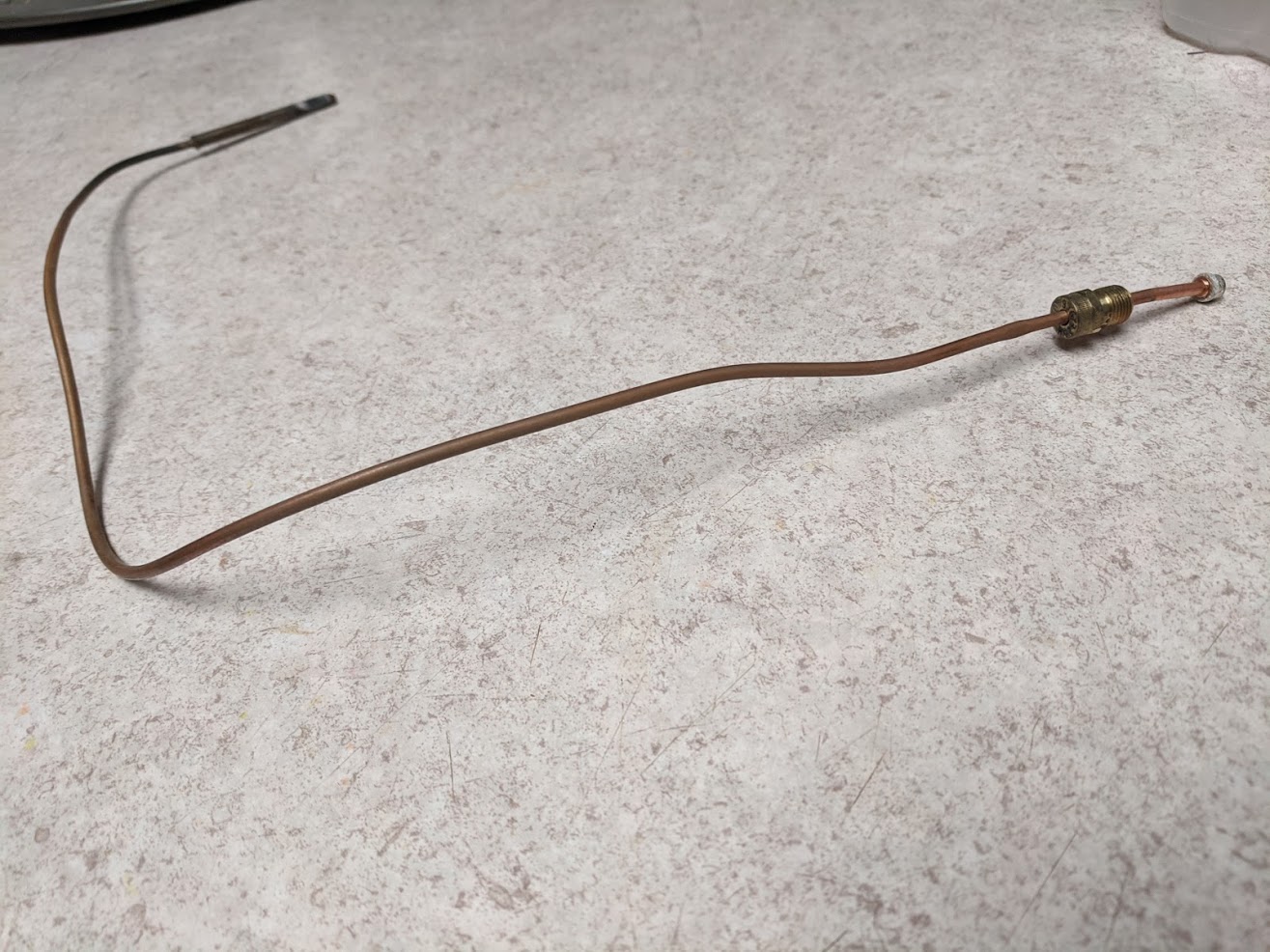
    After a quick stop to Home Depot and some help from the Ron Swanson-esque employee, I picked up the $12 thermocouple that I was hoping would solve all of my problems. After taking care to turn off and disconnect the gas from the heater, I followed some simple instructions from the #1 youtube video on replacing a thermocouple. Roughly 15 minutes later I had the water heater up and running and had to crack a cold one to celebrate being able to take hot showers again after 3 days of freezing ones.

    A month later and everything is still running smoothly, piping hot water and more money in my bank account. 

    Moral of the Story – Don’t get blinded by the frustration caused a problem. Stop and look for a solution. Who knows, It could save you time and money as well as give you an immense feeling of accomplishment by being a problem solver. 

    KEEP STACKIN!

  • What Should I Be Teaching My Kids About Money?

    What Should I Be Teaching My Kids About Money?

    Money is definitely something that you need to be teaching your kids about. The problem is that most people don’t know where to start. Heck, most of us here are teachers. We teach for a living, but we don’t know what or how to teach our children about money.

    The sad fact is that less than half of parents in America talk with their kids about saving and investing for retirement. Unfortunately, too many parents are themselves uneducated when it comes to managing their personal finances. This whole blog is designed to give you enough background knowledge and confidence to take charge of your own finances so that you can pass this knowledge on to other teachers, but more importantly, your own children.

    So where do I start?

    The Basics

    The first conversations about money with your child should focus on what money is, how you earn it, and where it goes. Start with talking to them about your check and how you earned that money. It’s very important that your child understands that the money you earn comes from you giving your time to your employer. It isn’t just “given”. After they see your paycheck, they will probably think that you are rich! The next step is to explain to them where the money goes. This money allows them to have a place to live, lights, food, etc… Explain to them that all of these items need to fit in your budget. A budget is an important part that many people skip and even fewer follow. They need to understand that without a budget, you can’t move into the next step of financial literacy.

    Savings

    Now that your child understands the basics. You can dive deeper into budgeting with them and show them that you should NOT be spending every dollar you earn. Start with a simple idea of a savings account. This is an important step for children. We live in an instant gratification society where people get what they want when they want it. Kids must learn the concept of delayed gratification and teaching this at a young age is paramount. Try to keep it very simple. Have them think of a reasonably priced item that they really want. Now it is up to them to save enough money to buy it. If your child is 8 or older, you could give them a small allowance for doing chores around the house. This is a golden opportunity for them to learn the concept of work for pay. Just like if mommy and daddy don’t go to their job, if you don’t do your chores, you don’t get your allowance. An important step of this is to make sure that you give them the money that they’ve earned. They need to have the ability to spend it when you go places. They need to see all of the temptations in everyday life. We’ve all made impulse purchases before. Your child needs to see that there are going to be things out there in the real world that are going to try and “persuade” you to give up your hard earned money. Whenever your child wants to spend on something that isn’t their “goal”, remind them of what they really want to get, but don’t stop them. If they do decide to spend on something else, keep talking up that “goal” that they have to create a little buyer’s remorse. They need to feel that at a young age. Better to feel some buyer’s remorse now on a $10 toy than 20 years from now on a $20,000 one! Once they’ve learned that lesson, it’s time to move on to the next step.

    Investing

    Now the real fun begins. Remember when you talked with your child that the way you earn money is by working? Now they need to learn that real wealth is made when your money makes money for you! To me, the best way to teach this lesson is to actually open an investing account for your child. I believe that a Roth IRA account is the best vehicle to do this. We talked about Roth IRA’s in this post. A Roth is a great choice because the money grows tax free and is NOT taxed when money is withdrawn. Your child can also withdraw any principal invested at any age. The con is that they may NOT withdraw any growth on the money until they are age 59.5. This investment also gives you a chance to talk with your child about retirement. Wouldn’t we all like to retire at age 59.5 with enough money to live our best life? Starting a Roth at an early age will allow your child to do that. Now this is the ultimate in delayed gratification! One caveat with a Roth is that your child can ONLY invest $6,000 or what they claim in earned income during a calendar year, so your child will need to have a documented job to invest in a Roth. Sorry, their allowance doesn’t count. Oh, your child has a mowing “business” that they are paid to mow your yard and a neighbors. Hmm. We may have something. Consult your personal CPA before committing to that. The Professor is NOT a certified CPA. 

    Conclusion

    Every parent wants their child to have a great life. Teaching them about money at an early age is a vital role for you as a parent. As a teacher, you KNOW that your children are NOT being taught these types of lessons in school. Ironically, high schools and colleges will teach students how to manage money in a business, but not your own personal finances! So, take the steps necessary to put your child on the right path here in Money 2020! Nobody will care about THEIR money more than THEM!

    Keep Stackin!

  • 5 ways to grow your net worth in 2020

    5 ways to grow your net worth in 2020

    In 2019 I was able to increase my net worth by $32,000 but only took home roughly $40k from my paychecks… How is this possible? It’s actually a lot simpler than you think. There are a few basic steps that we can all take in the new year to grow that net worth number. It’s really the only number that I am constantly paying attention to as a metric for my personal wealth. 

    Step 1 – Tracking your net worth. I like the app Personal Capital to track my accounts and every day expenses. My favorite feature of the app is the home screen that tracks your net worth for you! Looking at it everyday makes you aware of how much you have and plays a part in gamifying the process for you. Currently, I am down to just recording it annually. I started by recording every month in order to make sure I continued growth. Being aware of what this number is and the impact transactions have on it, has to be your first step in financial independence. Very few people out there will innately acquire wealth. We must be aware of where we stand in order to grow. 

    Step 2 – Owning a house. This one should have a big asterisk beside it. Owning versus renting is not a one size fits all decision. There are a lot of things to consider about your own situation but for me it looks to be a profitable experience. My mortgage payment is half of what the average rent is in my city. I bought an affordable fixer-upper in a popular part of town. As I slowly renovate rooms to modernize the place the property’s value is holding steady and my monthly payments are slowly going converting into equity. Whenever it is time to sell, I’ll likely make some money off of that. Whereas with renting, I can guarantee that I won’t make any money. One thing that is nice about Personal Capital is it automatically pulls your houses estimate from Zillow to keep tracking this for you. I’m able to follow the ebbs and flows of the market, and it gives me a very rough idea of what my property should be worth.

    Step 3 – No New Debt. Of course I say this after saying it can be profitable to buy a house! Housing is one of those expenses that you can expect from life. You’ll always have to pay for a place to live. When I talk about no new debt I talk about avoiding loans and payment plans for items you can live with out. Jewelry, electronics, furniture, renovations, all of these things can have payment plans that turn into debt that hangs over your head and pull that net worth down. Always try to make decisions that limit new debt. Pay outright for small things. These little debts add up much faster than you realize. Try to avoid them and seek alternatives if you can. 

    Step 4 – Pay down your existing debt. We all have debt in some way shape or form. Make sure you are taking active steps to pay yours down. Don’t miss a payment ever and prioritize what debt you have. 

    1st – Pay down any of those credit card debts that are wracking up. 18% interest can suffocate you for years if you are just making the minimal payment

    2nd – Car loans – depending on your interest rate take care of any vehicle or personal loans.

    3rd  – Student Loans – While these interest rates are high, federal student loans do not transfer should anything happen to you. In the event of death student loans are wiped out… Unlike your other debt

    4th – Mortgage – If you have recently purchased a house or refinanced you are probably sitting at a nice interest rate (something below 4%). At that rate I don’t feel that it is essential to throw down loads of money to pay that debt down. Yes it would be nice to own your house outright but at 3% interest you are better off putting that money to work in index funds that are returning at a 6-7% rate!

    Step 5 – Invest. Some of us out there are fantastic at saving money. They are frugal and always save more than they earn. But they never take that next step of putting that money to work for them. It sits stagnantly in a savings accounts at their local bank earning fractions of a percent in interest. This was a viable strategy for your grandparents due to the high savings accounts rates of the past but that time is no more. According to the FDIC, the national average interest rates on savings accounts is at… Wait for it… .09%!!! What a waste! In modern times the purpose of a savings account, if you even have one, should be a rainy day fund. A quick source of money that you can access immediately to cover repair costs on large items on your house or vehicle. A savings account is no longer a great tool to build net worth. Instead you should be putting those dollars to work for you in LOW COST INDEX FUNDS. Check out our resources on them. Challenge yourself to invest incrementally more each year or each quarter or maybe even each month. It is crazy how fast that net worth can snowball!

    Make these steps happen as soon as you can. We are all bad about putting things off thinking there will be a more convenient time later. Make these steps today so that your net worth can start its exponential growing process!

    KEEP STACKIN!

  • Mind YOUR Money!

    Mind YOUR Money!

    Well, you wouldn’t think that we would need to put out a post like this since we are dealing with teachers that are supposedly responsible people, but….. People! Check your pay stubs EVERY time you get paid and check on your accounts at least once per month!

    If you have followed our advice, much of your paycheck is automatically sent to the proper accounts. Everything “should” be correct and getting to the right places. I mean, those are adults working in the business office, aren’t they? They are, but they are also human, so sometimes mistakes do happen.

    The T.A. and I have been dealing with some major issues in our district regarding our paychecks. We are a small district, so our business office consists of one person. Unfortunately, our business manager took a different job in October. Our district hired an agency to handle the finances until the new business manager was hired. Let’s just say that things haven’t transitioned very well. Pay amounts were wrong for certain extra-curricular activities, insurance premiums were not deducted, and 403b, HSA, and other various monies were never sent to the proper accounts. At first, we thought it was just due to the transition. It was, but it happened a second pay period and then even into a third! The T.A. and I contacted our superintendent after the first pay period. By the second pay period, we were bugged, but we stayed understanding. I mean, nobody wins if we go in guns blazing, but we had to make sure the right people were aware of what was going on.

    The part that really opened our eyes was that many of our colleagues had no idea that their money wasn’t getting into their accounts! As long as the money in their checking account made it, they didn’t seem to mind that the rest didn’t make it! We talked and encouraged them to check their accounts and make sure that their money was there and accurate. It wasn’t until we informed them that their insurance premiums might not have been paid that they REALLY perked up. It was as if their 403b money didn’t matter. UGH!!!

    Now, there was no nefarious activity behind our problems. There was nobody misusing funds or sending them to the wrong place. Apparently codes and passwords needed to be updated with the new company we had hired, but if nobody would have pointed it out, that money might still not be in our accounts earning interest and dividends. Even worse, people might have lapsed on their insurance!

    Teachers, we can do better! We have to pay attention to and care about our money. Nobody else is going to care about it for us. If they do, they are trying to get their hands on it!

    KEEP STACKIN!

  • Is Disney+ Worth It?

    Is Disney+ Worth It?

    How the latest from the entertainment giant has me questioning how many streaming services are too many?

    Tuesday marked the release of the latest streaming service, Disney+. Disney became just the latest entertainment company to release a service emulated after Netflix’s staple model. Being a huge Star Wars and Marvel nerd I found that trying out Disney+ was a must for me and.. HOLY COW IT IS NEAT! I spent the first hour perusing all of the titles available. After the trip down memory lane perusing old titles that I had completely forgotten about or didn’t know Disney owned, I settled into the 

    After cranking out the first episode of The Mandalorian, I started to think about exactly how many streaming services I currently pay for each month. I have always considered myself frugal when it came to my entertainment needs. Long ago I cut the cord from cable and relied solely on Netflix and Youtube, undoubtedly a cheaper alternative. But as the years have passed and I have continued to add streaming services to my monthly bill it has come time to question exactly how many do I need and what am I willing to spend each month for my at home evening entertainment. THIS CALLS FOR A SPREADSHEET!

    A Look at the 2019 Streaming Services

    Here’s a quick side by side look at today’s most popular streaming services available to purchase. Many of these are viewed as alternatives to cable. Each have their pros and cons.

    Streaming Service

    Cheapest Price

    Deluxe Price

    Typical Annual Price

    Pros

    Cons

    $9

    $16

    $156 / year

    Movies and Original Content. Ad Free

    Waiting for content. Losing content

    $5.99

    $50.99

    $480 / year for ad free live TV

    Can play live TV and Sports

    Expensive

    $6.99

    $6.99

    $60 / year (special deal)

    Ad Free. Original Content

    Limited to Disney Owned Products

    $15

    $15

    $180 / year

    Great Original Content and Movies

    Expensive for what you get

    $12.99

    $12.99

    $119 / year

    Part of the Prime Delivery

    Content isn’t the greatest

    $25

    $40

    $300 / year

    Live TV

    Limited Channels

    $5.99

    $10.99

    $72 / year

    Live TV and Sports

    Not a lot of extra content

    $12

    $12

    $144 / year

    Ad Free. Download videos

    Music is separate. Average content

    $5

    $5

    $60 / year

    Can bundle with Disney and Hulu

    Not great extras

    $5

    $5

    $50 / year

    Cheap

    Does is have anything?

    Totals…

    $103

    $175

    $1621 / year

    Lifetimes worth of content

    That’s a hefty price point

                            So as you can see, having all the world’s content and your fingertips is far from free. But where do you draw the line?

    Take a look at all of those available options above. It’s important to prioritize what streaming services serve you best. At an additional $100 per month for the basic level subscriptions to these streaming services it would almost be cheaper to get a basic cable plan. These pricing also have a way in creeping up from year to year increasing your annual expenses. And this does not take into consideration the opportunity cost of these monthly plans. Setting aside that money in the proper index funds means it is growing at 6-7% and generating dividends. So in reality, spending $1,000 per year on streaming services adds up. I enjoy Netflix as much as the next person but I’ve had that account for 8 years now, that’s roughly $1,200 I’ve paid for one streaming service!  

    Personally I don’t seem myself getting rid of every single streaming service I am currently subscribed to. But the addition of Disney+ does make me stop and consider what I want to purchase moving forward. One way I’ve been able to keep cost down is sharing the service and pricing with other family members. Cutting your costs in half or in a third makes it easier to justify the spending. Still it’s important to curb some of that spending. Do I really want to pay $15 a month for HBO now that game of thrones is over? Is watching march madness really worth the $6 a month for CBS all access. These are the frugality questions that we should be asking ourselves in all aspects in our lives not just entertainment.

    Ultimately you need to decide what brings you joy and what that amount of joy is worth to you. I’ll definitely be keeping Disney+ for the year but might reconsider in the future. Remember when deciding what to pay each month you are taking away from the pot of money that you could be saving for investments or for other aspects of life that bring you joy. For me paying hundreds per year to stream certain TV shows at night might just not be worth it. 

    The choice is yours, prioritize your spending and as always

    KEEP STACKIN!

  • Debt is a four letter word!

    Debt is a four letter word!

    The T.A. and I were talking the other day about the fact that we have talked a lot about what to do once you have money, but many people live paycheck to paycheck. It’s time we talk about the biggest problem facing Americans today…. Debt….

    One of the first posts that I read when I started down this path was the classic Mr. Money Mustache post on debt being an emergency. I highly suggest reading that post as Mr. Money has a way with words that I still am learning. He is the man!

    When it comes to debt, Americans are in love! According to a 2018 study by Nerdwallet, the average American household has $6,829 of revolving balances each month. Add in your monthly mortgage/rent, car payment, student loan payment, etc… It’s no wonder that your average American looks at you like you have a third arm when you ask them how much they are saving each month for retirement.

    If debt is so bad, then why do so many people put themselves in this situation? Most people don’t venture out to bury themselves with debt. It’s more like a death through a thousand paper cuts type of situation. They get that first job and see how much money they are going to be making. They decide to purchase a house to start their family. So starts their life of mortgage payments. They realize they need a new/newer vehicle because they “deserve” it. So they take out a vehicle loan with a monthly payment they can afford. They pick up a few things to go into their house to make it look nicer. They go out to eat a few times a month. All of these small charges go on their credit card because they will have enough money at the end of the month when they get paid. Uh oh, the water heater goes out. $1,200. Damn house. They pay that bill because they have to have hot water, but that means they don’t have enough to pay that $500 credit card bill. It’s ok they think because the minimum payment is only $25. They make that minimum payment and carry over that $475 plus another $15 for a total of $490. Here’s where it all starts to go wrong. They don’t change their habits. They rack up another $500 in credit card charges the next month and now have a $990 bill staring them down. Get the picture?!?

    So how do we handle this debt problem? Well, if you’re like most Americans, you ignore it and try not to think about it. You DEFINITELY don’t talk about it. The typical American sticks their head in the sand and hopes the debt will go away. THAT WON’T WORK! So what do they do? They run out and get a consolidation loan or even a home equity loan and pay all them cards off! Problem solved! Wrong. Wrong.

    Because here’s what happens. All of their debt is gone, but their habits don’t change. They continue to put those little charges on their credit cards and now, not only do they have that new loan payment, but their credit card debt starts to climb again. It’s an all-too common theme in America. People NOT taking responsibility.

    So professor, what’s the answer then? How do I fix this situation? 

    First, you must face up to your debt and NOT ignore it! Immediately stop spending money on those credit cards. Put every penny you can spare into paying them off. You can start on the card with the smallest balance or the highest interest rate. Hard-core budgeters will tell you it has to be the highest interest rate card, but you need to do whatever works for you! It won’t be easy. It will probably suck, but YOU put yourself into this situation and only YOU can get yourself out.

    The key is that you MUST take action.

    KEEP STACKIN!

  • Am I an Idiot for Buying a New Car?

    Am I an Idiot for Buying a New Car?

    Sort of, but not FULL IDIOT

    For many of us, car shopping is one of the great frustrations in life. You spend weeks if not months researching and searching for options only to either spend too much money or end up with something that is unreliable. The finance community has all kinds of feelings and opinions on purchasing vehicles. I don’t know that there is a one size fits all model for your car shopping experience, but there are definitely some bad car-buying decisions that can be made. The following is a walk-through of my decision-making process resulting in my ultimate purchase of a (gasp) brand new vehicle.

    Much of the F.I. community would be appalled at my decision to buy a brand new vehicle. For the typical person, it might not have been the best decision to fit their lifestyle but after my debate and research, I do feel that it was the best decision that fits my lifestyle.

    The old reliable Toyota Camry

    Transportation Priorities

    1. Fuel-Efficient
    2. Reliable
    3. Storage Space
    4. Okay for winter conditions
    5. Longevity

    Fuel Efficiency – My number 1 priority for a vehicle is its fuel efficiency. I want to be as environmentally conscious as I can as well as saving money on the monthly gas bill. I commute 70 miles a day and travel a lot in the summer and on weekends. Having a gas guzzler just doesn’t make sense to me. This rules out any kind of truck and really anything with 6 cylinders in general. My target while searching was 30 MPG.

    Reliability – I need my vehicle on a daily basis and I don’t have a realistic backup. Additionally, I have very little knowledge when it comes to mechanical workings under the hood. I can do the basic maintenance myself. After that to fix something I would need a solid youtube tutorial plus a lot of free time, which is something I don’t have during the school year. I am envious of those of you with that skill and are able to drive around ridiculously old cars that are cheap because you have the skill set to keep them functioning. However, I do not currently have that ability so this essentially ruled out any of those ultra-cheap and old cars.

    Storage Space – I have spent the last decade of my life driving the hand-me-down family sedan. I made the decision that I would like to have some more potential for storage space. Once again I spend my summers travelling in my vehicle. It would be nice to not have to fill it up to the brim ever road trip I take. Likewise, I enjoy my outdoors activity so a more accesible backend is what I was looking for. Essentially this narrowed the search to vehicles with a hatchback.

    Snowy Conditions – Living in the North does bring about its limitations. Like I said I drove the family sedan fine in the winter for a decade. However, I had to always be conscious about snowfall and storms and it is nerve-wracking driving a 2-wheel drive vehicle on snowpacked roads. Had I ever had an accident? No. Was I ever stressed driving? Yes. So for this, I was really hoping to get something that had 4 wheel drive. It was my last priority but it was definitely on my wish list. It also made me hesitant to buy an electric vehicle. Last year we had several days below the -20 degree mark and I park outside. Current battery technology is astounding but I did not have faith of that battery holding up the same 10 years from now.

    Longevity – I am not a car guy. I don’t like constantly searching for cars. Hence my being okay driving a hand-me-down Camry for 10 years. In my search I was hoping to find something that I could get several years out of. I put over 20,000 miles a year on my vehicles and I wanted something that I could drive for at least 5 years. In my mind this ruled out many vehicles that were well over that 100,000 mile mark. Yes there are brands with great reputations for running well beyond 200,000 miles but there are also brands that have the habit of wearing down and starting to be problematic once they get over 150,000.

    Before all of the hardcore frugality types start tearing some things apart I would like to make it clear that up until this point I reached 270,000 miles on my slowly decaying toyota camry. It’s missing 2 door handles, the AC only works on certain settings and it doesn’t like that cold weather. I’ve reached the point where I have lost confidence in being able to drive it across the country in the summertime. Also, For the extremist out there thinking that why am I wasting my time driving to work rather than get a closer job and bike or walk for a commute saving thousands I will say you are correct but that isn’t what fits my lifestyle right now. I enjoy the place that I work at and I enjoy the city I live in. To me, that is worth the extra money every month.

    And the winner is…

    The 2018 Subaru Forester. Cheaper than the CRV Rav 4 with similar fuel efficiency and reliability. More reliable and better-predicted longevity than the Ford or Chevy equivalent.

    The reason I ultimately chose the newer vehicle boiled down to 2 things. The Vehicle had 0 miles on it and was under warranty for the first 60,000. and I was able to get 0% financing. To me this was big. 0% financing meant that I would pay ZERO INTEREST for my car. At that point, I decided that I would get a new car. The only thing to decide was how much I wanted to put down.

    I determined the amount I could put down based on how much I could pay each month. I felt comfortable with a $500 monthly payment for 4 years. To achieve this I put $4,500 down. Technically I would have been better off putting that into an account to gain interest but that’s not how my habits work. I was better off putting that money down on the car and keeping that $500 a month car payment.

    HOW ON EARTH DID I JUSTIFY BUYING A NEW CAR? It’s a terrible investment right? depreciates as soon as you leave the lot. All of this is correct. I justify the brand new purchase with the idea of how I drive cars. My plan is that I won’t be looking for a new car again until the 2030’s. If I can get 12 years out of the vehicle, all of a sudden that $500 a month payments turns into $165 a month. Much more reasonable and definitely something to consider when car shopping. To me it’s worth the bad investment to not have to worry about my daily ride to and from work. Ultimately I would like to have a much shorter commute, allowing for me to have a cheaper car that barely gets driven but for today that’s not what is most practical.

    A year later…

    Well, it’s been a year since I bought the Subaru Forester and I have to say I enjoy it a lot. Some things that I have noticed…

    1. I put a lot of miles on vehicles…
    2. 4 wheel drive is a nice perk but it doesn’t mean you don’t have to be careful driving in ice and snow.
    3. Cars made in 2018 definitely ride differently than cars made in 2001.
    4. Extra cargo space has made traveling more convenient and less stressful.
    5. I’m averaging 33.0 miles per gallon since purchasing the vehicle.
    6. losing out at $500 a month that I could be investing hurts. But it is manageable knowing that it is a temporary cost.

    So overall a positive buying experience. And like I said, while it as not been fun paying $500 a month for a car payment I know now that I can do it and still have enough left over to invest. Meaning once I pay off the vehicle that will free up another $500 a month to invest.

    I think buying a new car was the right choice for me at the time. It could also be the right choice for you or maybe it’s not. When buying try to take your own bias out of it and create a checklist of your priorities, just like I did. Then see what types of car fits your needs the best. Until then,

    KEEP STACKIN!

    I feel less like an idiot now seeing JL Collin’s post!

  • Travel Rewards! Case Study; Chase Sapphire Preferred

    Travel Rewards! Case Study; Chase Sapphire Preferred

    There’s no place like home…. Or is there.

    Some people love to travel the world and see different things. I am not one of those people. I am very much a homebody, but as I get older, I am realizing how much I hate the cold winter weather and want to head somewhere warm. This year I decided that my wife and I are going on a vacation. After looking at our budget, I realized that we would have to blow it up to make a nice vacation work. I knew I would have to find a way to pay for it that was “unconventional”. Hello, travel rewards credit cards!

    If you’ve been reading this blog, you remember my post on the cash-back Discover It card. After that successful venture, I started doing more research into using credit cards for the travel rewards. I ended up choosing the Chase Sapphire Preferred card for it’s excellent bonus. After spending $4,000 in the first 4 months, I would be eligible to receive 60,000 bonus points. This was easy enough as I had been paying our monthly bills on the Discover It card for the previous year. I just changed those payments over to the Chase Sapphire Preferred card. We easily met that minimum spend in the first 3 months, and BOOM, 60,000 bonus points were added to our account. At that point, I started paying our monthly payments on our Chase Freedom Unlimited card because we earn 1.5 pts for every dollar we spend. Then I transfer those points to my Chase Sapphire Preferred card because those points are worth 1.25 cents/point when redeemed for travel through the Chase portal! Double-hacking!!

    An added bonus was you can get 15,000 point for every friend you refer that qualifies for a card. So being the great friend that I am, I referred the T.A. Once he qualified, another 15,000 points were added to my card. I’m such a nice guy!

    So after paying our monthly bills over the last 8 months on the Chase cards, we ended up with over 94,000 points! 

    Monthly spending points – 19,512

    Referral – 15,000

    Bonus Points – 60,000

    Total points – 94,512

    After accumulating these points, we decided that we wanted to go to Cabo. We are lucky in the fact that my parents have a timeshare, and we were able to get a FREE 6 night stay at a resort there through my parents’ point portal. I looked into flights and was able to get round-trip flights to Cabo for 91,163 points! FREE FLIGHT!

    The Professor taking it all in.

    Granted, the die-hard travel hackers out there could have done this more efficiently and for better “value”, but for my first time, I’m pretty happy with the results! Another example of making the credit card companies work for you! And hey if you decide you’d like to try the Chase Sapphire Preferred card. Here’s a referral link that you can use.

    KEEP STACKIN!

  • How to Avoid the Sneak of Lifestyle Inflation

    How to Avoid the Sneak of Lifestyle Inflation

    “Be careful on what size of house you buy because you’ll end up buying enough crap to fill it” – Papa T.A.

    In the fall of 2015 I purchased my first house. I had been bouncing around to different apartments and rental houses for the previous 7 years, all the while paying someone else to live in their place while they generated some nice passive income from me. Finally, I decided enough was enough and purchased my first home. A small, 2 – bedroom house that was over 100 years old and in need of several cans of fresh paint. As I was looking at houses I remember my father, a life-long frugal man, comment, “Be careful on what size of house you buy, because you’ll end up buying enough crap to fill it.” Being in my 20’s and used to the annual purge that comes from switching apartments I thought there was no way I would ever fill an entire garage, 2 bedrooms, a basement and all of the storage that came with it. Fast forward to 2019 and low and behold I have managed to fill my small 2 bedroom house with crap.

    While many human beings do this same thing with their own homes I think it is far more dramatic with our Paychecks. Think back to a time when you first started working. Go look at those old paystubs and see what you were able to live off of when you first took that teaching job. How many started below $40k annually? How many below $30k? Yikes. Yet we, for the most part, were able to pay bills, enjoy life, take vacations etc. on that smaller amount of money. in 2019, I make considerably more than I did in 2012, On average $500 a check more, Yet I still find myself feeling financially stressed at times. How is this possible? Making $1,000 more per month yet still have financial stress? The answer is Lifestyle Inflation.

    Spending that bonus check before you’ve seen it!

    Lifestyle Inflation is when our monthly expenses slowly creep up to match our added income. Sometimes it shows up as an immediate purchase shortly after or even before an expected raise or bonus comes in. Think, Clark W. Griswold spending his Christmas bonus on a swimming pool before even seeing if he got an bonus or not. Other times it creeps up on you in small extra expenses that consistently add up. For myself, this manifests in craft beers and Amazon purchases. 22-year-old me had no problem walking past the local 6-packs to grab the Buschlight for a fraction of the price, He also would’ve laughed at me for being an amazon prime member because why on Earth would I be buying that many things online, there wasn’t any more room in the apartment! Small expenses like this continue to add up until you hit that stress point again and you’re right back to where you started financially; stressed, not saving anything, and assuring yourself that if you just made more money that would be the answer. Well, I have news for you, if you don’t confront the lifestyle creep no amount of income will ever be enough. Case in point – Had a conversation with a friend of mine who is in the private sector. Making well over what a teacher would make. He is fixed on the idea that once he gets his next bonus then he’ll really be able to start paying down his student loans and truly investing. He says that as he makes $80k a year. However, his rent is triple what my mortgage is, he likes his new cars and nice watches etc. So simply getting more money for most of us won’t save us from that financial stress. You need to FIGHT THE LIFESTYLE CREEP!

    So how can we fight this? Auto investing is a great first step. Schedule a transfer to your savings account or your investment account shortly after your payday. For me, it’s the next day. So many time I don’t even see the full amount of that paycheck in my account before a couple of hundred dollars are pulled out and put into an account that I won’t spend down. Another great way is to up your increase to your 403b. This is a pre-tax contribution so there are some additional benefits for choosing this route. It is harder to access this money in a pinch so I tend to only increase my 403 contributions slightly each year. Similarly, you can increase your contributions to your HSA account. Basically, save first, not last. If you choose to look at your account at the end of each month and save whatever is left it’ll always be less than if you were to set an amount to get taken out of to start with. In addition to saving first, you should just be aware of that inflation creeping into your life. As you are online shopping or getting your groceries for the week don’t forget about your frugality just because you got paid yesterday. Evaluate your financial decisions based on the happiness those purchases will provide you. Don’t buy a $250k house just because that’s what your friend did, think about what will make you happy. A big house with a big mortgage payment with all kinds of rooms to start accumulating your own collection of crap. Or a smaller house with a smaller mortgage payment and some money to invest or to travel or to do whatever it is that brings you joy.

    So take some time and look back at those early checks to see what you used to be able to live off of. Figure out how much you want to start auto-saving even if it’s $50 just start. Lastly, look at what you are buying and how much joy that purchase is bringing you and decide for yourself if it is worth it or not.

    Keep Stackin!