Category: Budgeting & Cash Flow

Practical strategies for managing income, eliminating debt, building emergency funds, and creating financial stability on a teacher salary.

  • How to Save for Your Child’s College (Before It’s Too Late)

    How to Save for Your Child’s College (Before It’s Too Late)

    I’ve got two daughters in college right now—and let me be blunt: I didn’t plan for this. I didn’t save early. I didn’t have a college fund. And now? I’m paying for it—literally and emotionally. It’s stressful. It’s expensive. It’s a heavy weight that could have been avoided.

    College is an exciting time for young adults. Don’t cause them stress by not preparing now.

    If you’re a parent and college is still a few years away for your kids, you’ve got a chance to do it differently. Saving for college doesn’t have to be overwhelming, and the payoff—peace of mind, financial stability, and freedom for your kids—is worth every effort.

    In this post, I’ll walk you through why saving early matters, and how you can actually start building a solid college fund today (even if you feel like you’re already behind).


    What Does “Saving for College” Really Mean?

    Saving for college simply means setting aside money regularly, over time, to help pay for your child’s future education costs—whether it’s a 4-year university, a trade school, or community college. With tuition, books, and living expenses continuing to rise, college can easily cost tens (or hundreds) of thousands of dollars per student.

    A little planning now can save a lot of headaches later

    This kind of expense can catch parents off guard. According to the College Board, the average cost of tuition and fees for the 2023–2024 school year was over $10,000 for in-state public colleges and more than $40,000 for private colleges. That’s per year.


    Why It’s So Important to Start Saving Early

    Here’s what I’ve learned the hard way: when you don’t prepare, you borrow. When you borrow, you pay more. Interest adds up fast. And when the bills roll in? It’s not just money you owe—it’s the time and energy you lose worrying about it.

    Starting early gives you options. It lets compound interest work in your favor. It lets you contribute small amounts that grow over time instead of scrambling with big payments later. Most importantly, it gives your kids the gift of choice—without burying them in student loans.

    Give your money time to grow and you will be rewarded

    How to Start Saving for College Today

    1. Set a Realistic Goal

    You don’t need to cover 100% of your child’s college costs. Many families aim to save for about a third of the expected cost. Scholarships, grants, and part-time jobs can help fill the rest. Start by using a college cost calculator to estimate future expenses, then set a monthly savings goal that fits your budget.

    2. Open a 529 College Savings Plan

    This is the gold standard for college savings. A 529 plan is a tax-advantaged account designed specifically for education expenses. Money grows tax-free and withdrawals are tax-free when used for qualifying education expenses like tuition, books, and room and board.

    You can set one up through most investment firms or directly through your state’s plan. Many plans even offer automatic deposits to make saving effortless.

    3. Automate Your Contributions

    The easiest way to build a habit is to automate it. Set up a recurring monthly transfer from your checking account to your 529 or savings account. Even $25 or $50 a month adds up over time—and you won’t have to think about it.

    4. Ask Family to Contribute

    Instead of more toys or gadgets during birthdays and holidays, ask grandparents or relatives to contribute to your child’s college fund. Many 529 plans let others make one-time or recurring contributions online, which makes it easy for loved ones to pitch in.

    5. Review and Adjust Each Year

    Life changes. So should your savings strategy. Each year, revisit your goals, check your account balance, and adjust your contributions if you can. If you get a raise or bonus, increase your savings rate. You’ll thank yourself later.


    Tips to Stay on Track (Even When Life Gets in the Way)

    • Start small: Don’t wait until you can save hundreds each month. Begin with what you can, even if it’s $10 a week.
    • Use windfalls wisely: Tax refunds, bonuses, or gifts can make a big dent in your savings goal if you resist the urge to spend.
    • Keep the end in mind: Picture your child receiving that college acceptance letter without fear of debt. That vision can keep you motivated.

    Final Thoughts

    I didn’t save, and now I’m hustling to make tuition payments, navigating student loans, and watching my kids stress about costs. It’s not a great feeling. But it’s one you can avoid.

    Start saving now—no matter how little. Give your future self (and your kids) the advantage of preparation. You’ll be building more than just a college fund. You’ll be building freedom, flexibility, and financial peace. So create your plan, work your plan, and along the way, KEEP STACKIN!


    All your saving now will pay off in the end!
  • Why You Need an Emergency Fund as a Teacher!

    What Is It?

    pexels-photo-3483098.jpeg
    Photo by John Guccione www.advergroup.com on Pexels.com

    Why Teachers Need One

    Don’t let a health emergency ruin your financial future

    Building an Emergency Fund

    Peace of Mind

    The Professor taking it all in.

    Practical Tips for Maintaining an Emergency Fund

    Real-Life Scenarios Where an Emergency Fund Proves Crucial

    Conclusion

    Leave a Reply

  • 5 Creative Ways for New Teachers to Make Extra Money (Without Losing Your Sanity)

    5 Creative Ways for New Teachers to Make Extra Money (Without Losing Your Sanity)

    Ah, the joys of being a new teacher. The smell of freshly sharpened pencils, the sound of 25 little angels giggling in unison, and the ever-present mystery of where all your red pens went. But let’s be real, the modest paycheck that comes with the job can make you feel like you’re moonlighting as a professional ramen noodle chef. Fear not, fellow educators! Here are five fun and creative ways to earn extra money without straying too far from your teacher roots.

    1. Tutoring Services: Sharing Your Brainpower

    So you’ve spent years becoming a master of calculus or a whiz at grammar. Why not put that brainpower to extra use? Offering tutoring services is a no-brainer (pun intended).

    tutoring allows you to use your current skill set

    Why It’s Awesome:

    • Flexible Hours: You get to decide when you want to work. No more 7 AM alarm clocks unless you’re into that kind of torture.
    • Instant Expert Status: Students and parents will think you’re a genius. And let’s be honest, you are.
    • Extra Connections: You might end up as the town’s beloved math wizard or grammar guru. Fame at last!

    Tips for Success:

    • Local Ads: Channel your inner 90s kid and post flyers at community centers, libraries, and coffee shops. You’ll feel just like you’re promoting your garage band.
    • Online Platforms: Websites like Wyzant and Tutor.com can help you reach a wider audience without ever leaving your couch.

    2. Selling Educational Resources: The Etsy of Education

    Remember those brilliant lesson plans, worksheets, and activities you spent hours crafting? Well, it’s time to let them shine in the spotlight and make you some money on the side.

    Why It’s Awesome:

    • Passive Income: You do the work once, and then just watch the dollars (okay, maybe cents) roll in.
    • Creative Outlet: Unleash your inner Picasso on those PowerPoints and worksheets.
    • Helping Others: Sharing your resources with other teachers makes you a hero in the teaching community.

    Tips for Success:

    • Join the Party: Sign up on Teachers Pay Teachers, Etsy, or Gumroad. It’s like a giant swap meet for educational resources.
    • Show Off: Use social media to flaunt your creations. Don’t be shy – humblebragging is encouraged here.

    selling your hard work online takes time up front, but then can be a steady income stream in perpetuity.

    3. Online Teaching and Course Creation: Your Ticket to Internet Fame

    Why limit your teaching brilliance to the four walls of your classroom? The internet is a vast, untamed wilderness waiting for your educational expertise.

    Why It’s Awesome:

    • Global Reach: Teach students from Timbuktu to Toronto.
    • Flexible Delivery: Live sessions, recorded lessons, interactive activities – the choice is yours.
    • Subject Variety: Teach whatever tickles your fancy. Always wanted to run a course on the history of memes? Now you can.

    Tips for Success:

    • Pick a Platform: Sites like Udemy, Teachable, and Skillshare are your friends. They provide the tools, you bring the talent.
    • Engage Like a Pro: Use quizzes, discussions, and live Q&A sessions to keep your students hooked.

    4. Summer and After-School Programs: Keeping the Fun Going

    Sure, summer vacation is great, but what if you could make money while still having fun? Many schools and organizations run summer and after-school programs and they need rockstar teachers like you.

    Why It’s Awesome:

    • Extra Pay: These gigs pay hourly, meaning more cash in your pocket.
    • Skill Building: Gain experience and new skills that you can brag about in the teachers’ lounge.
    • Balanced Schedule: These opportunities often fit nicely into your teaching schedule without making you feel like a hamster on a wheel.

    after school programs allow your creativity to shine

    Tips for Success:

    • Scout Locally: Check with local schools, community centers, and non-profits for available positions. Who knows, they might be looking for someone exactly like you.
    • Network: Use your connections. Ask colleagues and administrators for leads – someone always knows someone who needs someone.

    5. Freelance Writing and Blogging: Teacher by Day, Wordsmith by Night

    Got a knack for storytelling or a passion for sharing your teaching adventures? Channel your inner Shakespeare (or BuzzFeed writer) and dive into the world of freelance writing and blogging.

    Why It’s Awesome:

    • Variety: Write curriculum, educational articles, or even start your own blog. The world (wide web) is your oyster.
    • Creative Freedom: Let your creativity run wild. Write about anything from your classroom hacks to that time a student brought a chicken to class (true story).
    • Potential Growth: A successful blog, much like this one, can bring in revenue through ads, sponsored posts, and affiliate marketing. Plus, you get to say you’re a professional blogger – how cool is that?

    Tips for Success:

    • Build Your Portfolio: Start with smaller publications or create sample articles. Show the world you’ve got the chops.
    • Join Writing Communities: Connect with other teacher-writers for job opportunities and feedback. You’ll find your tribe and probably some hilarious stories along the way.
    • Be Consistent: Whether it’s freelancing or blogging, regular content is key. It’s like watering a plant – nurture it and watch it grow.

    Conclusion

    Teaching is a labor of love, but that doesn’t mean you have to settle for a ramen-only diet. With these creative side gigs, you can boost your income while staying true to your passion for education. Plus, you might just discover new talents and interests along the way. So go forth, fellow educators, and conquer the world (and your bank account) with your skills and creativity. And if you have any other ideas on ways new teachers can make extra income, please let us know in the comments below! In the meantime, Keep Stackin!

    you don’t have to live on ramen alone!

  • Get Out of Debt Fast Using the Snowball Method!

    Get Out of Debt Fast Using the Snowball Method!

    Debt – The Facts

    Debt is quickly becoming a crisis in America, and not just at the federal level. Statistics show that the average American household carries a credit card balance of $14,241 at an average interest rate of 17.13%. That works out to $2,439 in just interest payments each year! No wonder American households are living paycheck to paycheck and couldn’t handle a $400 emergency bill.

    The Best AND Fastest Way to Get Out

    The best and fastest way to get out of debt is the debt snowball method. This is one of the Dave Ramsey’s baby steps. There are parts of Mr. Ramsey’s methods that I don’t necessarily agree with, but I agree that consumer debt is one of the biggest issues facing the average American. With the debt snowball method, you will erase that debt and get on your way to financial freedom!

    What is “consumer” debt?

    This is a great question. There are many kinds of debt out there. Credit cards, mortgages, student loans, car loans, RV loans, lines of credit, the list goes on and on. When banks look at consumer credit, it is anything not backed by collateral. Your mortgage for example is not considered consumer credit because it is backed with your home as collateral.

    While that is the technical meaning of consumer credit, I would like to make a couple of distinctions in that list. According to the collateral definition, your car loan or RV loan would not be considered consumer credit since they are backed by the vehicle. Here at Teachers Stacking 10s, we view vehicle loans as consumer credit because the assets they back only depreciate. Conversely, while student loans aren’t backed by any physical collateral, they are backed by your education and SHOULD increase your earning potential.

    So, for this article, we are focusing on all debt outside of mortgages and student loans. The nice thing about this though is that you could easily include those if you want.

    How Do People Get Out of Debt?

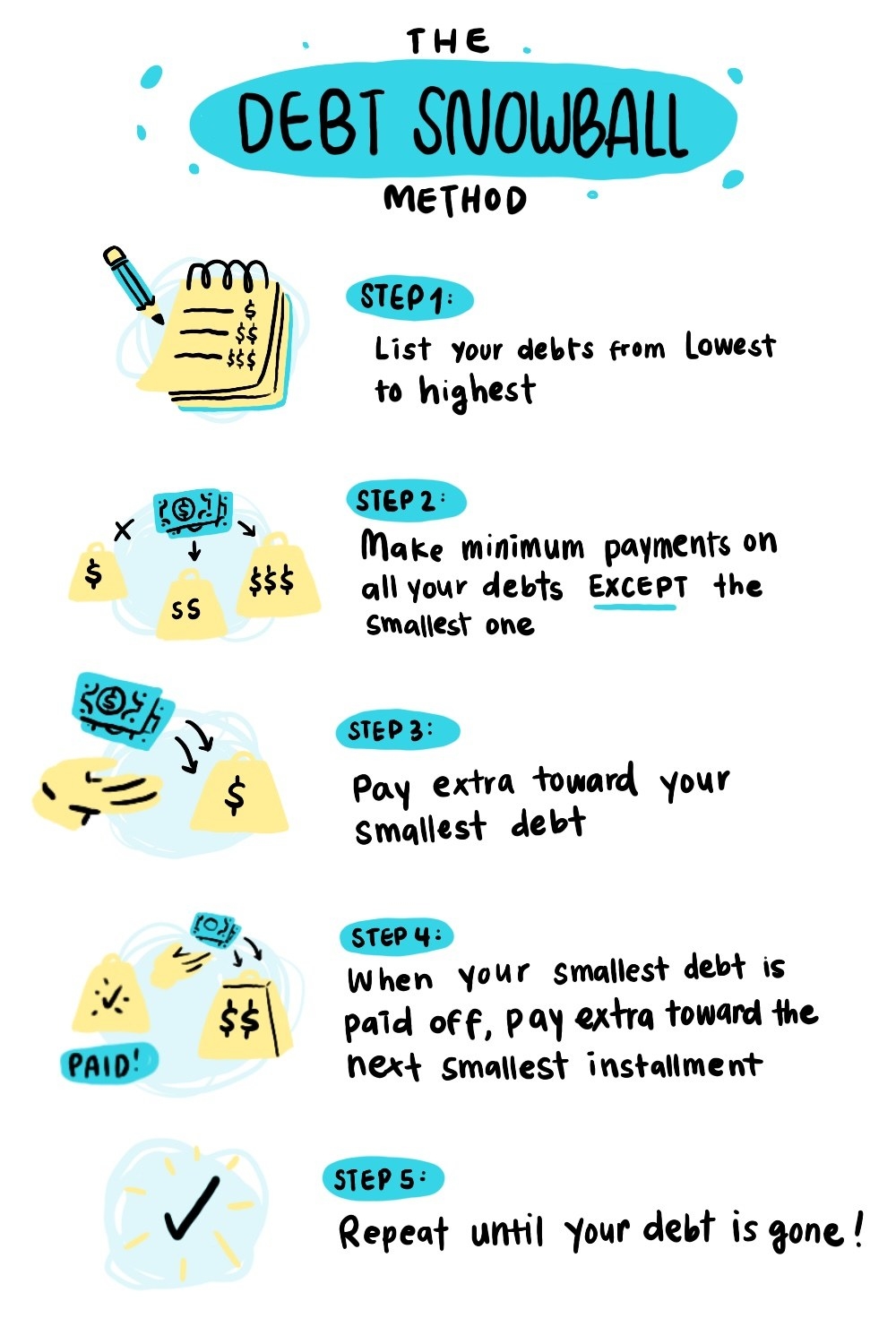
    There are two ways that people usually attempt to pay off debt. The first one is the debt avalanche method. This is when you list out all your debts and put them in order from highest interest rate to lowest interest rate and pay them off from highest to lowest. This sounds like the best method according to math. The problem is that debt isn’t a math problem. It’s a behavioral problem. We need a method that is going to work on that behavior and emotion. That’s where the debt snowball comes in. Instead of ordering the debt according to interest rate, you are going to order the debts from smallest balance to largest balance and begin paying the smallest balance first. Then you make minimum payments to all debts except the smallest balance. You throw as much as you can at that smallest one until it’s paid off. Once it is paid off, you roll everything you were paying on that paid off debt into the next smallest debt. You continue this until you have each debt paid.

    Why is This Method So Effective?

    Some of you reading this are probably swearing at me right now saying, “This method will cost you more interest than using the avalanche method!” And you would be correct, but remember I said debt isn’t a math problem, it’s a behavioral problem. If your highest interest debt is also your largest debt, it might take you months or even years to pay it off. What I want you to have is a win by getting that small balance paid off. You’ll get that emotional charge and are more likely to stick with it than if you just keep paying month after month without seeing any benefit. We are in a highly addictive and I want it now society (probably the reason you are in debt!). You need a plan that is going to give you that win and allow you to see progress towards your goal.

    Why Can’t I Just Roll All My Debts into One Larger Debt?

    This is a TERRIBLE idea, but one that many people subscribe to. There are two reasons that this is a terrible idea. The first reason goes back to that behavioral problem. By rolling everything into one larger debt, you aren’t going to see that win of getting something paid off for a long time, possibly even a VERY long time. I want you to get those wins! The second reason is even more dangerous than the first. By rolling all those debts into a new debt, you are just robbing Peter to pay Paul. Sure, those smaller debts are all taken care of, but you have opened the door to those old bad habits and you could accumulate more debts on those open cards or lines of credit, and you could end up in an even worse position!

    So, get those debts all lined up, get them in order, and start scratching and clawing your way to debt freedom. That will allow you to really get after the fun part, wealth accumulation which will be completely new to many and will allow you to KEEP STACKIN!

    The Problem:

    The average American household is $58,000 in debt.

    The Solution:

  • A Little Research Can Save You THOUSANDS Of Dollars!

    A Little Research Can Save You THOUSANDS Of Dollars!

    The Story

    Last week, my Maytag Neptune dryer started making that hideous, high-pitched squealing sound. I shouldn’t have been surprised. We have owned it for TWENTY-ONE years! It’s been a great dryer and is an extremely well-built machine. I have torn it apart before to fix this same “type” of sound, but this time replacing the support rollers in the back didn’t fix the problem. In fact, it starting making an even worse grinding sound after the repair. I thought this might be the end of the line for this stalwart of our home appliances, but I felt like I couldn’t let it go. I talked to my local appliance store where I get most of my parts and discussed the issue. (If you don’t know a local shop service guy, I STRONGLY recommend that you get to know one and NOT one of the big box stores!) My service guy said that the bearings in the motor were shot and that the only fix is to replace the motor. UGH! Not the news I wanted to hear, so I went home dejected thinking it was time to shell out some major $ to purchase a new dryer.


    As you know, we here at Teachers Stacking 10s are all about finding ways to save money, so I turned to the other source of knowledge when I’m looking for ways to save, the Internet. After some research, I found a video showing how to replace the motor in my exact type of dryer and I realized that it was actually SUPER SIMPLE to do. My local shop didn’t have this part in stock, so I checked a website, Appliance Parts Pros, where I have ordered parts in the past, and it had the exact replacement motor! I was ecstatic. The only problem was that it cost $320. This created a dilemma for me. $320 isn’t a small amount of money, BUT the alternative was to go out and purchase a new dryer. The cheapest models I could find were $600, and I’d be replacing a solidly built machine with something much lower quality. To match the same build and quality, would be $1,200 or MORE! After mulling it for a few hours (I didn’t have time to think on it much more. With two teenage girls in the house, the dryer is in HIGH DEMAND), I went ahead and ordered the replacement motor.


    The new motor arrived after just 2 days and took me about 15 minutes to get installed and put back together. I was nervous, because it was the first motor that I’ve replaced. I went down and turned the breaker on and it didn’t immediately “trip”. Test one passed! I went back to the dryer to give it a “dry” run of running with nothing inside. I reached out to hit the start button and closed my eyes. Click! The dryer kicked on and was quieter than it had been in years! Test two passed. I put in a load of clothes to dry and still quiet as a mouse. $300+ saved!!

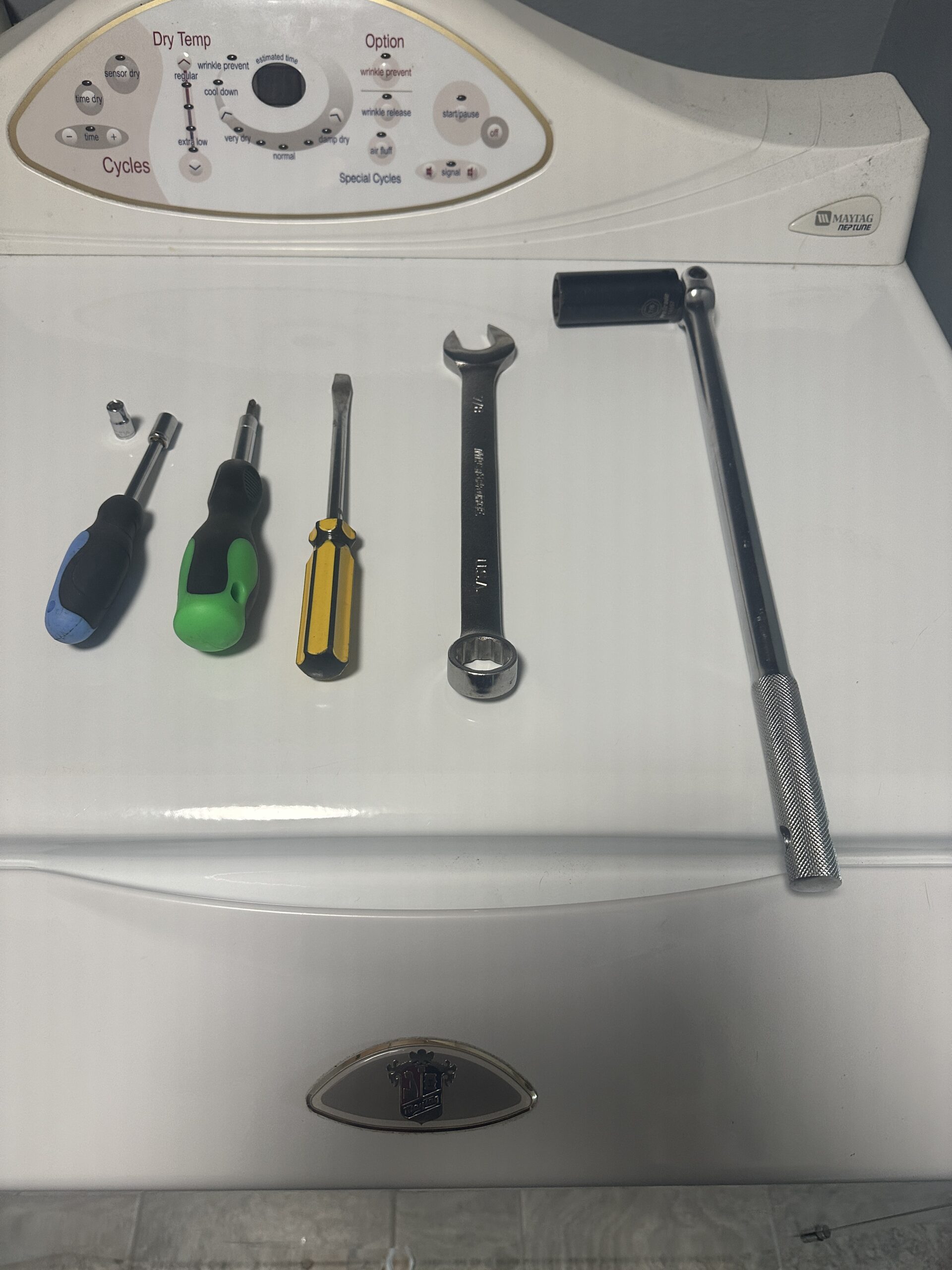
    Many of you might be saying to yourself, “But Professor, I’m not handy at all!” And you might be right. Most people would have heard that squealing sound from the dryer and just decided right then and there that they were going to go out the next day and purchase a new dryer. And there are certain repairs that are beyond even the most “handy” of homeowners, BUT the point I want to make is do some research online before you go out and spend big money on appliances that are going to break down in 6-8 years anyways. The tools required to replace this motor? A Phillips and a flathead screwdriver, two nut drivers, a 7/8″ socket and a 7/8″ wrench. That’s it!

    While you were in college, or even now if you’re renting, most appliances are the responsibility of the landlord. When you become the homeowner, these appliances are now YOUR responsibility. They are usually the biggest headache to homeowners because repairs can often require specific skills, tools, or knowledge. But that isn’t always the case. A service call is usually a minimum charge of $100 and that’s before ANY work is even done. Over the last 10 years, I’ve replaced the ignitor in my oven 3 times, fixed my dryer now 2 times, replaced the valves on 2 toilets, and jetted out my sewer lines 4-5 times (that’s a whole different story). Add up the savings on all of these repairs, and it’s in the thousands of dollars!! Even the T.A. has saved money fixing his hot water heater. Does this mean we can do ANY repair? Of course not, certain appliances like a refrigerator have compressors that require special equipment that cost well beyond what it would save a typical homeowner. 


    So before you call for that service tech to come to your house, take a deep breath, do a little research, and see if you can’t save yourself a little money. As always, KEEP STACKIN!
    The Problem:

    Appliances are often the biggest headache for new and long-time homeowners who have never had to repair any of these types of machines.

    The Solution:

    Before you jump the gun and call in an expensive service tech, or, worse yet, go out and buy a new machine, do a little research. In today’s age of YouTube, you can find videos on just about anything. See if it is a problem that you can fix yourself and save some money that you can KEEP STACKIN!
  • Exciting Side Hustle!

    I just wanted to drop a quick post to let everyone know that the side hustle that I mentioned in my last post is close to going live. It is going to go live the first week of March. It has taken a lot of work and will continue to be work going forward, but I’m excited at the possibilities that it presents. Once it’s live and moving forward, I will let everyone know exactly what it is so you can see what I’ve been up to.

    Until then, KEEP STACKIN!
  • Chase Sapphire Preferred 100,000 Bonus Point Offer!

    Chase Sapphire Preferred 100,000 Bonus Point Offer!

    Hello Stackers!

    I wanted to make a short post letting all of our readers know about Chase’s bonus points offer on their Sapphire Preferred card. I reviewed this card from this post back in October of 2019. I had gotten the card to take advantage of the 60,000 bonus points when I spent $4,000 in the first 4 months. Well, now Chase is offering 100,000 bonus points when you spend $4,000 in your first 3 months! This is their biggest offer yet! Those bonus points can be used through their Chase Rewards site that lets you spend on a variety of options, but TRAVEL is the best option. Each point on your Sapphire Preferred card is worth 1.5 points in their Chase Rewards portal. This is a huge offer.

    I must remind you though that if you do decide to take the offer that you MUST pay that credit card bill in full each month! Do NOT carry that balance forward or the interest will negate any benefits you get through Chase Rewards. You might not think that you could spend $4,000 in the first 3 months, but look into whether or not you could pay all of your monthly bills through your card. I still pay all of my bills through my Chase cards to accumulate points. I just wish they would give this offer to existing users of the Sapphire Preferred card.

    One final note, the Chase Sapphire card does have a $95/year annual fee. For me, it’s well worth the fee because I take advantage of much more than that in travel every other year. You will have to decide for yourself if this card would be worth it to you. If it seems like it would be worth it, you can apply for the card by clicking this link.  In full transparency, this site will receive a small commission if you use this link to apply for the card, and it would be much appreciated.

    Until next time…

    KEEP STACKIN!
  • Saving Money By Doing My Own Basement Remodel!

    Saving Money By Doing My Own Basement Remodel!

    I feel like I need to start this post off by saying that I know that this won’t be for everyone. I have always been a handy person. I’m not saying this to toot my own horn because much of the work that I did, can be done by most people with a little bit of research. With YouTube, you can learn how to do almost anything. One YouTuber that I got a TON of information from was Basement Finishing Guy. His videos were extremely helpful and gave me tons of insight into how to do things correctly.

    I’m also very lucky that I have access to most of the equipment that I used. Even if you can’t do all of the work that I did, you could definitely choose parts to tackle yourself and save some money.

    This whole project was always something that I always wanted to do, but it took a heavy rainfall last March to push me over the edge. We had gotten some water in the finished side of our basement in the past, but this time it really flooded one corner. If I would have done a little investigating, I would have found that the reason it flooded was because the small window well had filled with water and flooded in through the window. But I was convinced that we had a crack in the cement wall so I just started tearing down the paneling and drywall and framing. Lo and behold, no crack! Well, the carpet still had to come out, so I just went with it. I still wanted to make a larger window in that room and also put a larger window in my daughter’s basement bedroom to make it legal. She’s been in that bedroom for a couple years, and I knew that I would feel more comfortable having a large, legal egress window there, so away I went.

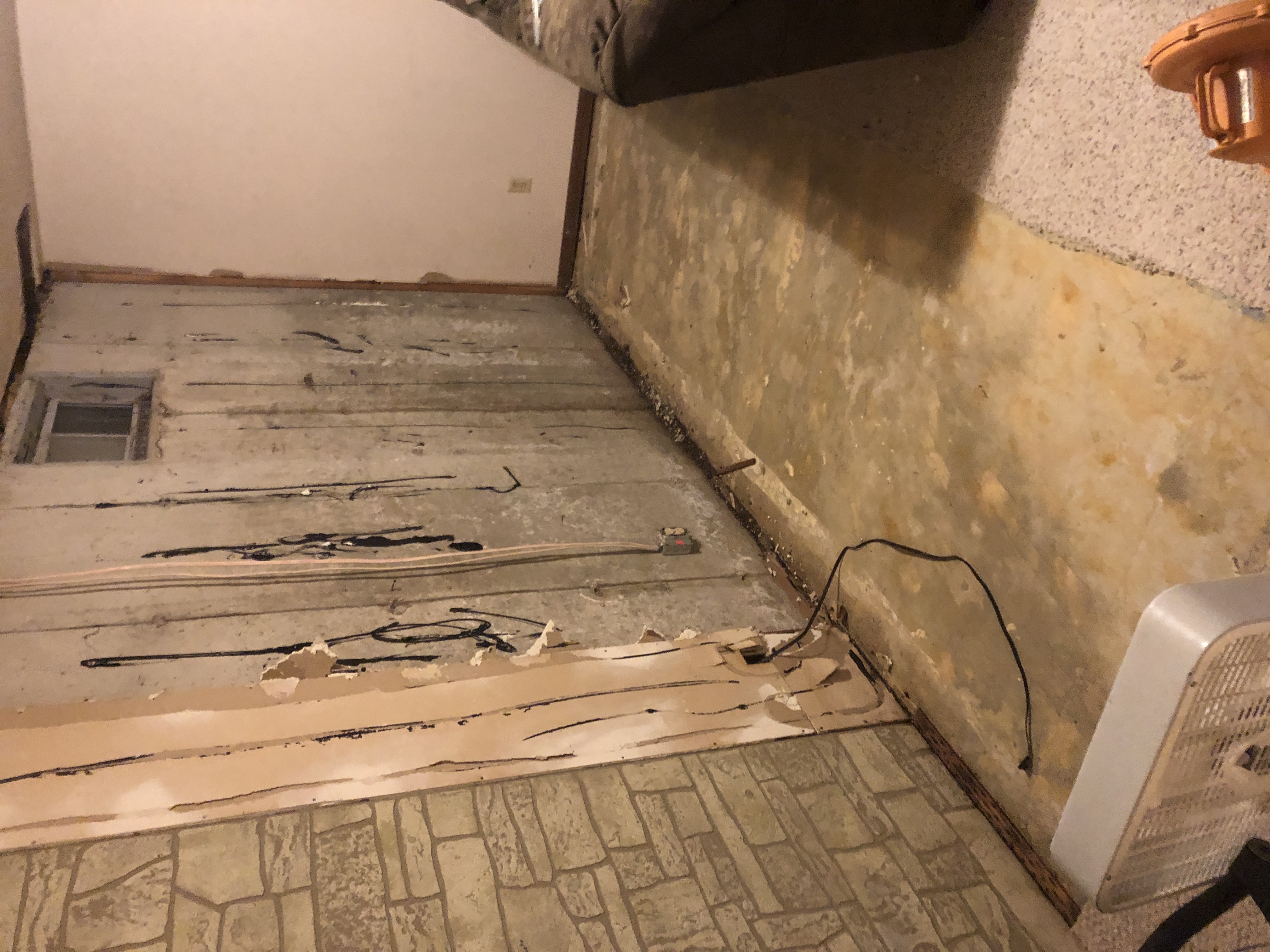
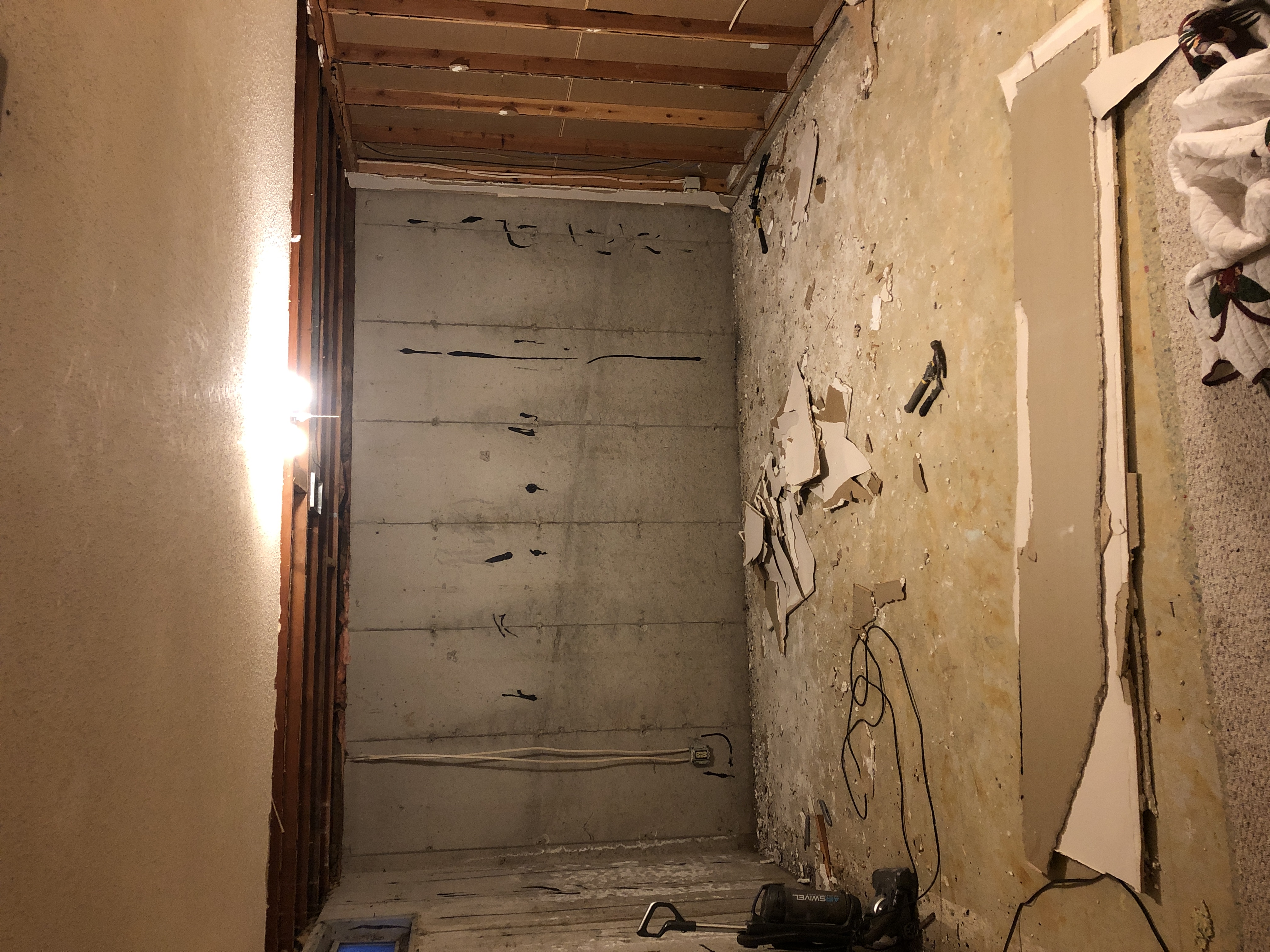
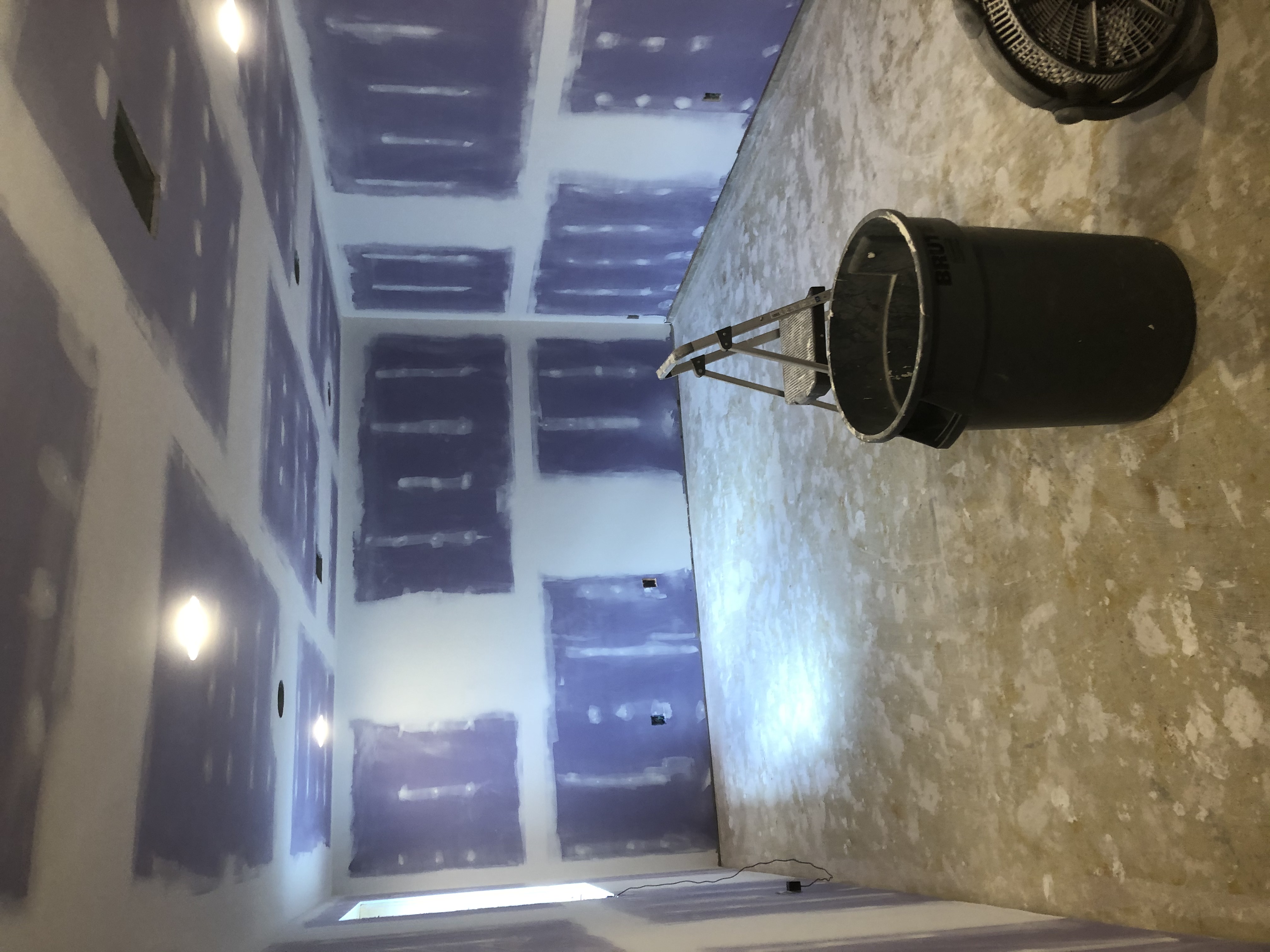
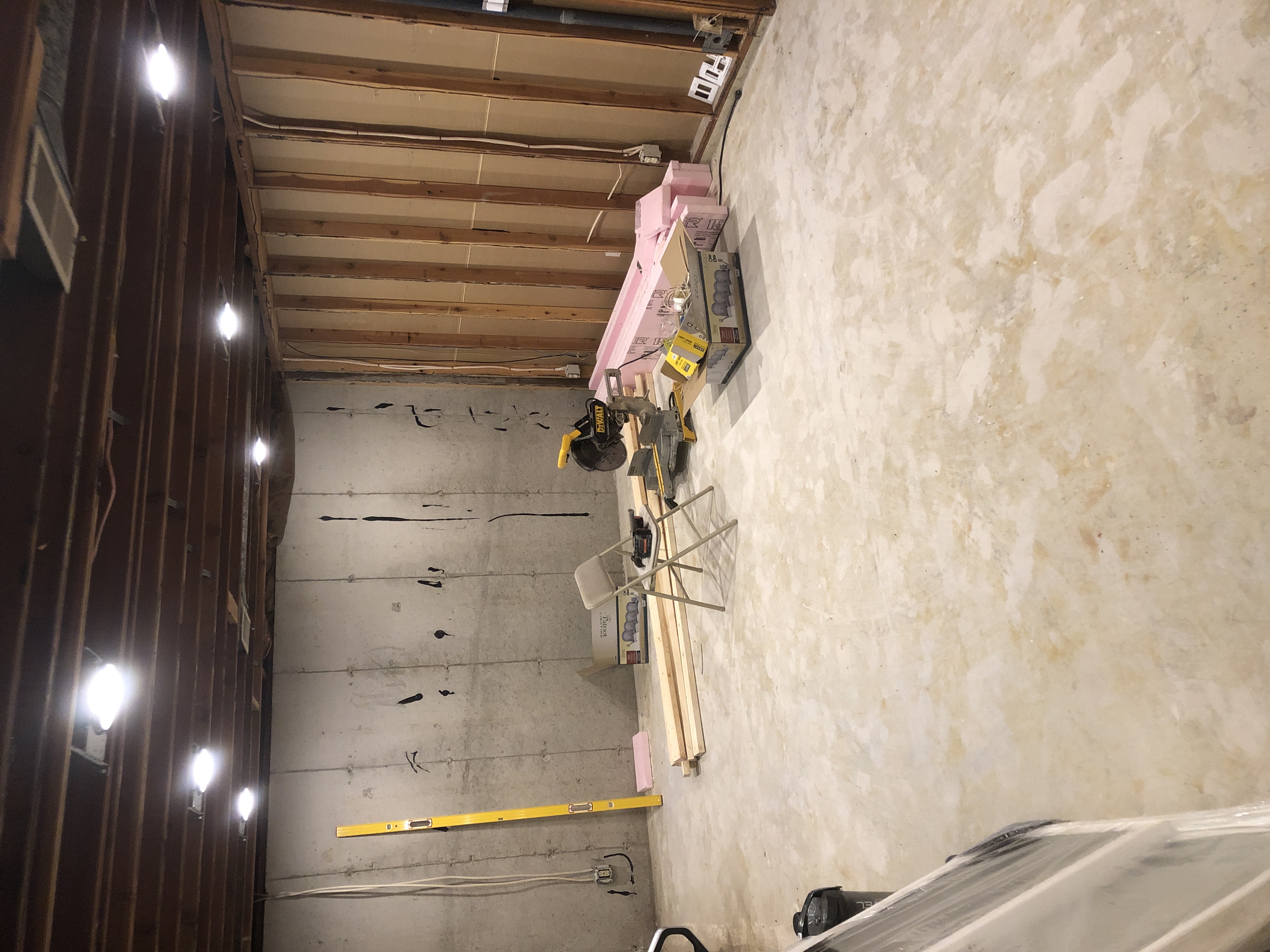
    The first stage of the remodel required me to demo the entire family room and one wall in her bedroom. It took some work, but it didn’t require much in terms of “construction” knowledge. I just had to tear out all the old drywall and paneling and remove the carpet and pad. This first picture is the beginning of the tear out phase. This is where the leak occurred. It was a little “rash” on my part to just start tearing things out, but as you can see along the base of the wall, it was only a matter of time before that 2×2 stud was completely rotted out. This wasn’t the first time that water had penetrated into that wall. The picture on the far right is about halfway through the demolition phase.

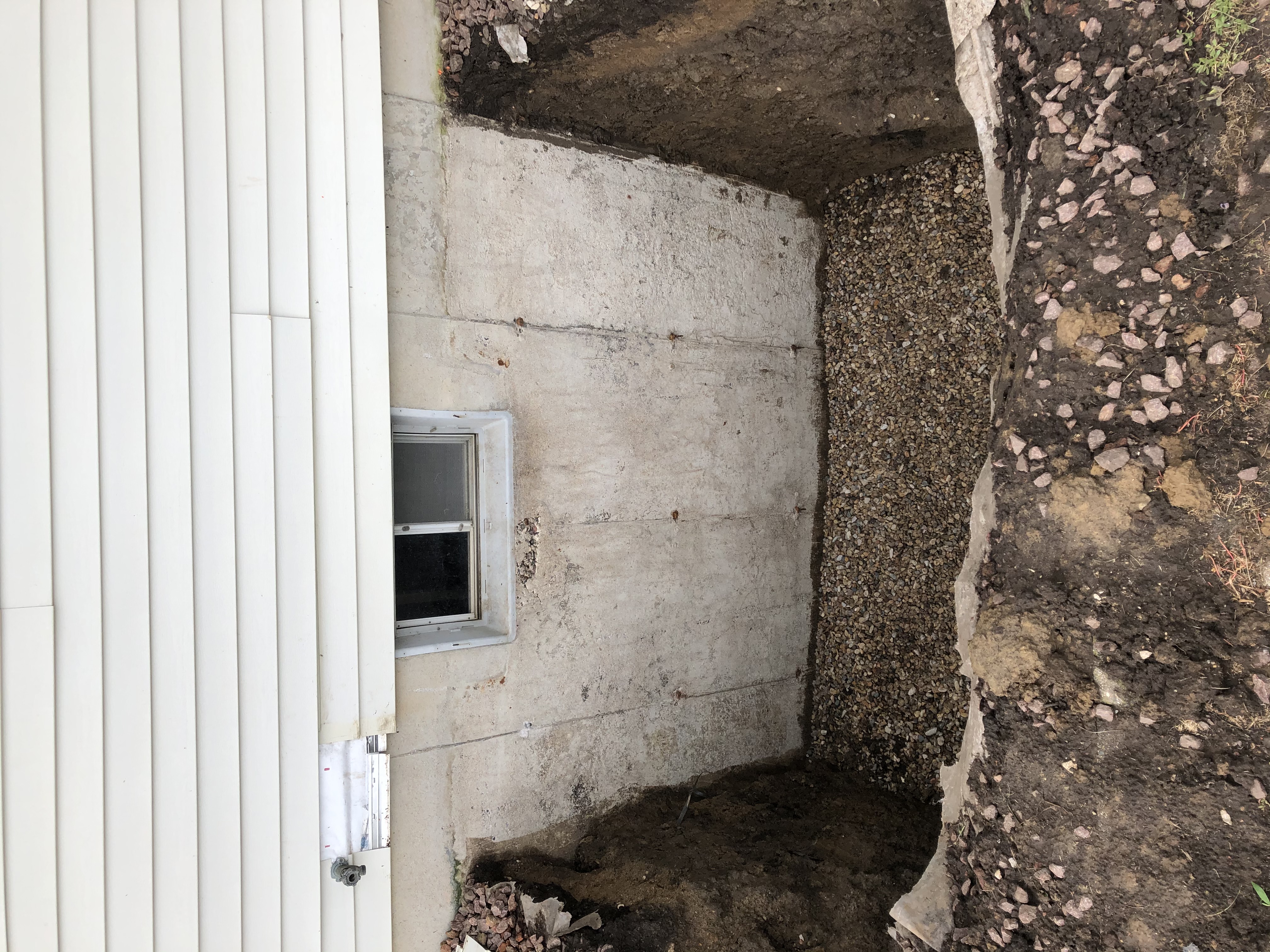
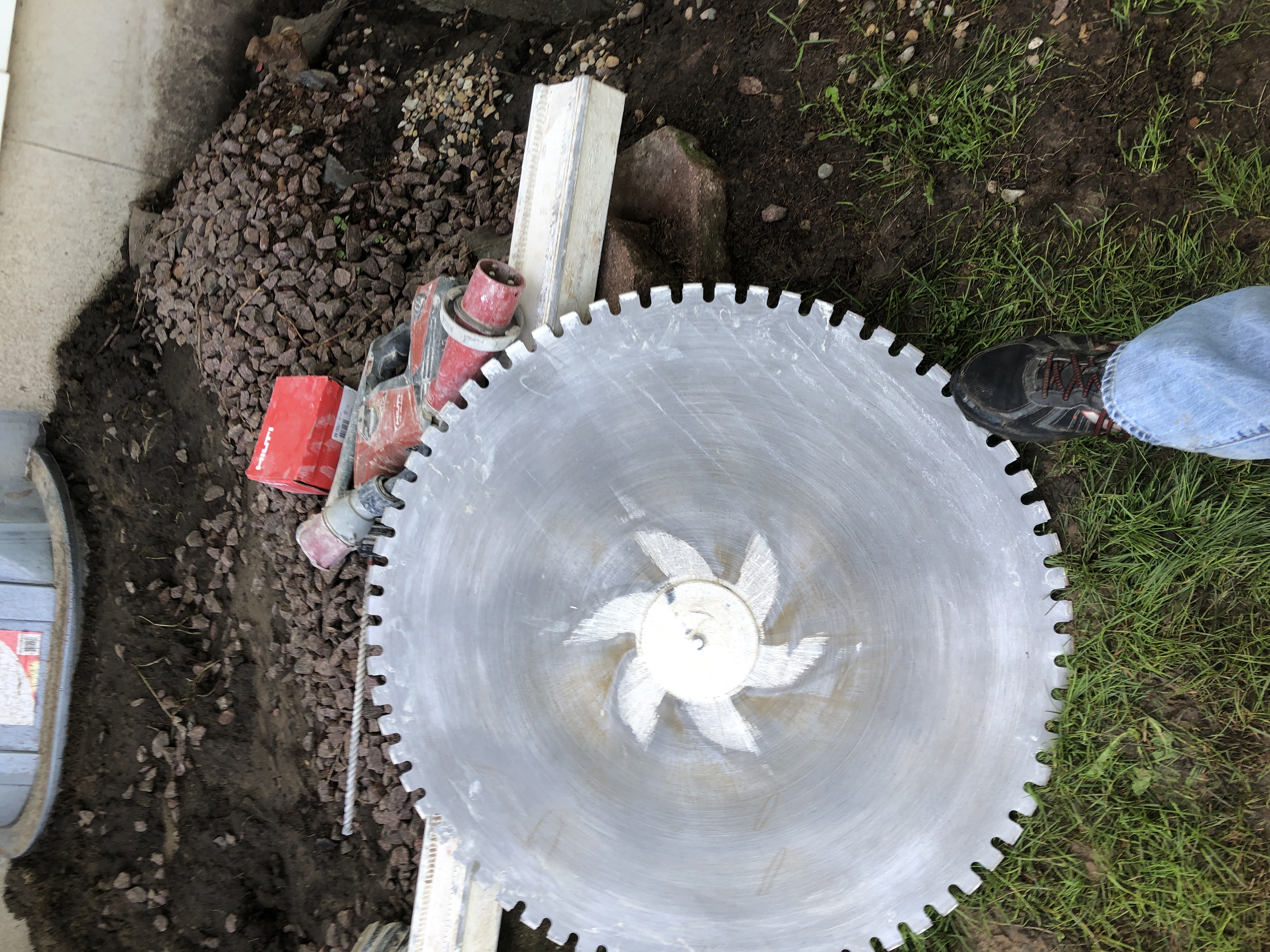
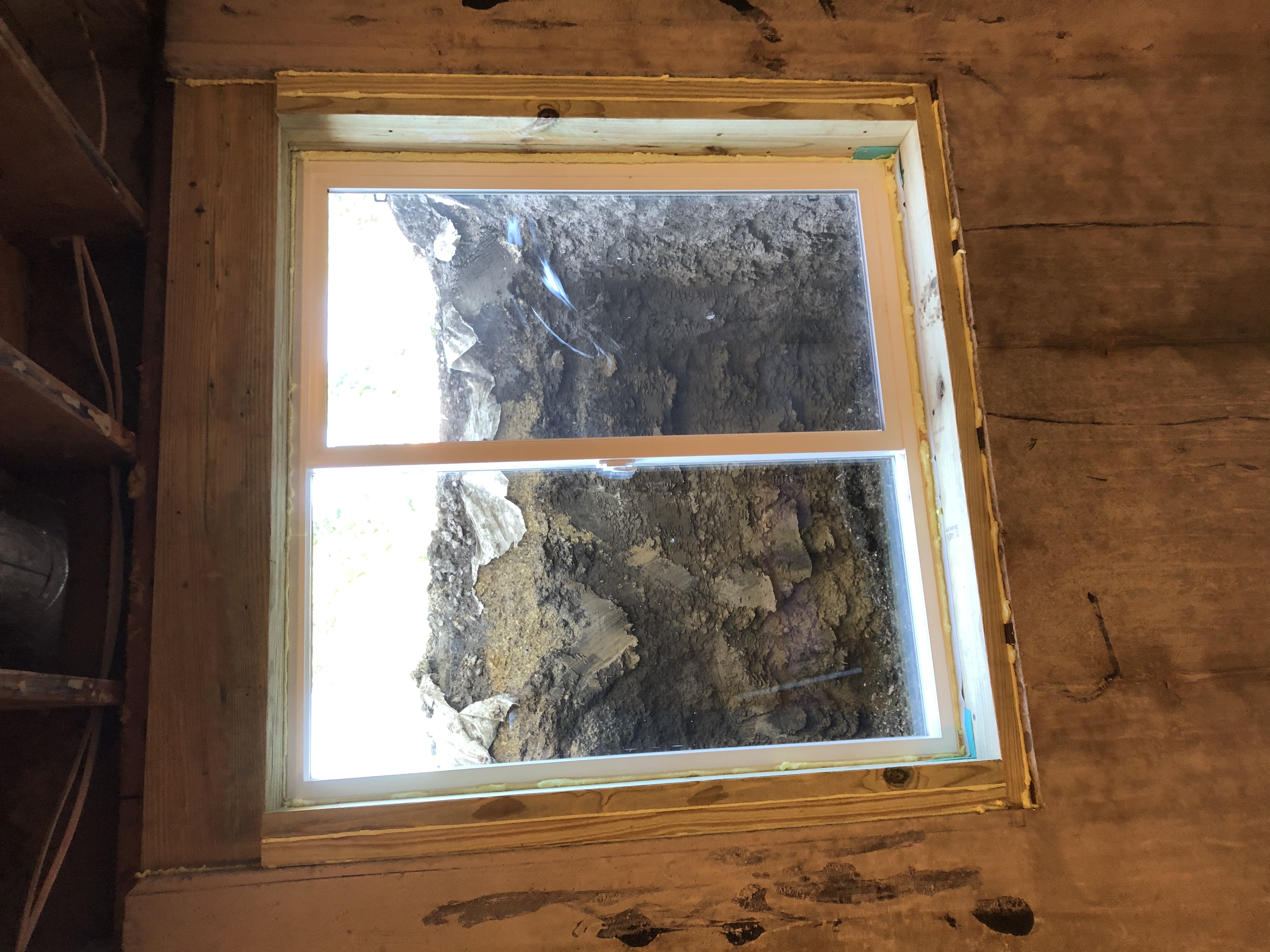
    The second phase of the project was the main reason for the renovation. The installation of the egress windows. As you can see in the pictures above, the previous windows were those small windows that would not allow anyone to escape. This phase of the project did require me to hire a company to do the actual cutting of the concrete. I was able to dig out the “well” for the window before they arrived as they told me, “We just cut. We don’t touch a shovel.” Boy, am I glad I hired them. They showed up with over $150,000 worth of equipment and a saw blade that made my size 12 shoe look like a kid’s toy. They completed the job in less than 2 hours. If I would have tried to cut it myself, they told me that it would have taken me a week and I would have had cuts that were completely unsquare. It ended up costing $1,150, but sometimes you need to bring in the professionals. Once they had cut the openings, I went right to work boxing in the opening with framing and installing the 48″x48″ sliding windows. The pictures below show the hole I dug and filled with 3/4″ rock, the saw blade they showed up with, and how it looked after I got one of the windows installed. Once the inside was finished. I moved to the exterior and installed the egress wells. It just so happened that I did this part on one of the hottest days of the summer, but I knew I wanted to get them in before we got any heavy rains. This was also the most expensive parts of the remodel as I went with a modular type egress system. The total for these was about $1,700. I attached them to the concrete foundation with a hammer drill and some anchor wedges. They turned out fabulous.

    Phase three of the project was installing can lights into the ceiling. I installed two rows of four cans separated an equal distance apart. This was a pretty easy installation. The more difficult part was the wiring. I contacted my brother-in-law electrician and we talked through the steps involved. I also watched a YouTube video. It took a solid 3-4 hours, but I was able to get everything wired into place. You can see the picture on the lower left below with the lights installed and on. The hardest part of this phase was the wiring in the box for the switches. I installed the lights so that they were controlled in two zones. The front four lights controlled by one dimmer switch and the back four lights on a separate dimmer switch. Again, speaking with my brother-in-law, I was able to get these lights wired correctly without any real problems.

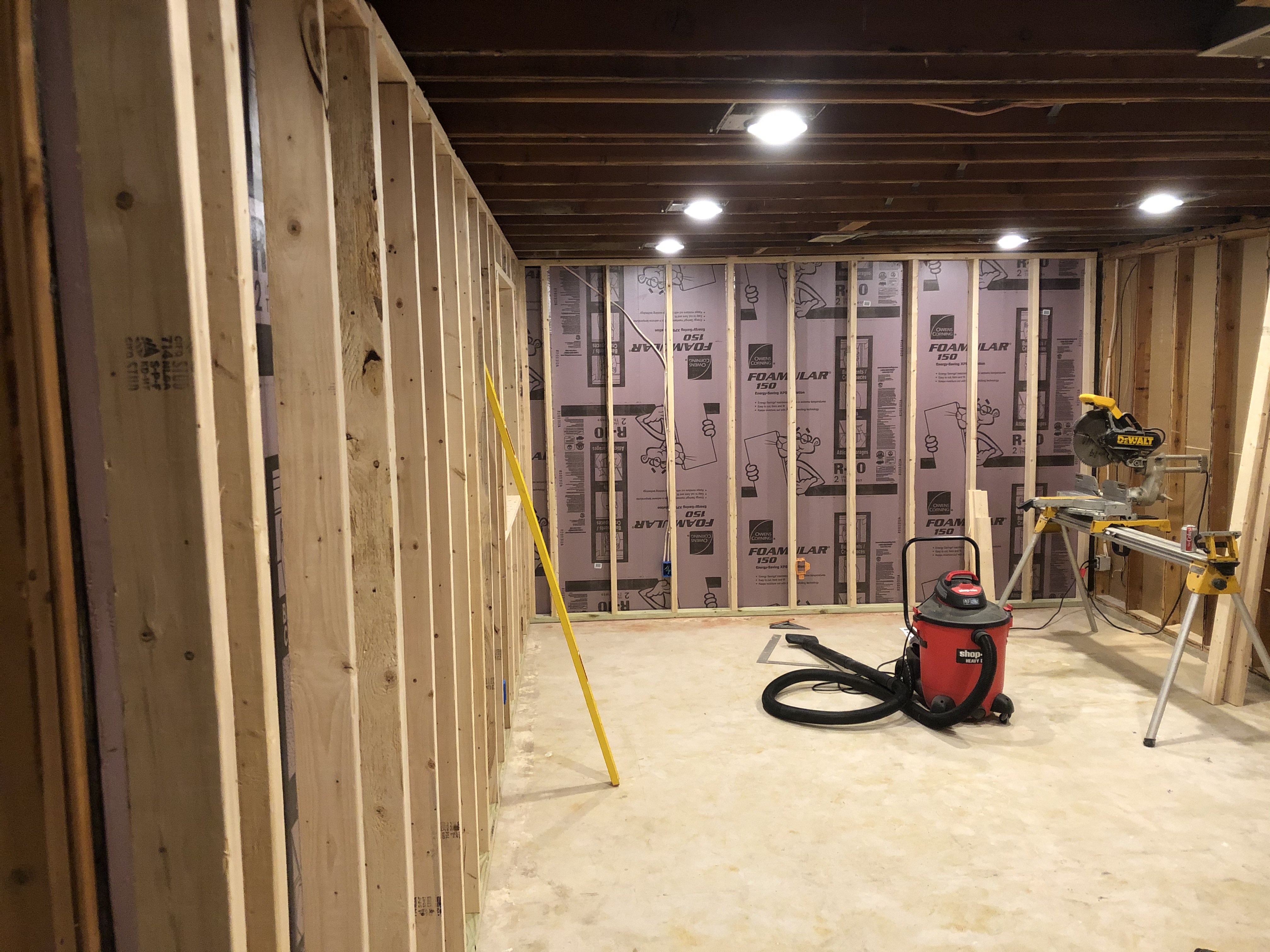
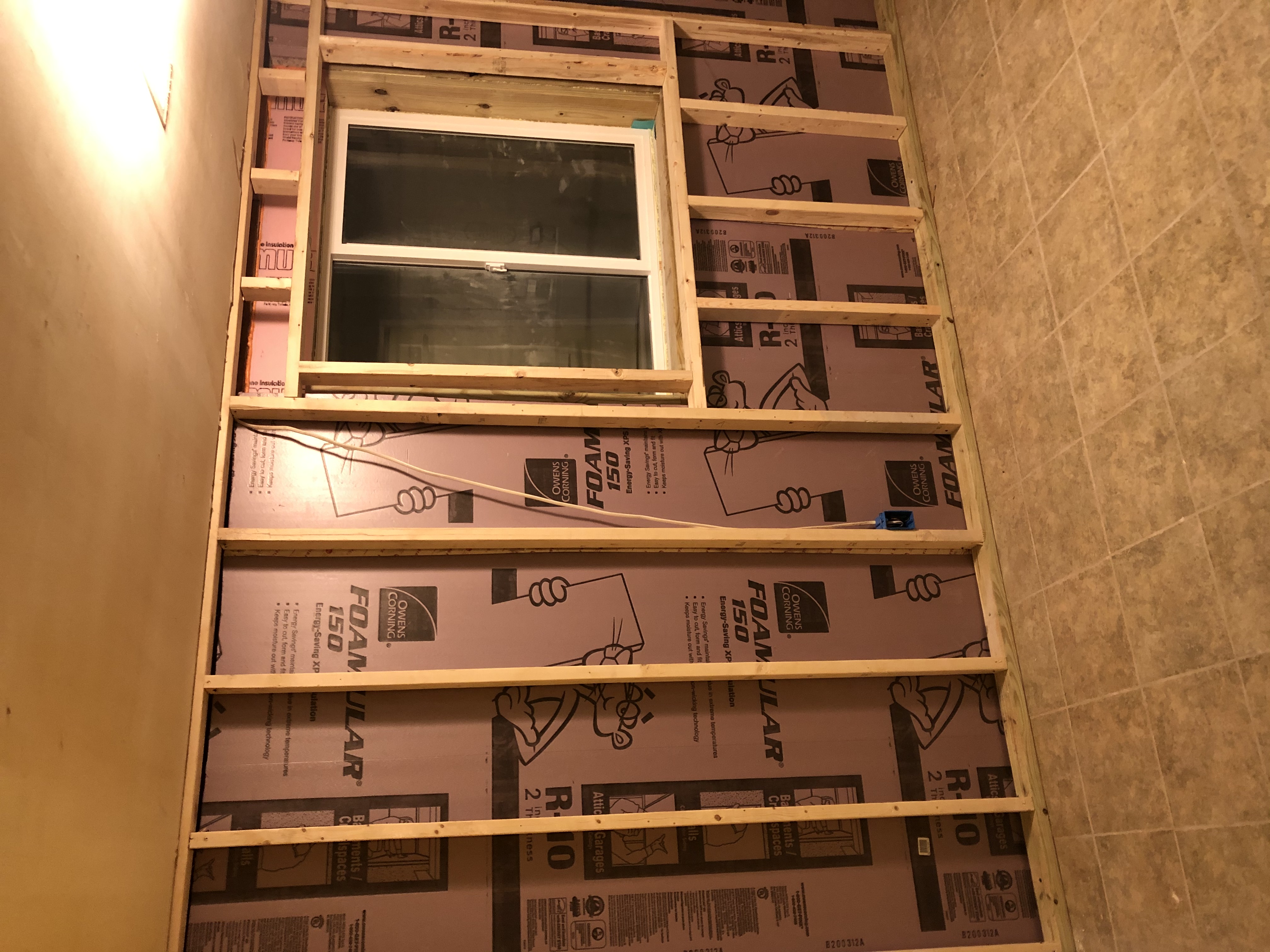
    The next phase was to install insulation on the exterior walls and frame out 2×4 walls. I watched a LOT of different videos to make sure that I framed the walls correctly. As I mentioned before, Basement Finishing Guy on YouTube really has some great videos on this part. I watched his 6-Part Basement Framing Series probably 4-5 times through to make sure I did everything correctly. I started by attaching 2″ rigid foam insulation to the bare concrete with proper adhesive. Once those were attached, I framed the two exterior walls following all the steps that were shown. This is where a remodel project really starts to take shape. There is something about seeing these perfectly straight 2x4s all lined up that is just so satisfying. The picture on the lower left is from the family room, and the lower right is from my daughter’s bedroom.

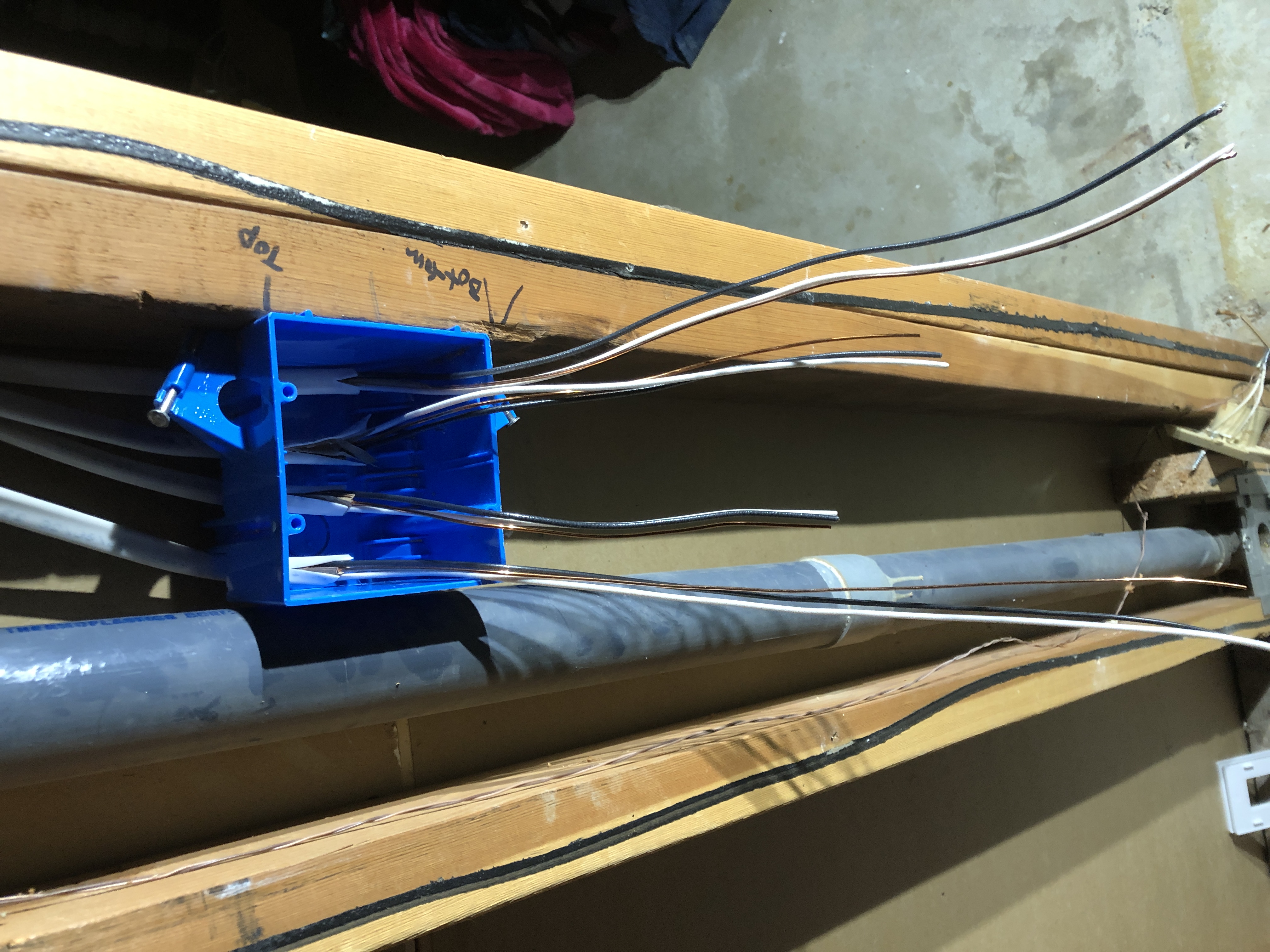
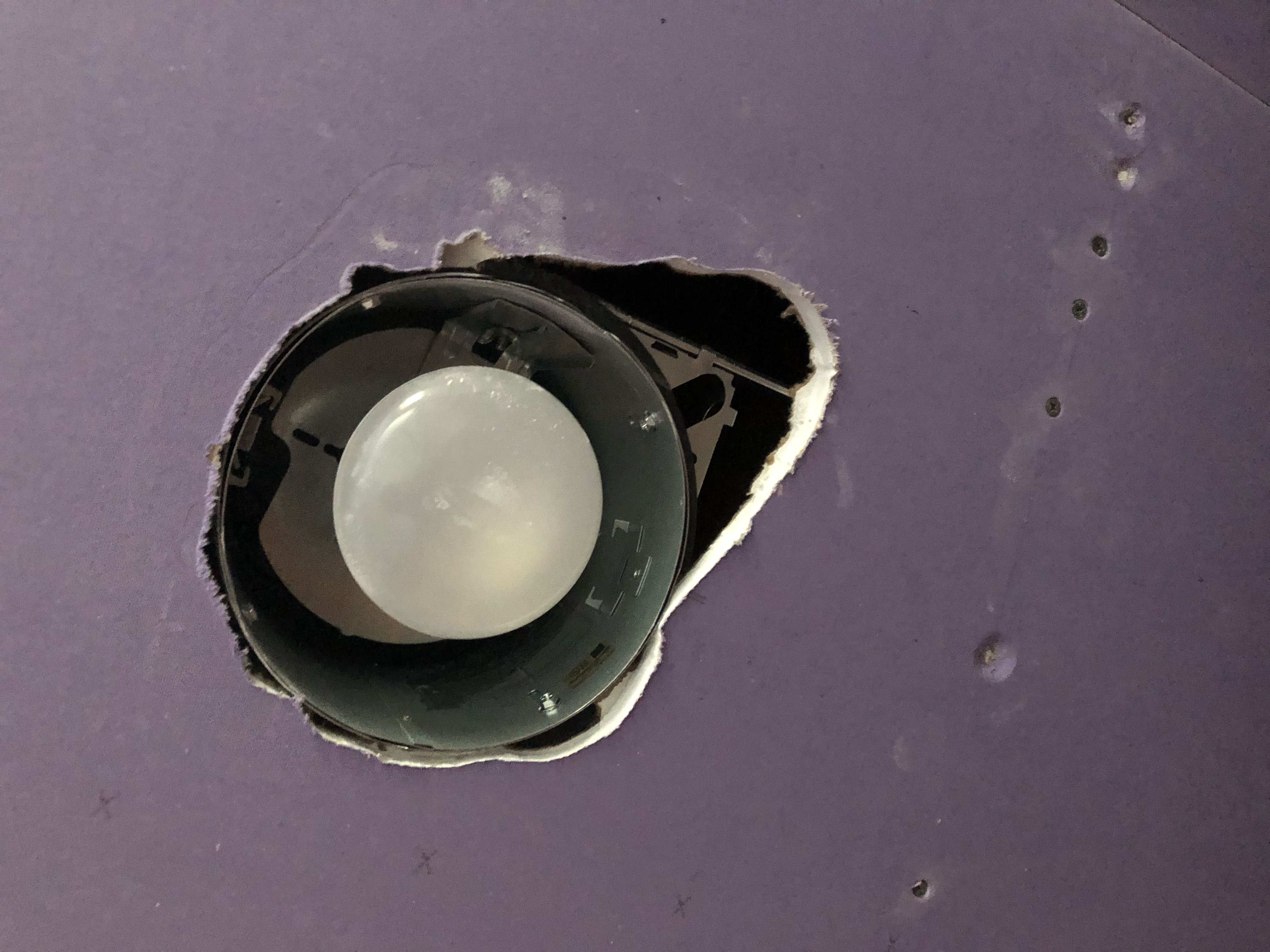
    Once the walls were framed up, I proceeded to attach new outlet boxes to the walls and wire them in. This was much easier than wiring in the can lights. I made sure to check the proper electrical codes and attach the boxes in the proper positions and secure the wires correctly. I only zapped myself one time when I grabbed the old metal box on the sides. It was a small jolt like back when we used to brush up against the electric cattle fence. Once that was complete, I started to hang sheetrock. Doing sheetrock, or drywall, is a pain in the ass. I had to have the TA come over one day to help hang the sheets on the ceiling because each sheet is about 50 lbs. Not only is the stuff heavy, but cutting out for lights and outlets is dusty as heck. A Rotozip tool makes it easy to cut the holes out, BUT it’s also easy to make a mistake as you can see in the picture on the lower left. One thing I would probably do differently if I did it again would be to add furring strips to the ceiling to even out some of the unevenness in the joists. There were a couple of them that caused us some issues during hanging. Even so, it turned out pretty well. As with everything, I watched a lot of videos on how to do the drywall properly. A big help for my was DIY Home Renovision’s Drywall Installation Guide. I watched these videos over and over as well. He’s also got other great videos on things you can do in your home.

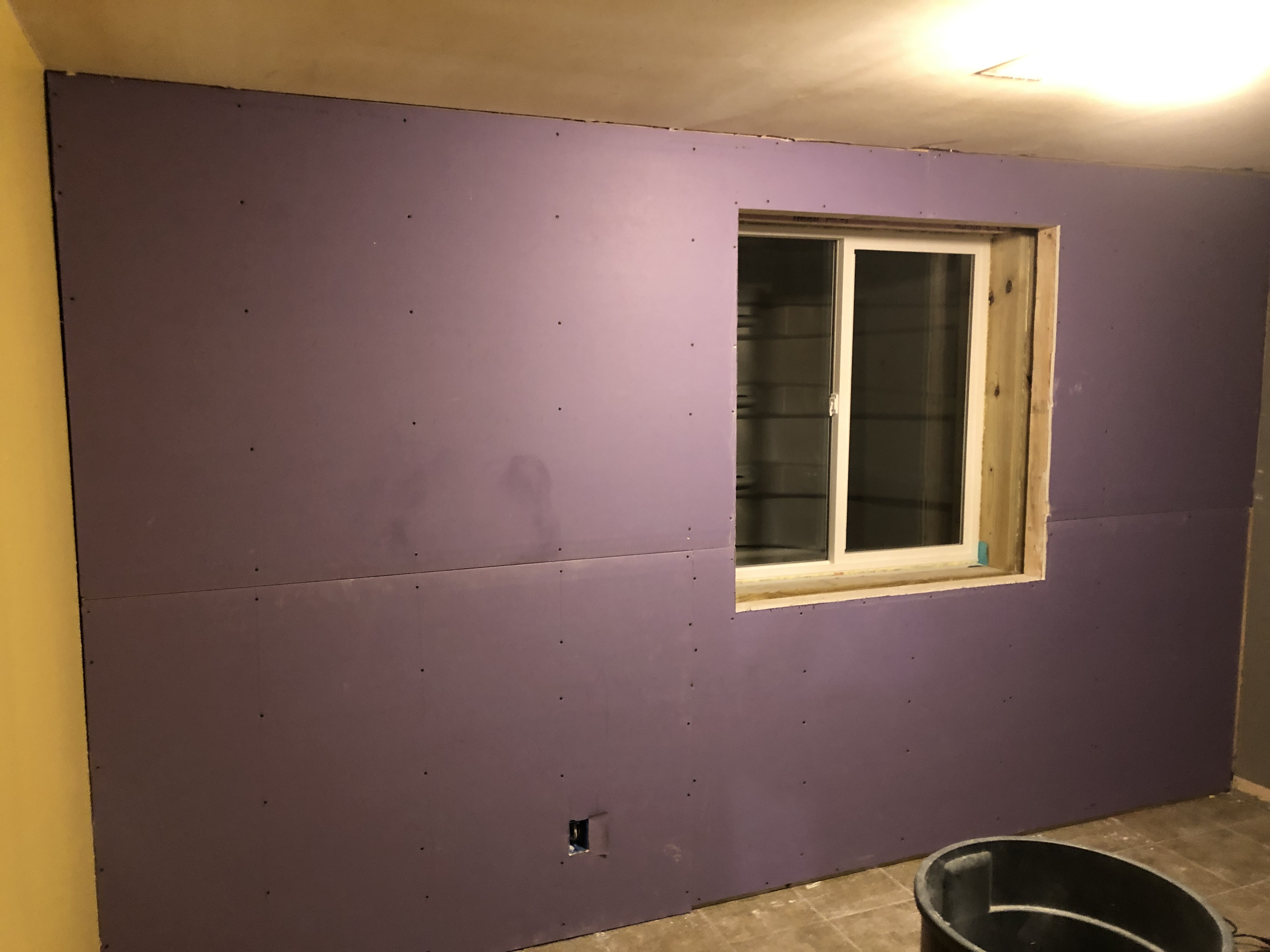
    Hanging the drywall took a day, and then it was time to mud and tape. This part of the job took me the longest time because it’s very fine work AND you have to give the drywall “mud” time to dry. It’s also TERRIBLY messy, especially when working on the ceiling joints. One YouTuber in particular, Vancouver Carpenter, was a great help in my “mudding” process. The middle two pictures are before I applied mud. The picture on the right is of my “finished” work in the family room.

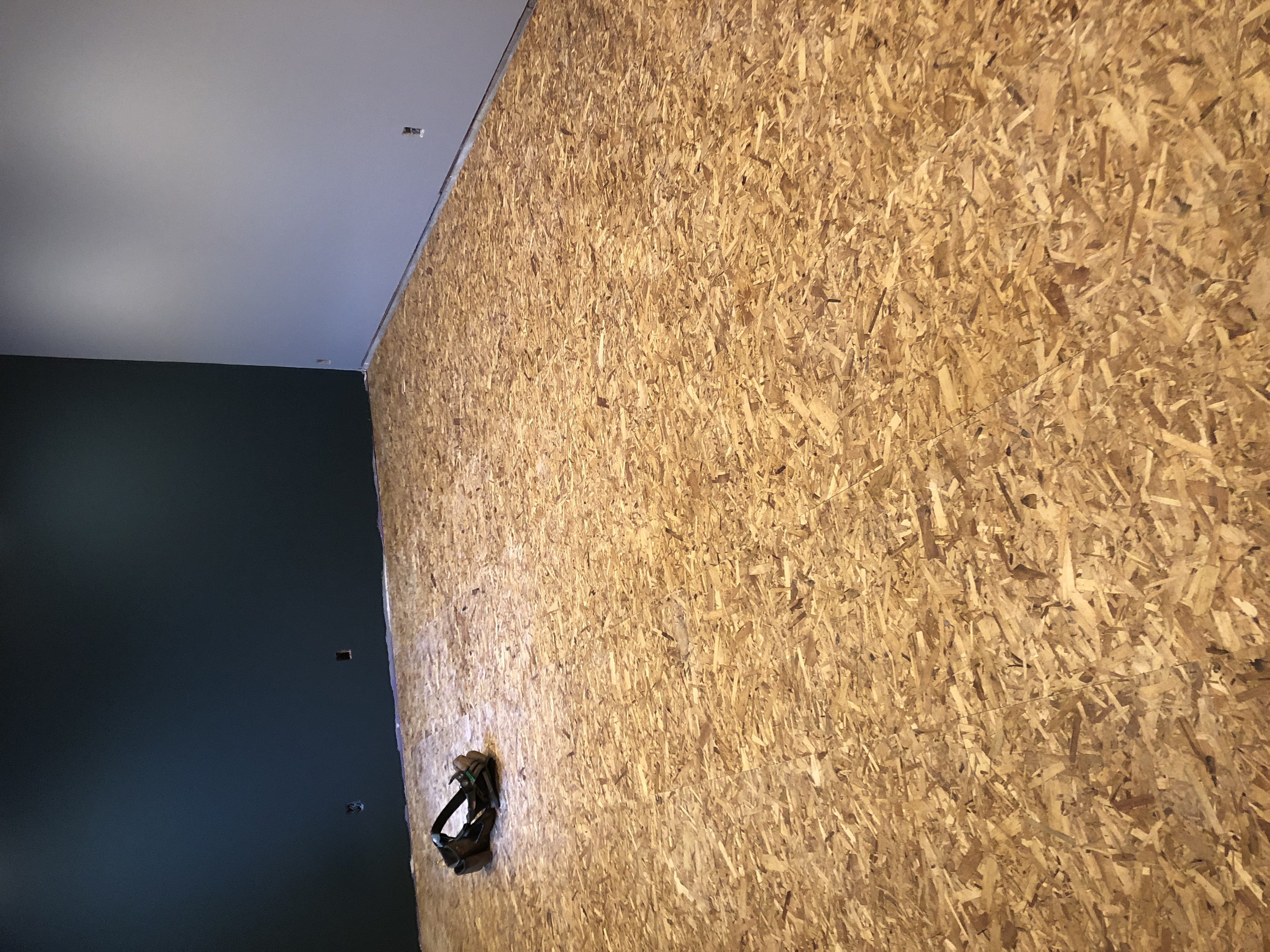
    Next, I primed all the walls with a quality primer/sealer, and then painted. Nothing too exciting there. Then I installed a Dri-Cor subfloor that will prevent the new carpet from getting wet again IF any water does happen to infiltrate the basement. This system involves 2×2 sheets of plywood that have a dimpled plastic laminated to the bottom to keep the organic material off the concrete floor. It also gives some R-value insulation to the floor to make it feel warmer. Again, I found a great video online that helped with this install. This was a pretty simple install as the pieces are tongue and groove. I did attach them to the floor in spots with a hammer drill and concrete screws as per the manufacturer’s instructions since we were going to be installing carpet underneath. Once that was finished, I installed trim and baseboard around the room before the final step.

    The final stage of the project was carpet installation. Again, I hired professionals to do this part of the job as it is another pain in the ass to lay carpet and padding out. This was another pretty large cost as we went with a higher quality carpet that will last and be resistant to mold, mildew, and stains. You can see in the two pictures below the before and after carpet look of the room.

    It definitely wasn’t a cheap project, but by doing a lot of the work myself, I was able to save a TON of money. My total cost for the project was about $12,000. That’s just for materials and a few tools I used on the project. Most contractors say to find your materials cost and double it to account for labor costs. I did pay for labor for the cutting of the concrete and for the carpet installation. I’d say a fair estimate for the total cost would have been at least $20,000 if I would have hired the whole project out. I’m glad that I did this project last year instead of this year as costs of some building products, especially lumber, have tripled!

    All in all, I think the project went very well. I didn’t really mind the electrical work and framing. The drywall and mud/tape was definitely a job that takes some skill and practice to do well. There are spots in my mud job where you can see imperfections, but for the cost, it looks pretty good to me!

    This all might seem like a lot of work and really complex, but YouTube can be your best friend. You can learn how to do almost anything by going there and watching videos. The videos I linked throughout this article are the ONLY reason that I was able to tackle this job. I was definitely nervous doing a project of this scope, but as we tell our students, “Knowledge is power.” With the explosion of the Internet the last 20 years, there has never been more knowledge out there available for everyone to take advantage of. That being said, I am NOT affiliated with ANY of the links that I have included in this post. I included them for you to see how easy it is to learn from people that are out there on YouTube.

    Hopefully this inspires you to look at your own situation and what you can do in your remodeling projects to save a little money and as always….

    KEEP STACKIN!

    Minnesota teacher retirement at 60 reduction comparison under enhanced 60-30 rule

    Minnesota Teacher Retirement at 60: Understanding the Enhanced 60/30 Rule

    For years, Minnesota teacher retirement at age 60 was financially unrealistic for


    Read More

  • 6 ways to Intelligently Spend Your Coronavirus Stimulus Check

    6 ways to Intelligently Spend Your Coronavirus Stimulus Check

    So… You are about to get some of your tax money back… What exactly should you spend it on? Unfortunately, many casinos don’t abide by the social distances rules so we can’t go and put it all on black. With that option taken out of the equation… Here are a few things you can do with that government hand back. 

    Quickly I’d like to point out that this is not free money, it’s your tax money that they have “Given back to you”. They’ll take it again next tax season don’t worry about that. So not technically free money but whatever, Let’s talk about how you can put it to work for you in order of importance. 

    1. Survive – If your family has been financial impacted by the Covid-19 quarantine of 2020, use that hand out in whatever way you need to to insure food, shelter and security. Thankfully, states are paying their teachers their salaries still, but perhaps a loved one is impacted. If you need to put that money to work for you in these next couple of weeks, make sure you take care of that first. 

    2. Pay down Debt – Have an outstanding balance on that credit card that’s been hanging over your head? Use that stimulus pay to pay down that debt. Remember credit card debt has an astronomical interest fee. It might not feel like that much but it is quickly adding up behind the scenes. Pay that credit card debt down and climb out from some of that debt. Break that pay-check to pay-check cycle.

    3. Stock up that emergency fund – This time has been a great reminder to keep a little cash cushion in your accounts for when times might get tough. We had all of about 5 days to prepare for society shutting down. The next great event that challenges the financial system will probably hit equally fast. Always a great reminder to have some of your money in liquid accounts (meaning you can easily cash out and use that money). Personally, I keep a small checking account and a chunk of money in the Vanguard Money Market in my brokerage account. Vanguard Money Market earns around 2% and I can easily use that money to cash out or buy stocks. 

    4. Put that money to work for you – No major debts? Still collecting your salary and haven’t had to dip into that emergency fund? You get a chance to put that stimulus check to work for you. The stock market is extremely volatile right now and will likely drop again and climb again and drop again and climb again etc. etc. Remember, no one can time the markets. Invest in low cost index funds and those index funds will continue to grow for you for years to come. They might drop over the short term, but remember our goal is to build long term wealth here. 

    5. Check out other sources to invest in – Have you always wanted to get into real estate investing? Interested in starting a side hustle? Thinking about making some renovations to your home that will increase it’s value? This stimulus check could be the perfect excuse to start seriously looking at these alternatives ways to increase your net worth. 

    6. Treat Yo’self (sort of) – I’ve always believed that the most important thing to invest in is yourself. This can be just the push you have needed to start investing in yourself. Maybe it is in the form of taking online classes, maybe it’s purchasing higher quality food to cook in your time at home, maybe it’s something as simple as purchasing a more supportive office chair so your back doesn’t ache every day. I don’t know that you should spend all of your stimulus check on treating yourself, but it’s okay if you spend some of it on you. I would challenge you to spend it on something that will genuinely enrich and add value to your life, not just feel good in the moment. Personally I am spending some time and money purchasing supplies and building a DIY modest home gym. That way I won’t have any excuses as to why I can’t exercise.

    However you choose to spend your check, please do so wisely, it’s likely that there won’t be another stimulus like this and this situation we are finding ourselves in is likely to last more than the next few weeks. Go through this list in order and make sure you feel good about each option before you advance to the next. Use your newfound time and money to grow your skill set and increase your knowledge. Look for new resources and tools to enhance your understanding of your financial situation. And as always… 

    KEEP STACKIN!
     

  • 5 ways to start the Financial Conversation with your Family.

    5 ways to start the Financial Conversation with your Family.

    Now it the time to have those conversations about money with the ones that you love. 

    A year ago, one of our firsts posts was discussing the importance of having money conversations with your family. It is challenging to have those financial conversations with the people around you. Often people can be ashamed and consider it a blow to their ego when comparing bank accounts. But now, a time of uncertainty is the perfect time to have these conversations. Some tips to start these conversations on the right foot. 

    1. Talk proactively – No one can control the previous money mistakes that we have made. We have all made several. I make financial mistakes almost weekly, and that’s okay. Don’t dwell on the past but instead frame your conversation as it applies to the future. Saying things like, “What bills and debts do we needs to pay down this month?”, “How much do you think we could afford to invest?” “How much do you think we should budget for groceries next month?” All of those kinds of questions avoid looking at past financial mistakes and focus on future expenses or investments. 

    2. Don’t compare bank accounts – Net worth is a very nice stat for individuals to track to monitor overall financial well-being. But what might be a good spot for you won’t necessarily be a good spot for someone else. Directly comparing salaries, bank accounts, investments, etc. has a way of demeaning one person or the other’s accomplishments. Just because my friend pulled in over 6 figures last year doesn’t mean that he is more successful than I am. It just means his incoming revenue from salary is higher. Instead talk about where people have their money stored. Is it in a savings account (bad)? Is it invested? Are they investing it wisely (for instance not spending money on speculative marijuana stocks)? What are their interest rates for their debt? What are their plans to pay off that debt? All of these are conversation starters that focus on actions people can take not just focusing on the dollar amount in their accounts. 

    3. Talk about the impact of a lost job – The Covid-19 quarantine serves as a great reminder that we need to have a plan ready should we lose our primary source of income. What a great time to have those conversations now. Things to bring up, “How long can we survive without our primary source of income?”, “What assets could we sell if we had to?”,”What could potentially be an alternative source of income for our family?”, “Should something happen to one of us do we have insurance or a will in place?”. Times like these provide us an all to real example that our day to day lifestyle can be temporary. It is better to prepare for those dire times now while we are relatively safe. 

    4. Learn what costs are essential in your life – As society strips down all to just essential businesses in operation we can also do the same in our financial life. What a great time to see what you physically must spend money on versus what is just fun to spend money on. During this time I have realized how much money I spend eating out, traveling, going to breweries, etc. These are all hobbies of mine and I’ve known that I spend money on them but during this quarantine I have felt first hand how much I have truly spent on them. It’s leading me to question how much I am spending. Yes I will go out to eat in the future and yes I will travel and go to microbreweries, but now I am aware that I can curb those things. It also has me realizing how much I am spending on gas and purchases I make in the gas station. Use this quarantine to talk with your family about what expenses you can permanently remove from your day to day lives. 

    5. Find a financial mentor – As you are talking about finances and reading through various websites and books it is important to also find a person that you trust that you can look to as a financial mentor. This person doesn’t have to be perfect. Just someone in a similar situation as you that is open to discussing finances. It’s helpful to have that person in a similar walk of life to bounce ideas off of. The Professor and I chat finances daily. Most of it is nonsense about what the markets are doing or what we think the future might hold but it’s helpful to have the person to bounce ideas of investments off of and someone that will tell you when a purchase you’re considering is stupid. Also a good idea to chat with someone from a similar walk of life. Conversing with a friend who’s income and expenses are ten times greater than yours might just lead to frustration. 

    There you have it, 5 ways to start that financial conversation at home and ways that we can use what we are experiencing during shelter in place to help curb our spending and grow our net worth beyond The Covid-19 outbreak of 2020. 

    Stay Safe and as always…

    KEEP STACKIN!