Category: Investing for Teachers

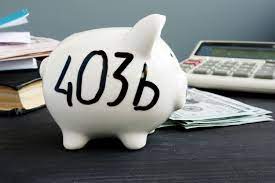
Investment strategies tailored to educators, including 403(b) plans, Roth IRAs, HSAs, asset allocation, and long-term wealth building.

  • When Markets Fall, Stay Standing: A Teacherโ€™s Guide to Long-Term Wealth

    โ€œIn the short run, the market is a voting machine, but in the long run, it is a weighing machine.โ€
    โ€” Benjamin Graham

    As a teacher, you know that learningโ€”and growthโ€”takes time. The same goes for your investments. With the recent market downturn, itโ€™s tempting to worry or even consider pulling out of your retirement accounts. But historyโ€”and mathโ€”say that staying the course is almost always the better choice.


    ๐Ÿ“Š Market Drops Are Normalโ€”Even Healthy

    Markets go through cycles. What feels like a crash now may just be part of a long-term upward journey.

    ๐Ÿ” Stat Snapshot:

    • The S&P 500 has had an average annual return of ~10% since its inception.
    • Market corrections (drops of 10% or more) happen about once every 2 years.
    • Despite major crashes (like in 2008 or 2020), the market has always recovered.

    ๐Ÿง  Keep a Long-Term Mindset

    Your retirement planโ€”whether a pension, 403(b), or IRAโ€”is designed for the long haul. If youโ€™re 5, 10, or 20+ years away from retirement, youโ€™ve got time on your side.

    CrashYear% DropRecovery Time
    Dot-com Bust2000โ€“2002-49%4 years
    Financial Crisis2008โ€“2009-57%5 years
    COVID Crash2020-34%6 months

    Each of these times felt awful in the moment. Each one recoveredโ€”and went on to new highs.


    ๐Ÿ™…โ€โ™€๏ธ Emotional Decisions = Expensive Mistakes

    Selling during a drop feels like avoiding painโ€”but it often locks in losses instead.

    ๐Ÿ“‰ Stat Highlight:

    • From 2001 to 2020, the S&P 500 returned 7.5% annually, but the average investor only earned 2.9%. Why? Panic selling and poor timing.
    • If you invested $10,000 in 2003 and stayed fully invested, youโ€™d have ~$60,000 by 2023.
    • If you missed just the 10 best days? Youโ€™d have ~$29,000.
    • Miss the 20 best days? Down to ~$18,000.

    Most of those “best days” come right after the worst ones.


    ๐Ÿ’ช What You Can Do Instead

    Rather than react emotionally, try this:

    โœ… Stick to your plan โ€“ Especially if your retirement is more than 5 years away.
    โœ… Keep contributing โ€“ Youโ€™re buying more shares while theyโ€™re โ€œon sale.โ€
    โœ… Talk to a pro โ€“ A financial advisor can help you review your strategy calmly.
    โœ… Avoid the noise โ€“ News cycles thrive on fear. You donโ€™t have to.


    ๐ŸŽ Remember: Youโ€™re a Teacher

    You teach students resilience, patience, and how to keep going when things get hard. That same wisdom applies here. The market might be down nowโ€”but it wonโ€™t stay that way forever. The key to building long-term wealth is not timing the market, but time in the market.

    โ€œThe stock market is a device for transferring money from the impatient to the patient.โ€
    โ€” Warren Buffett


    ๐Ÿ“Œ Final Thought

    Panicking during a dip is like giving a pop quiz on Day 1 of schoolโ€”itโ€™s too early to judge the outcome.
    Stay calm, stay invested, and trust the process. Your future self will thank you and you’ll KEEP STACKIN!


  • $0 to $300k Net worth… A 10 year journey

    $0 to $300k Net worth… A 10 year journey

    I mark the beginning of my financial journey as April 2014. I had been teaching for a year and a half and saving more than I earned to the point where I had some extra money in my savings account gaining .5% interest. I was fortunate enough to have a co-worker that was more knowledgeable than me and he talked to me about opening up my first Roth IRA and pointed me towards the legendary Mr. Money Mustache, and the Millionaire Next Door for some light financial readings.

    I can’t say that I was immediately hooked but it did get the wheels turning towards financial independence. Quite a lot has occurred in my life over the past decade. I went back to school to get my master’s degree. I bought and sold a house (even took money out of my Roth to do so). Bought a new car. Changed jobs. And have spent my summers roaming around the country camping, fishing, and hiking. Today, my personal net worth topped $300k for the first time! I write this not to flex but to try to show a real-life long term perspective on our paths to wealth and to illustrate that the snowball effect is real and slow and steady investing does payoff in the long run.

    In the last 10 years I’ve learned a lot about personal finance. Not all of the information came at once and I still learn more about it each day. However, I have gotten to the point that I can put my finances on autopilot. I no longer keep a detailed budget and track every expense. I don’t spend much time researching the markets deciding what stock to pick. I know what to do with the money once I get it at this point so my views have shifted to trying to make more money to put into the system. Here are a few priorities that I had a long the way to get me to the point of having my finances on auto-pilot.

    1. Spend less than you earn.

    I was fortunate to grow up in a household where this was heavily emphasized so I never knew any other way. As I mentioned before, after a year and a half of teaching I had built up a fair amount of savings just by spending less than I was making. It’s a simple concept that can be much more challenging to execute. I was fortunate to start teaching in a small college town so a lot of my expenses were much cheaper than other places in the country. That first year is tough as you’re navigating new terrain and a new way of life. I kept things cheap and my entertainment tended to be exploring nature (Free), happy hour busch lights and dominoes pizza (Cheap). I got the second cheapest one bed-room apartment in town and drove my old Toyota Camry the 12 miles to work each day. All of these things kept my expenses down and allowed me to build up a bit of a cushion in my savings account.

    2. Tracking your budget.

    After grinding that first year or so I loosened up a bit on the budget and started finding things I wanted to spend my money on. I spent the next few years trying a variety of spreadsheets and budgeting apps to help curb that spending (I had graduated from happy hour Busch Lights to craft beers from my local brewery). Keeping spending down as I got raises from my employer meant I had even more money to save and invest each month. I tried mint, personal capital, YNAB and my own personal spreadsheet. All 4 of these had a role in tracking net worth and progress towards my goals. Cutting the extra stuff I didn’t like out of my budget each month lead to even more that I was able to put away. Ramit Sethi puts it better than I do, “Spend extravagantly on things you love, and cut costs mercilessly on things you don’t.” This resonated well with me now that I was a few years into my financial journey. I still wanted to live my life full of things I enjoyed but wanted to cut out those hidden costs of thing I could care less about. I am always the first one to suggest going out to eat, heading down to the brewery, or packing up and planning a 2 week vacation. However, I could really care less about what phone I have, what clothes I wear, or how expensive my home is. Tracking my budget for those years really helped establish spending patterns in my life to the point where I don’t have to think about it much anymore. I don’t use any budgeting software at this time because the years of using it established my routine, now I just stick with it.

    3. Investing the Extra

    With my budget habits solidified the next step is to put those extra dollars to work. Life-style creep is real. With each years raise it’s so easy to subtly spend more and more, I know I do. Now, with every raise, I adjust the amount of money that is auto-invested from my check. This means that roughly the same amount is being deposited into my bank account each month of every year even though I get a raise every year. When I never see the money I never think about spending it. So not only is my money growing with my low cost index funds but I am actively contributing more to it every year. This has been a huge step in the journey. Automate that and free up some brain space for yourself.

    4. Increase Income

    This has been my latest quest. Now with moving to Higher-Ed and having a more complicated source of income I am constantly looking for new duties to add and more places to invest my time that will help bring in more income. At the public school level this takes the form of extracurricular activities. Maybe you don’t want to be a coach or an advisor but every event that happens needs workers and for a lot of schools that’s a paid position. It can be getting your masters to get a pay bump. It can be a job with a different district or a new role within yours. It can be a summer or weekend job if you’re one of those crazy teachers that looks for work in the summer-time! It can be a challenge in public education to find ways to increase your income but it is definitely still possible.

    It seems straightforward but that’s my simplified path these past 10 years

    1. Spend less than your earn
    2. Track your expenses
    3. Invest the rest
    4. Increase income

    Put the extra money in some low-cost index funds and let the market do it’s work for you. For some insight. In the last 10 years my rate of return is 14.6% and the vast majority of my holdings are in total market index funds. Set it and forget it. My favorite kind of investing.

    Hopefully this is motivation for you to set out on your own financial journey or some motivation to keep stacking away!

  • Advice For Someone Starting a New Teaching Career In Minnesota

    Advice For Someone Starting a New Teaching Career In Minnesota

    A few weeks ago, I had the honor of presenting to a class at a local university. These students had just finished their student teaching, making this their last class before entering the “real world.” I met the professor while mentoring a student teacher, and she invited me to give a presentation on Minnesota TRA and teacher pensions/retirement in general.

    Here are a few key points I shared, which I believe are crucial for anyone entering the teaching profession. These topics aren’t typically covered in teaching classes, but they will significantly impact your life and future.

    1. SET UP YOUR RETIREMENT ACCOUNTS

    Typical 403(b) reps

    As a new teacher, it’s essential to visit your business office immediately and set up your 403(b) or 457(b) accounts. This is crucial because the earlier you start, the more time your investments have to grow. Time is your friend when investing. While most districts provide information, it’s up to you to learn about these accounts on your own. Talk to other teachers in your district; often, there’s someone who is the “go-to” person for financial advice.

    Avoid financial “advisors” who come to your school to present their products. Many of these products are designed to benefit the advisors more than you. Remember Matthew McConaughey’s character in “The Wolf of Wall Street” saying, “The name of the game, moving the money from the client’s pocket to your pocket.” This is how most of these products are designed. Research the vendors your school provides and ask a lot of questions, especially about their fees.

    2. SET UP YOUR HEALTH CARE ACCOUNTS

    Learn about your school’s health care accounts and your options. Like retirement accounts, schools usually don’t offer advice on which health care plan to select. Check if your school offers an HCSP or HSA plan and take the initiative to elect your investments. Some career teachers missed out on thousands of dollars in gains because they didn’t do this early in their careers.

    hospital bills add up as you get older. start preparing for them early!

    3. BE PICKY!

    Teachers coming into the profession today have a much more wide open job market. When I applied to my current job 25 years ago, I was one of 300 applicants for the position. Today, most schools are lucky to get a handful of applicants, if any! This means that new teachers can be more picky in the jobs that they look for. I strongly recommend looking for jobs in communities that are growing. A growing community usually means a growing school district. This means more money coming into the district and it also means you are less likely to be “cut”, or laid off, due to declining enrollment, cutting of programs, or lack of funding. This is a huge concern in many rural schools in the state. 

    4. BE WILLING TO TALK ABOUT MONEY

    Even today, talking about money is often considered taboo. However, wealthy people do talk about money. Many people are embarrassed about their financial decisions or their financial status. Donโ€™t be embarrassed about your financial situation and donโ€™t be jealous of others who may have more. Be open to discussing money, saving strategies, and ways to earn more. I learned at almost 50 that starting an LLC can help you write off many expenses and save on taxes, all perfectly legally!

    These are some of the tasks you need to complete as you start your teaching career. Address them right away because once the students arrive, you’ll be swamped with teaching duties. Before you know it, the first year will be over, and you might realize you forgot to set up these accounts. Donโ€™t let that happen to you. Be proactive and prepare for your future.

    I want to leave you with the final thought I shared with those college students: Nobody will care about your money or retirement as much as you do. Donโ€™t let anyone tell you otherwise, and as always, KEEP STACKINโ€™!

  • A Perfect Time to Set up Your Emergency Savings Account

    With high interest savings accounts paying out at 4.5% currently, it is a great time to establish those emergency savings accounts!

    Here at Teachers Stacking 10’s, like many other financial gurus, we recommend having a few months income built up in a savings account that is easy to access. Experts vary in how much is the ideal amount and it is different person to person but you can find amounts that range from 3 to 12 months! Starting off this is a daunting task as your just trying make ends meet. Do not feel bad if you don’t have this part of your finances locked in! We are a bit unique as teachers in that our jobs are far more secure than other jobs in the private sector. The threat of teacher lay-off (while not zero) is very low, and even so it’s a market saturated with jobs now…

    But I digress, many of us don’t have 3 months of savings built up for those big and sometimes unplanned purchases in life. A costly car repair, braces for your teenager or replacing appliances, life has a way of throwing those things at us when we aren’t necessarily prepared for it. So take the leap now to get prepared!

    With the increase in interest rates we are finally seeing some savings accounts getting some decent returns. Not as much as what you’d expect in a high yield index fund but 4 – 5% is still very solid growth for your emergency cash flow.

    Check out Nerd Wallet’s list of the best online savings accounts right now

    That’s a great list, personally I’ve been enjoying my capital one 360 savings account that I’ve had for years. Mobile check deposit is great and 4.3% interest rate is even better! I took the initiative this summer to build up that emergency fund to have some more security in life and to take advantage of some high interest rates! What interest rates is your savings account getting right now? Could it be doing better? Is it time to research some online options? It’s a great time to do some research and check things out!

    If you’re still a bit cautious about getting into the market and investing, now’s a great time to set up that savings account!

    Keep Stacking!

  • 403b โ€“ What Should You Know

    403b โ€“ What Should You Know

    Your 403b is a tool that we talk about frequently on the site. Let’s get into the details of what exactly your 403b is and how it can work for you

    403b – The Basics

    A 403b account is tax sheltered annuity account available to public school teachers and a few other careers in the public sector. It is tax sheltered, which means this money comes out of your check pre-taxes, which is a nice tool to lower your taxable income. At the time of writing this in 2022, the maximum contribution to your 403b is $20,500, which is a substantial amount. This means that you can invest up to $20,500 annually into this account. If you are able to max this amount out, that is very impressive! For most of us this isn’t a realistic goal. Heck for some of our staff that would be over half their salary! 

    So you can contribute $20,500 pre tax into this account, but what can you do with it? 403b is essentially the public sector version of a 401k. You really shouldn’t touch it until you’re at retirement age (59.5 years). There is a significant penalty if you do. So think of it as another investment tool at your disposal.  Something to one day supplement your pension. You can begin drawing money out of that account once you hit age 59 and a half. Ideally, you would wait until you hit 72 and are legally required to start withdrawing from it. That’s another 12 years of growth in the market. Like we’ve mentioned before, there’s potential for your investment to nearly double in that time period, even when you aren’t investing in it!

    How to set up your 403b

    A 403b is an account that you must set up through your place of work. You’ll have to go through your business office or HR department in order to set yours up. Because of this, it is also going to be restricted to what firms you can go through. In my current district, we recently made a push to have vanguard available as our provider. We like them due to their transparent fee structure. Once you get yours setup, you’ll have to consider how much you are comfortable with contributing each check. Once you’ve set that up with your HR department, login to your investment firm and allocate what series of index funds you’d like you money to go into. Then you are all set for years of passive investing and growth. 

    Pro’s

    Some pro’s of using your 403b for investing.

    1. It’s tax-sheltered. That means you’re not going to pay taxes on that income until you start withdrawing from that investment account. That can be nice to lower your current taxable income. 

    2. There might be some matching money. Many school districts have some kind of incentive program for investing into your 403b. For schools in our area, it comes in the form of the district matching up to a certain percent or dollar amount. Districts like doing this because they also have to pay less tax on your income so contributing $1,000 to your 403b is cheaper for them than increasing your salary $1,000. Please, if your district has a matching program take advantage of it. It’s free money you are missing out on!

    3. It’s passive. You really don’t have to do anything once you get things set up. You can always modify and change what or how much you invest but typically its very hands off. 

    Con’s

    1. You can’t touch it early. Let me rephrase that. You shouldn’t touch it early. Pulling money out of your 403b before age 59.5 comes with a penalty. You’ll have to pay 10% penalty on the money, and you’ll have to claim it as income on your taxes. Honestly, I think of this as a positive because it forces me to not touch that money until I am much older. 

    2. Limited investment options. You are definitely limited to what companies you can invest with. When I started my job, we had to go through a local financial group. They were fine, but their fees were astronomical compared to what I currently have with Vanguard. There is potential to work around this. Typically your district will be open to adding Vanguard or others to your investment groups.


    So all in all, Your 403b should be a tool in your investment tool box if you qualify for it. When you retire you will thank your younger self for putting away what money you were able to. If you want a deeper dive into all thing’s 403b check out Dan’s website at – 403bwise.org. It is a fantastic resource for 403b info. 


    Keep Stacking!

  • Teacher’s New Year Financial Checklist

    Welcome to 2022!

    It’s crazy that another year has come and gone. Hopefully 2022 is better than 2021, but I’m not gonna hold my breath on that…

    As we move into another year, it’s important that you take a good look at your financial picture to make sure you are on the right path to ensure your financial well-being in the future. I’m going to discuss 4? important areas that you should check.

    1. 403(b)/IRA/Roth Contributions

    The New Year is a good time to look back at the total contributions you made to your retirement accounts the previous year. These retirement accounts are your best vehicles to saving for your future retirement. If you aren’t maxing out your contributions to these accounts, consider increasing the amount you contribute for 2022. Some people calculate their contributions by a percent of their salary while others contribute a fixed $ amount per paycheck. Talk to your business office about upping your contributions by a percent or two. Even and extra $25/paycheck will add up to a nice dollar amount after years of compounding.

    2. Analyze Your Budget

    This is an often overlooked task that many people dread doing. To take control of your financial future, you MUST look back to your past. Look back at 2021 and calculate what all of your expenses were and what categories are they in. You can do this by hand, OR more realistically, you should let a software program do it for you. There are many options out there like Mint, Personal Capital, Quicken, just to name a few. This can be a painful experience for many people when they realize they spent $400/month on Amazon.com buying wants instead of necessities. (Yes, I catch myself on that site too much and it’s one of my 2022 goals to cut that spending!)

    3. Find places to cut costs

    Once you have studied your spending from the previous year, it’s time to hunt for areas to cut costs. It’s common for people to look at their big expense areas and try to cut costs in those areas, but it’s also just as important to look at those costs you “think” are fixed. Shop around for your home and auto insurance to see if you can save by switching to a different company. Most insurance companies just continue to raise your rates year after year the longer you are with them. Look at your cell phone bill and see if you can drop to a cheaper plan. Look at your online subscriptions and see if you really need Hulu/Netflix/Amazon Prime/Disney+/etc… My goal for 2022 is to lower our spending on groceries. I hate to admit that we waste far too much food in our household. With one child off at college, our food bill should go down (depending on how much inflation keeps rising of course!) Whatever you cut in this area, may be able to cover the increased retirement contributions.

    4. Look at your job situation

    Education has often been an occupation where a teacher starts their career at one school and maybe leaves after a year or two, but then settles into that district and remains their for the rest of their teaching years. This can be a great as it allows a teacher to become comfortable in that position and create structure in their lives, BUT it can also rob them of higher earnings and a greater net worth because they may stay in a low-paying district their entire career. Most of you have probably noticed that teachers are retiring or leaving the profession in the greatest numbers on record. This has created openings in every content area and in every part of the state. It SHOULD be on your radar to at least take a look at some of these openings in other districts to see if you are leaving money on the table by staying in your current district. “Job-hopping” is very common in the private sector and also one of the best ways to increase your earning potential.

    In conclusion, your financial future is in your hands. These uncertain times have shown us that school districts are NOT worried about your financial interests. Don’t be afraid to step back and look at YOUR picture and what is best for you and as always…

    KEEP STACKIN!

  • Don’t Touch this account when you decide to leave teaching!

    Don’t Touch this account when you decide to leave teaching!

    Teacher job boards seem to be filling up left and right as more and more people are leaving the profession early, some even mid-year. As this becomes a grim reality for many of us we still need to make the right financial decisions when we leave. The biggest thing to do is DO NOT WITHDRAW YOUR PENSION CONTRIBUTIONS

    When you leave teaching you have the right to withdraw your contributions to your pension fund. Notice how I say “Your” contributions. You can only take out the amount that was deducted from your paychecks over your years of teaching. The districts contributions stay in the pension fund. This is a terrible financial move. It depends on the state on how long it takes to be “vested” in the states pension plan. Typically, after 3-5 years you are vested, meaning you get access to a pension. This is true regardless how long I teach. Let’s look at my current set-up

    9 years of teaching – $41,000 in TRA contributions

    Lets say I walk away tomorrow. What happens to that $41k? I have the option to withdraw that amount. Reminder that I never paid taxes on that amount so I’d get hit with an income tax on that amount. To make it easy, let’s say it end up being $30k. So I would have the option to have that $30k now after taxes etc. Sounds okay but isn’t spectacular. 

    What happens if I stay vested. I let that money sit in my TRA account. I am then going to be eligible for a pension from the state. It won’t be enough to live off of but it will be significant. The TRA estimate for my wage and 9 years of service, so long as I didn’t withdraw until age 62 would be $678 a month… For life. After only 4 years I’ve already gotten that $30k back and I’ll continue to get $678 a month. This is true even if you leave to take a teaching job in another state. Many teachers take advantage of this and actually receive a double pension. 

    Changing careers or switching jobs comes with a lot of financial stress. Make sure to save yourself some future stress by leaving your pension contributions where they are at and staying vested in your state’s plan. You’ll be thankful you did when you get to retirement age


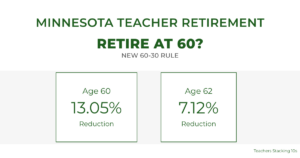
    Minnesota teacher retirement at 60 reduction comparison under enhanced 60-30 rule

    Minnesota Teacher Retirement at 60: Understanding the Enhanced 60/30 Rule

    For years, Minnesota teacher retirement at age 60 was financially unrealistic for


    Read More

  • 3 accounts you need to be auto-investing in

    3 accounts you need to be auto-investing in

    As the new year starts it’s time again to evaluate how much of your paycheck you are saving and investing. For most of us a new school year means moving to a new step on the pay scale. I always think this is the best time to increase your contributions to your saving and investing. Personally, I always try to adjust my savings so that my take home amount stays close to the same each year. I find that is the best way for me to avoid the life style creep that comes with increases in pay. But as you adjust your auto-investing and savings where should that money go? Here are the 3 types of accounts I have found work the best for myself.

    1. 403b or 457 plan.

    We have covered both of these types of plans before but both are plans you have set up through your employer and your contributions to these accounts come out pre-tax, lowering your taxable income. It is a great idea to increase your monthly contributions to a 403(b) or 457 plan each year. It doesn’t have to be by much, sometimes mine is only a $20 increase a month but that is still slowly stacking those tens into an investment account putting more of those dollars to work for you creating more assets. Typically, to increase your contributions you must contact payroll at your school so they can take that money out pre-tax. It’s a pretty painless process, I do it annually. 

    2. HSA

    HSA is a strange one but can be an unorthodox investing tool. Building up your cash reserves in an HSA account can be a wise investment strategy. It is money that is never taxed and will be useful down the road as medical expenses can potentially increase. Your HSA might be throug your bank collecting a small amount of interest, however it is also possible to transfer that money into an investment account to put it to work for you. Once again this is money that is never taxed however the current annual max contribution is $3650 for single and $7300 for family. Once again this will be a conversation or an email to payroll at your school to get the changes made. 

    3. Roth IRA

    I’ve always been a fan of Roth IRA’s, probably because it was my first experience in investing. A reminder, Roth IRA contributions are post tax and you most likely manage these yourselves. Roth IRA’s differ from 403(b) type plans in that they are taxed up front then you can get that money tax free once you turn 59.5. 403(b) plans are the opposite, taxed at the end not upfront. I also enjoy Roth IRA’s because you have more control and more access to your money in that account typically. Once again there is an annual max contribution of $6,000 currently. 

    I would highly recommend increasing your contributions to each of these three types of accounts. They all serve a unique purpose and are all good investment strategies. There are many different opinions on the order in which you should invest in these. Many suggest the order that I have listed above however I find it comes down to personal preference. There are also other directions you can choose to go to invest your new income. 

    4. Brokerage account

    You can increase your contributions to your brokerage account. I also do this annually but it make up a small fraction of my total money in the market (10%). You have a ton of freedom in your brokerage account and it can be fun and exciting to invest in one and get into buying and selling stocks. This comes with a caveat. All of your gains in this account are taxable. That’s one thing all of the amatuer day traders in the world need to understand is you have to pay capital gains tax on earnings from that account. It’s a fine place to add your new investments but you should feel confident about your understanding of the market before you dive into it. 

    5. Traditional savings account

    There’s nothing wrong with having a traditional savings account and increasing your monthly contributions to it. You might have some big purchases coming up and want to have the cash on hand ahead of time to afford them, a very wise move. It’s also very wise to have a small cash reserve in a savings account that you can easily access. However, I do challenge you to have a goal in mind when you are contributing to a savings account. Set a number you want to have in there. Then once you have hit that number think about moving future investments into the market. in the year 2021, the average savings account interest rate was .06%. Think about that. $10,000 would earn you $6 annually. Meanwhile a low cost index fund has a rate of return of 15.9% over the past decade. Keep the cash reserves that you need to have to feel comfortable, then think about put the left over money to work for you. 

    Those are 5 places that you can put your new raise to work for you. Which one fits you best? And I challenge you to save and invest as much of your pay bump as possible. 

    KEEP STACKIN!


    Minnesota teacher retirement at 60 reduction comparison under enhanced 60-30 rule

    Minnesota Teacher Retirement at 60: Understanding the Enhanced 60/30 Rule

    For years, Minnesota teacher retirement at age 60 was financially unrealistic for


    Read More

  • FOMO – What is it? And why you need to fight it

    FOMO – What is it? And why you need to fight it

    FOMO in all aspects of life could be destroying your mental health while providing zero benefits. 

    FOMO is the Fear of Missing Out. It exists in all aspects of human life and is magnified in the financial sector. You see and hear it all of the time. People that want to quickly get in on a new fad or a new profitable company while it’s still on the way up. We have recently lived through this experience so that you didn’t have to… Enter the meme stock craze! 

    So many of us desperately want to pick a winner in life. You see it all of the time. I think immediately to sports. Whether it is bandwagon fans or coaches that change their entire playbook every year hoping to get lucky and pick a winner. This fear of missing out is detrimental to our health. Rather than looking forward we spend all of this time looking backwards at all of the things that could’ve been, “If I had only bought amazon stock 10 years ago it would be worth 18x that value now!”…”If only I had gotten into this housing market a little early I could’ve made a fortune reselling this house.” Here is what that kind of thinking is doing to your brain

    Coincidentally, I just returned from Las Vegas, which is the perfect lead-off for the fear of missing out. We so desperately want to pick a winner that we are convinced just one more hand, one more pic, one more stock and we’ll hit it big. This just isn’t the case. Casinos capitalize on this phenomenon in our brains. We know going in that the house always wins but we are convinced that it’ll be different for us. Not a black jack player? Replace that with lotteries and scratch offs, same principle, we know what the odds are but we convince ourselves that we may be different. Someone is going to win it, it could be me! Or, you can’t win if you don’t play! We’ve heard these before, they are clever sayings that feed into our fears of missing out. 

    Fear of missing out isn’t just confined to sports and gambling however. I heard it from my father just the other day. My father is definitely one of THE MOST financially conservative people I know (I feel like that’s a lot of dads out there) yet here he was clearly worried about missing out on big earnings. What earnings was he talking about? He was talking about getting in on this current housing market. 

    What to do instead? – Stay the course. Responsible investing isn’t sexy. It’s spending less money than you earn month in and month out and investing the difference into reliable index funds. If you are looking for get rich quick ideas, this isn’t the site for you. And if you have the time, effort and skill to try your hand at day trading then you probably aren’t looking at teaching and most of our information isn’t for you. 

    Don’t believe in slow and steady wins the race investing? Just look at the professor’s quarterly reports, check out the growth from one year to the next. Slow and steady wins the financial race almost every single time. So that’s where you should always put your serious money. You can still partake in the speculative side of the market, just put less money there. I’ve always treated those speculative pics like gambling money. I have to personal be okay if I lose all of that money. That’s why most of my speculative pics (AMC and GME) I’ve only put a couple of hundred dollars into. Extra money that I had in my budget but enough investment that I feel like I am part of the craze. 

    Stay the course and KEEP STACKIN!


    Minnesota teacher retirement at 60 reduction comparison under enhanced 60-30 rule

    Minnesota Teacher Retirement at 60: Understanding the Enhanced 60/30 Rule

    For years, Minnesota teacher retirement at age 60 was financially unrealistic for


    Read More

  • Sowing the Seeds!

    One of the big reasons that the T.A. and I started this site was to spread information about how teachers can take control of their finances and move toward financial independence. We were able to start this conversation in our own district this past weekend when we held a Zoom call with some teachers in our district to explain some of the basics of our state retirement plan and the various options that are available. We put together a small presentation and then did a Q and A at the end. The reaction and response to it was great! We’ve had many people reach out to us to go into a little more depth in some of the areas. The big thing if you are thinking of doing this is to really make it a “no-pressure” type of presentation. It’s all about spreading knowledge and making people aware of what’s available. If you would like more information on exactly what we presented, don’t be afraid to reach out!

    KEEP STACKIN!