Category: Budgeting & Cash Flow

Practical strategies for managing income, eliminating debt, building emergency funds, and creating financial stability on a teacher salary.

  • How to Save for Your Child’s College (Before It’s Too Late)

    How to Save for Your Child’s College (Before It’s Too Late)

    I’ve got two daughters in college right now—and let me be blunt: I didn’t plan for this. I didn’t save early. I didn’t have a college fund. And now? I’m paying for it—literally and emotionally. It’s stressful. It’s expensive. It’s a heavy weight that could have been avoided.

    College is an exciting time for young adults. Don’t cause them stress by not preparing now.

    If you’re a parent and college is still a few years away for your kids, you’ve got a chance to do it differently. Saving for college doesn’t have to be overwhelming, and the payoff—peace of mind, financial stability, and freedom for your kids—is worth every effort.

    In this post, I’ll walk you through why saving early matters, and how you can actually start building a solid college fund today (even if you feel like you’re already behind).


    What Does “Saving for College” Really Mean?

    Saving for college simply means setting aside money regularly, over time, to help pay for your child’s future education costs—whether it’s a 4-year university, a trade school, or community college. With tuition, books, and living expenses continuing to rise, college can easily cost tens (or hundreds) of thousands of dollars per student.

    A little planning now can save a lot of headaches later

    This kind of expense can catch parents off guard. According to the College Board, the average cost of tuition and fees for the 2023–2024 school year was over $10,000 for in-state public colleges and more than $40,000 for private colleges. That’s per year.


    Why It’s So Important to Start Saving Early

    Here’s what I’ve learned the hard way: when you don’t prepare, you borrow. When you borrow, you pay more. Interest adds up fast. And when the bills roll in? It’s not just money you owe—it’s the time and energy you lose worrying about it.

    Starting early gives you options. It lets compound interest work in your favor. It lets you contribute small amounts that grow over time instead of scrambling with big payments later. Most importantly, it gives your kids the gift of choice—without burying them in student loans.

    Give your money time to grow and you will be rewarded

    How to Start Saving for College Today

    1. Set a Realistic Goal

    You don’t need to cover 100% of your child’s college costs. Many families aim to save for about a third of the expected cost. Scholarships, grants, and part-time jobs can help fill the rest. Start by using a college cost calculator to estimate future expenses, then set a monthly savings goal that fits your budget.

    2. Open a 529 College Savings Plan

    This is the gold standard for college savings. A 529 plan is a tax-advantaged account designed specifically for education expenses. Money grows tax-free and withdrawals are tax-free when used for qualifying education expenses like tuition, books, and room and board.

    You can set one up through most investment firms or directly through your state’s plan. Many plans even offer automatic deposits to make saving effortless.

    3. Automate Your Contributions

    The easiest way to build a habit is to automate it. Set up a recurring monthly transfer from your checking account to your 529 or savings account. Even $25 or $50 a month adds up over time—and you won’t have to think about it.

    4. Ask Family to Contribute

    Instead of more toys or gadgets during birthdays and holidays, ask grandparents or relatives to contribute to your child’s college fund. Many 529 plans let others make one-time or recurring contributions online, which makes it easy for loved ones to pitch in.

    5. Review and Adjust Each Year

    Life changes. So should your savings strategy. Each year, revisit your goals, check your account balance, and adjust your contributions if you can. If you get a raise or bonus, increase your savings rate. You’ll thank yourself later.


    Tips to Stay on Track (Even When Life Gets in the Way)

    • Start small: Don’t wait until you can save hundreds each month. Begin with what you can, even if it’s $10 a week.
    • Use windfalls wisely: Tax refunds, bonuses, or gifts can make a big dent in your savings goal if you resist the urge to spend.
    • Keep the end in mind: Picture your child receiving that college acceptance letter without fear of debt. That vision can keep you motivated.

    Final Thoughts

    I didn’t save, and now I’m hustling to make tuition payments, navigating student loans, and watching my kids stress about costs. It’s not a great feeling. But it’s one you can avoid.

    Start saving now—no matter how little. Give your future self (and your kids) the advantage of preparation. You’ll be building more than just a college fund. You’ll be building freedom, flexibility, and financial peace. So create your plan, work your plan, and along the way, KEEP STACKIN!


    All your saving now will pay off in the end!
  • Why You Need an Emergency Fund as a Teacher!

    What Is It?

    pexels-photo-3483098.jpeg
    Photo by John Guccione www.advergroup.com on Pexels.com

    Why Teachers Need One

    Don’t let a health emergency ruin your financial future

    Building an Emergency Fund

    Peace of Mind

    The Professor taking it all in.

    Practical Tips for Maintaining an Emergency Fund

    Real-Life Scenarios Where an Emergency Fund Proves Crucial

    Conclusion

    9 responses to “Why You Need an Emergency Fund as a Teacher!”

    1. tlover tonet Avatar

      I’d forever want to be update on new blog posts on this website , saved to my bookmarks! .

      1. The Professor Avatar
        The Professor

        Awesome! Thanks for the support!

    2. instagram video downloader apk uptodown Avatar

      Your writing has a way of resonating with me on a deep level. I appreciate the honesty and authenticity you bring to every post. Thank you for sharing your journey with us.

      1. The Professor Avatar
        The Professor

        Thanks much for the support!

      2. The Professor Avatar
        The Professor

        Thanks much for your support!

    3. X22abope Avatar
      X22abope

      Hey people!!!!!
      Good mood and good luck to everyone!!!!!

      1. The Professor Avatar
        The Professor

        Thanks for reading!

    4. X22abope Avatar
      X22abope

      Hey people!!!!!
      Good mood and good luck to everyone!!!!!

      1. The Professor Avatar
        The Professor

        Thanks for reading!

    Leave a Reply

  • 5 Creative Ways for New Teachers to Make Extra Money (Without Losing Your Sanity)

    5 Creative Ways for New Teachers to Make Extra Money (Without Losing Your Sanity)

    Ah, the joys of being a new teacher. The smell of freshly sharpened pencils, the sound of 25 little angels giggling in unison, and the ever-present mystery of where all your red pens went. But let’s be real, the modest paycheck that comes with the job can make you feel like you’re moonlighting as a professional ramen noodle chef. Fear not, fellow educators! Here are five fun and creative ways to earn extra money without straying too far from your teacher roots.

    1. Tutoring Services: Sharing Your Brainpower

    So you’ve spent years becoming a master of calculus or a whiz at grammar. Why not put that brainpower to extra use? Offering tutoring services is a no-brainer (pun intended).

    tutoring allows you to use your current skill set

    Why It’s Awesome:

    • Flexible Hours: You get to decide when you want to work. No more 7 AM alarm clocks unless you’re into that kind of torture.
    • Instant Expert Status: Students and parents will think you’re a genius. And let’s be honest, you are.
    • Extra Connections: You might end up as the town’s beloved math wizard or grammar guru. Fame at last!

    Tips for Success:

    • Local Ads: Channel your inner 90s kid and post flyers at community centers, libraries, and coffee shops. You’ll feel just like you’re promoting your garage band.
    • Online Platforms: Websites like Wyzant and Tutor.com can help you reach a wider audience without ever leaving your couch.

    2. Selling Educational Resources: The Etsy of Education

    Remember those brilliant lesson plans, worksheets, and activities you spent hours crafting? Well, it’s time to let them shine in the spotlight and make you some money on the side.

    Why It’s Awesome:

    • Passive Income: You do the work once, and then just watch the dollars (okay, maybe cents) roll in.
    • Creative Outlet: Unleash your inner Picasso on those PowerPoints and worksheets.
    • Helping Others: Sharing your resources with other teachers makes you a hero in the teaching community.

    Tips for Success:

    • Join the Party: Sign up on Teachers Pay Teachers, Etsy, or Gumroad. It’s like a giant swap meet for educational resources.
    • Show Off: Use social media to flaunt your creations. Don’t be shy – humblebragging is encouraged here.

    selling your hard work online takes time up front, but then can be a steady income stream in perpetuity.

    3. Online Teaching and Course Creation: Your Ticket to Internet Fame

    Why limit your teaching brilliance to the four walls of your classroom? The internet is a vast, untamed wilderness waiting for your educational expertise.

    Why It’s Awesome:

    • Global Reach: Teach students from Timbuktu to Toronto.
    • Flexible Delivery: Live sessions, recorded lessons, interactive activities – the choice is yours.
    • Subject Variety: Teach whatever tickles your fancy. Always wanted to run a course on the history of memes? Now you can.

    Tips for Success:

    • Pick a Platform: Sites like Udemy, Teachable, and Skillshare are your friends. They provide the tools, you bring the talent.
    • Engage Like a Pro: Use quizzes, discussions, and live Q&A sessions to keep your students hooked.

    4. Summer and After-School Programs: Keeping the Fun Going

    Sure, summer vacation is great, but what if you could make money while still having fun? Many schools and organizations run summer and after-school programs and they need rockstar teachers like you.

    Why It’s Awesome:

    • Extra Pay: These gigs pay hourly, meaning more cash in your pocket.
    • Skill Building: Gain experience and new skills that you can brag about in the teachers’ lounge.
    • Balanced Schedule: These opportunities often fit nicely into your teaching schedule without making you feel like a hamster on a wheel.

    after school programs allow your creativity to shine

    Tips for Success:

    • Scout Locally: Check with local schools, community centers, and non-profits for available positions. Who knows, they might be looking for someone exactly like you.
    • Network: Use your connections. Ask colleagues and administrators for leads – someone always knows someone who needs someone.

    5. Freelance Writing and Blogging: Teacher by Day, Wordsmith by Night

    Got a knack for storytelling or a passion for sharing your teaching adventures? Channel your inner Shakespeare (or BuzzFeed writer) and dive into the world of freelance writing and blogging.

    Why It’s Awesome:

    • Variety: Write curriculum, educational articles, or even start your own blog. The world (wide web) is your oyster.
    • Creative Freedom: Let your creativity run wild. Write about anything from your classroom hacks to that time a student brought a chicken to class (true story).
    • Potential Growth: A successful blog, much like this one, can bring in revenue through ads, sponsored posts, and affiliate marketing. Plus, you get to say you’re a professional blogger – how cool is that?

    Tips for Success:

    • Build Your Portfolio: Start with smaller publications or create sample articles. Show the world you’ve got the chops.
    • Join Writing Communities: Connect with other teacher-writers for job opportunities and feedback. You’ll find your tribe and probably some hilarious stories along the way.
    • Be Consistent: Whether it’s freelancing or blogging, regular content is key. It’s like watering a plant – nurture it and watch it grow.

    Conclusion

    Teaching is a labor of love, but that doesn’t mean you have to settle for a ramen-only diet. With these creative side gigs, you can boost your income while staying true to your passion for education. Plus, you might just discover new talents and interests along the way. So go forth, fellow educators, and conquer the world (and your bank account) with your skills and creativity. And if you have any other ideas on ways new teachers can make extra income, please let us know in the comments below! In the meantime, Keep Stackin!

    you don’t have to live on ramen alone!

  • Get Out of Debt Fast Using the Snowball Method!

    Get Out of Debt Fast Using the Snowball Method!

    Debt – The Facts

    Debt is quickly becoming a crisis in America, and not just at the federal level. Statistics show that the average American household carries a credit card balance of $14,241 at an average interest rate of 17.13%. That works out to $2,439 in just interest payments each year! No wonder American households are living paycheck to paycheck and couldn’t handle a $400 emergency bill.

    The Best AND Fastest Way to Get Out

    The best and fastest way to get out of debt is the debt snowball method. This is one of the Dave Ramsey’s baby steps. There are parts of Mr. Ramsey’s methods that I don’t necessarily agree with, but I agree that consumer debt is one of the biggest issues facing the average American. With the debt snowball method, you will erase that debt and get on your way to financial freedom!

    What is “consumer” debt?

    This is a great question. There are many kinds of debt out there. Credit cards, mortgages, student loans, car loans, RV loans, lines of credit, the list goes on and on. When banks look at consumer credit, it is anything not backed by collateral. Your mortgage for example is not considered consumer credit because it is backed with your home as collateral.

    While that is the technical meaning of consumer credit, I would like to make a couple of distinctions in that list. According to the collateral definition, your car loan or RV loan would not be considered consumer credit since they are backed by the vehicle. Here at Teachers Stacking 10s, we view vehicle loans as consumer credit because the assets they back only depreciate. Conversely, while student loans aren’t backed by any physical collateral, they are backed by your education and SHOULD increase your earning potential.

    So, for this article, we are focusing on all debt outside of mortgages and student loans. The nice thing about this though is that you could easily include those if you want.

    How Do People Get Out of Debt?

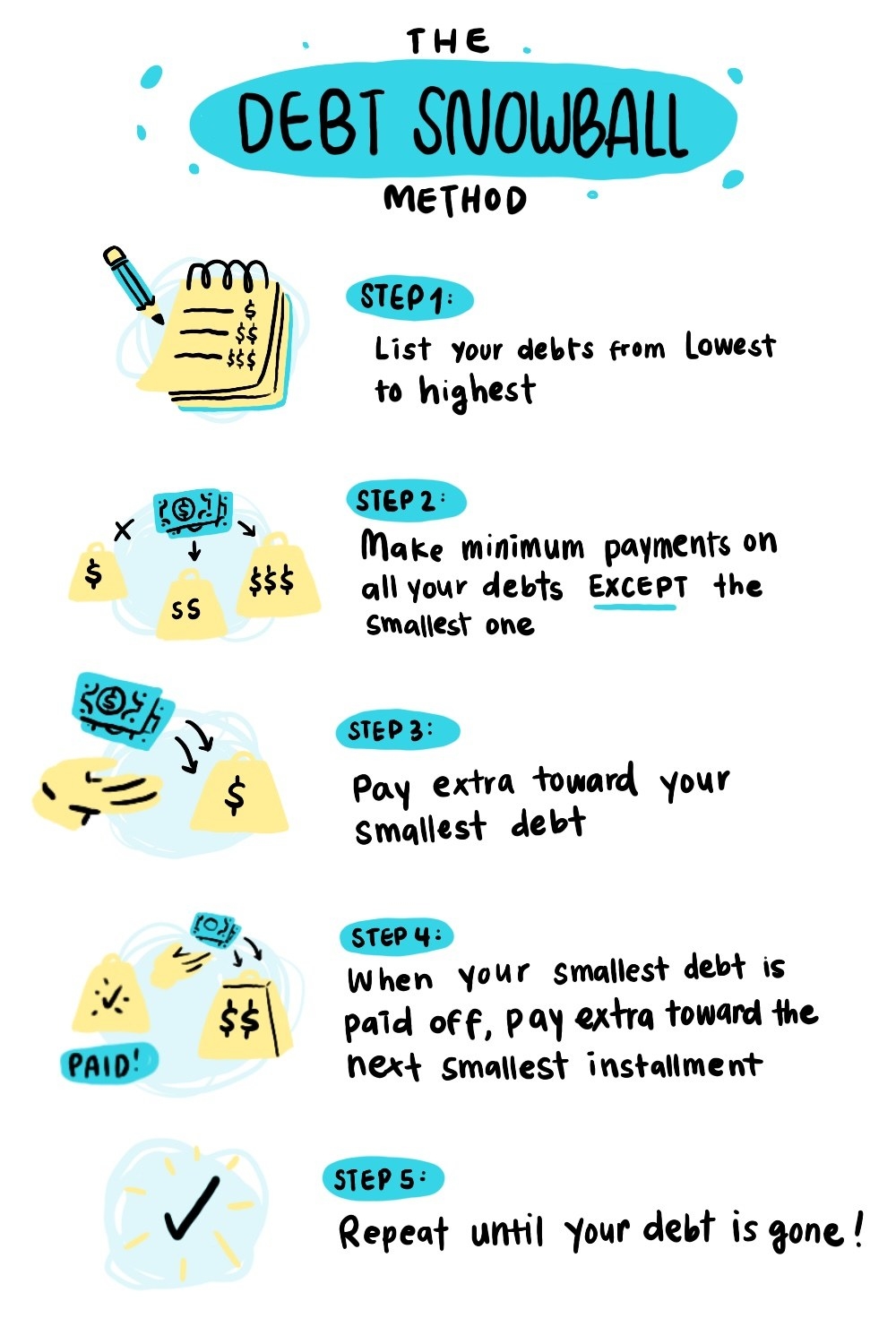
    There are two ways that people usually attempt to pay off debt. The first one is the debt avalanche method. This is when you list out all your debts and put them in order from highest interest rate to lowest interest rate and pay them off from highest to lowest. This sounds like the best method according to math. The problem is that debt isn’t a math problem. It’s a behavioral problem. We need a method that is going to work on that behavior and emotion. That’s where the debt snowball comes in. Instead of ordering the debt according to interest rate, you are going to order the debts from smallest balance to largest balance and begin paying the smallest balance first. Then you make minimum payments to all debts except the smallest balance. You throw as much as you can at that smallest one until it’s paid off. Once it is paid off, you roll everything you were paying on that paid off debt into the next smallest debt. You continue this until you have each debt paid.

    Why is This Method So Effective?

    Some of you reading this are probably swearing at me right now saying, “This method will cost you more interest than using the avalanche method!” And you would be correct, but remember I said debt isn’t a math problem, it’s a behavioral problem. If your highest interest debt is also your largest debt, it might take you months or even years to pay it off. What I want you to have is a win by getting that small balance paid off. You’ll get that emotional charge and are more likely to stick with it than if you just keep paying month after month without seeing any benefit. We are in a highly addictive and I want it now society (probably the reason you are in debt!). You need a plan that is going to give you that win and allow you to see progress towards your goal.

    Why Can’t I Just Roll All My Debts into One Larger Debt?

    This is a TERRIBLE idea, but one that many people subscribe to. There are two reasons that this is a terrible idea. The first reason goes back to that behavioral problem. By rolling everything into one larger debt, you aren’t going to see that win of getting something paid off for a long time, possibly even a VERY long time. I want you to get those wins! The second reason is even more dangerous than the first. By rolling all those debts into a new debt, you are just robbing Peter to pay Paul. Sure, those smaller debts are all taken care of, but you have opened the door to those old bad habits and you could accumulate more debts on those open cards or lines of credit, and you could end up in an even worse position!

    So, get those debts all lined up, get them in order, and start scratching and clawing your way to debt freedom. That will allow you to really get after the fun part, wealth accumulation which will be completely new to many and will allow you to KEEP STACKIN!

    The Problem:

    The average American household is $58,000 in debt.

    The Solution:

  • A Little Research Can Save You THOUSANDS Of Dollars!

    A Little Research Can Save You THOUSANDS Of Dollars!

    The Story

    Last week, my Maytag Neptune dryer started making that hideous, high-pitched squealing sound. I shouldn’t have been surprised. We have owned it for TWENTY-ONE years! It’s been a great dryer and is an extremely well-built machine. I have torn it apart before to fix this same “type” of sound, but this time replacing the support rollers in the back didn’t fix the problem. In fact, it starting making an even worse grinding sound after the repair. I thought this might be the end of the line for this stalwart of our home appliances, but I felt like I couldn’t let it go. I talked to my local appliance store where I get most of my parts and discussed the issue. (If you don’t know a local shop service guy, I STRONGLY recommend that you get to know one and NOT one of the big box stores!) My service guy said that the bearings in the motor were shot and that the only fix is to replace the motor. UGH! Not the news I wanted to hear, so I went home dejected thinking it was time to shell out some major $ to purchase a new dryer.


    As you know, we here at Teachers Stacking 10s are all about finding ways to save money, so I turned to the other source of knowledge when I’m looking for ways to save, the Internet. After some research, I found a video showing how to replace the motor in my exact type of dryer and I realized that it was actually SUPER SIMPLE to do. My local shop didn’t have this part in stock, so I checked a website, Appliance Parts Pros, where I have ordered parts in the past, and it had the exact replacement motor! I was ecstatic. The only problem was that it cost $320. This created a dilemma for me. $320 isn’t a small amount of money, BUT the alternative was to go out and purchase a new dryer. The cheapest models I could find were $600, and I’d be replacing a solidly built machine with something much lower quality. To match the same build and quality, would be $1,200 or MORE! After mulling it for a few hours (I didn’t have time to think on it much more. With two teenage girls in the house, the dryer is in HIGH DEMAND), I went ahead and ordered the replacement motor.


    The new motor arrived after just 2 days and took me about 15 minutes to get installed and put back together. I was nervous, because it was the first motor that I’ve replaced. I went down and turned the breaker on and it didn’t immediately “trip”. Test one passed! I went back to the dryer to give it a “dry” run of running with nothing inside. I reached out to hit the start button and closed my eyes. Click! The dryer kicked on and was quieter than it had been in years! Test two passed. I put in a load of clothes to dry and still quiet as a mouse. $300+ saved!!

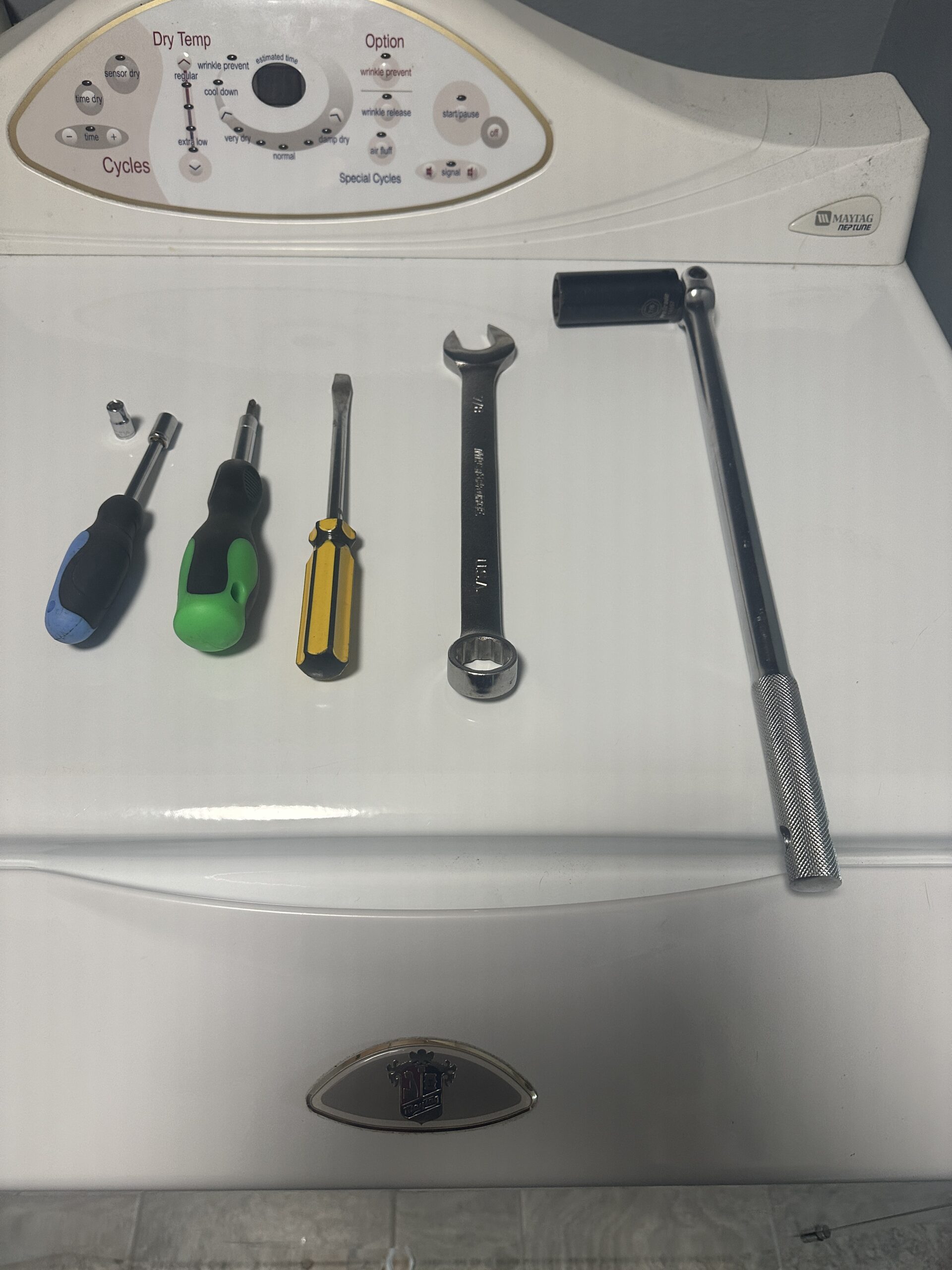
    Many of you might be saying to yourself, “But Professor, I’m not handy at all!” And you might be right. Most people would have heard that squealing sound from the dryer and just decided right then and there that they were going to go out the next day and purchase a new dryer. And there are certain repairs that are beyond even the most “handy” of homeowners, BUT the point I want to make is do some research online before you go out and spend big money on appliances that are going to break down in 6-8 years anyways. The tools required to replace this motor? A Phillips and a flathead screwdriver, two nut drivers, a 7/8″ socket and a 7/8″ wrench. That’s it!

    While you were in college, or even now if you’re renting, most appliances are the responsibility of the landlord. When you become the homeowner, these appliances are now YOUR responsibility. They are usually the biggest headache to homeowners because repairs can often require specific skills, tools, or knowledge. But that isn’t always the case. A service call is usually a minimum charge of $100 and that’s before ANY work is even done. Over the last 10 years, I’ve replaced the ignitor in my oven 3 times, fixed my dryer now 2 times, replaced the valves on 2 toilets, and jetted out my sewer lines 4-5 times (that’s a whole different story). Add up the savings on all of these repairs, and it’s in the thousands of dollars!! Even the T.A. has saved money fixing his hot water heater. Does this mean we can do ANY repair? Of course not, certain appliances like a refrigerator have compressors that require special equipment that cost well beyond what it would save a typical homeowner. 


    So before you call for that service tech to come to your house, take a deep breath, do a little research, and see if you can’t save yourself a little money. As always, KEEP STACKIN!

    The Problem:

    Appliances are often the biggest headache for new and long-time homeowners who have never had to repair any of these types of machines.

    The Solution:

    Before you jump the gun and call in an expensive service tech, or, worse yet, go out and buy a new machine, do a little research. In today’s age of YouTube, you can find videos on just about anything. See if it is a problem that you can fix yourself and save some money that you can KEEP STACKIN!

  • Exciting Side Hustle!

    I just wanted to drop a quick post to let everyone know that the side hustle that I mentioned in my last post is close to going live. It is going to go live the first week of March. It has taken a lot of work and will continue to be work going forward, but I’m excited at the possibilities that it presents. Once it’s live and moving forward, I will let everyone know exactly what it is so you can see what I’ve been up to.

    Until then, KEEP STACKIN!

  • THE PROFESSOR’S END OF Q4 2021 FINANCIAL UPDATE

    THE PROFESSOR’S END OF Q4 2021 FINANCIAL UPDATE

    This is my post showing how we are saving money both in and out of retirement accounts. I always like to read blogs that give real-life examples of those people practicing what they preach. Going forward, I will try and give a quarterly update of our financial position and the thoughts that go into it. I will warn you, I don’t have huge amounts of money socked away anywhere, but I think we have done a solid job in putting money aside.

    9/30/2021 12/31/2021
    Assets September December Change % Change
    Cash – All checking and savings accounts  $           7,114.66  $       11,324.39  $                4,209.73 59.2%
    Stock Account (TD Ameritrade)  $           3,487.78  $         1,296.93  $              (2,190.85) -62.8%
    Index Fund (Vanguard)  $           7,347.75  $         7,101.68  $                 (246.07) -3.3%
    Stock Account (M1 Finance)  $               386.04  $         1,123.88  $                    737.84 191.1%
    Crypto Account (Coinbase)  $                        –    $             598.10  $                    598.10 0.0%
    My 403(b)  $         87,532.49  $       95,716.44  $                8,183.95 9.3%
    My IRA  $               418.52  $             497.36  $                      78.84 18.8%
    Wife 401(k)  $      217,695.93  $    236,763.57  $              19,067.64 8.8%
    Wife 403(b)  $                        –    $             118.32  $                    118.32 0.0%
    My HCSP  $         27,686.70  $       29,441.43  $                1,754.73 6.3%
    Total Assets  $      351,669.87  $    383,982.10  $              32,312.23 9.2%
    Liabilities
    Current Debt (Credit Cards, Etc.)  $                             –   0.0%
    Clinic  $           2,768.60  $         1,568.60  $              (1,200.00) -43.3%
    Corolla Loan  $                        –    $                      –    $                             –   0.0%
    RAV4 Loan  $         11,378.84  $       10,320.63  $              (1,058.21) -9.3%
    My Student Loan  $           5,559.16  $         5,559.16  $                             –   0.0%
    PLUS Loan  $         10,214.00  $       10,014.00  $                 (200.00) -2.0%
    Property #1 Mortgage (Primary)  $      103,254.33  $    101,675.96  $              (1,578.37) -1.5%
    HELOC (Primary)  $         17,600.00  $       17,600.00  $                             –   0.0%
    Total Liabilities  $      150,774.93  $    146,738.35  $              (4,036.58) -2.7%
    Total Net Worth  $      200,894.94  $    237,243.75  $              36,348.81 18.1%

    Assets:

    Cash – $11,324.39 Up $4,209.73

    This includes all of our checking and savings account balances. I never was a big believer in the 3-6 months of savings, BUT some life changes forced me to rethink that. We are working our way up to about $25,000 in savings between our checking and savings accounts. I am finding it also gives me piece of mind to have this money just sitting there if a real emergency did arise.

    Our goal by the end of this year was $10,000. That goal was reached. Now our goal for 2022 is $25,000.

    TD Ameritrade (taxable) – $1,296.93 Down $2,190.85

    This is an account that I started so I could buy individual dividend growth stocks. I’ve sold some of my dividend stocks and put more into growth stocks. This account I am slowly selling off to be able to close and consolidate into other accounts that I have created. One of my stocks in this account, MDP, was acquired by another company so the stock was liquidated. That sounds bad, BUT I ended up making getting about $1,600 from it. Not bad from a $500 original investment! I also sold my GME stock at its most recent high of about $225. I ended up taking about a $250 loss on this stock. Dumb move on my part.

    Vanguard (taxable) – $7,101.68 Down $246.07

    This is an account that I use to purchase Vanguard index funds. This was going to be my emergency fund, and it kind of is my current “secondary” emergency fund. My plan is to get between $10-15,000 in this account and let it grow and replenish as needed. We are putting in $500/month into this. One of the stocks in this account dropped quite a bit from the end of quarter 3. It’s still a winner, but just not that HUGE winner it was at the end of Q3.

    M1 Finance (taxable) – $1,123.88 Up $737.84

    This is an account that I started so I could buy high growth tech stocks. I also added a “slice” that has dividend stocks as well. All in all, there are 98 total stocks in this portfolio now. The best thing about M1 is that it allows you to build a portfolio and put money into it and buy fractional shares instead of having to wait to save enough to build a position for each stock. Will add money to this as I can.

    Crypto Account (Coinbase) – $598.10 Up $98.10

    This is the newest account that we made. It is a cryptocurrency account. Crypto is all the rage right now, and I thought I would put a little money in to try and diversify our portfolio. I put $500 into this a few weeks ago. It’s currently up almost $100, but the thing about crypto is that it’s the most volatile asset you can own. It is not unusual for this to see 40% swings in a matter of a few days. I don’t plan on putting massive amounts of money in here. Only small parts of our total net worth.

    My 403(b) – $95,716.44 Up $8,183.95

    This is my main retirement account. I have been paying into this since I started teaching. Our district currently matches $800 each year into this account. It is kind of small for having taught for 20 years, but my early years of putting money into this account robbed me of many gains. I was invested in annuities with heavy fees and surrender penalties. It’s just been in the last 8-10 years that I have really become more knowledgeable about these accounts. 

    The market made a BIG bounce back in Q4.

    My IRA – $497.36 Up $78.84

    This is where I will roll over my 403(b) to when I retire. I added $48 this quarter. The reason was to be able to purchase another share of VTI. I had $180 just sitting in the money market there and I wanted it to “work” a little harder!

    Wife 401(k) – $236,763.57 Up $19,067.64

    My wife has a good job as a nurse. This 401(k) is from the organization that she used to work for. She switched jobs in December, so this account will no longer be receiving any contributions. With the total amount in the account though, it will definitely continue to see big growth as long as the market is doing well.

    Wife 403(b) – $188.32 Up $118.32

    This is her 403(b) from her new job. The new healthcare facility she works for also matches her contributions, but she has to be there for one year before she will see that match.

    My Health Care Savings Plan (HCSP) – $29,441.43 Up $1,754.73

    This is an account through our school that we both contribute to each month. It can only be used for medical expenses AFTER I retire. It has grown nicely the last 5 years. It has also regained all its losses from the collapse and continues to grow and reinvest its dividends.

    Liabilities:

    Clinic – $1,568.60

    It sucks to have low-back pain. We are still paying $400/month on the payment plan. There is NO interest on this so I am in no rush to pay it back. The low-back procedure does NOT seem to be having the same positive effect it used to though, so I do not plan on having it done again.

    RAV4 Loan – $10,320.63 Down $1,058.21

    We had to add another vehicle to our “fleet” in 2019 due to another driver in the household. We also needed a little bit larger one with two teenage girls. Slowly working this one down.

    Corolla Loan – $0 Down $0

    This is the loan for the vehicle to replace our previous car that was totaled. It’s a nice fuel efficient vehicle. My goal is to have it paid off in the next 12 months. ACHIEVED! Used part of our most recent stimulus check to completely pay this off! One yearly goal accomplished.

    My Student Loan – $5,559 Unchanged

    This is what’s left of my loan for my Master’s degree. With the pandemic, I was given forbearance on this loan.

    PLUS Loan – $10,014.00 Down $200

    And so it begins. This is the parent loan for our oldest daughter’s first year in college. This is a loan that we will work to pay off over time, but it will definitely go up each semester that she is in college. Kids…. We will get another $10,000 added to this loan in January for the second semester. I will then be doing a consolidation of my student loan and this loan. The hope is that it will then qualify for the “special” PSLF program that is currently in place. If it did, that would be a huge win. If not, then we will start the long process of repaying these loans.

    Mortgage – $101,675.96 Down $1,578.37

    This is the mortgage that we have on our home. The house currently appraises for about $207,000, so we do have some equity in it. We signed on our refinance at 15 years and 2.5%. We will have the house paid off just as I am ready to retire from teaching. Great timing!

    HELOC – $17,600 Same

    No payment on this at this time.

    Net worth (assets-liabilities) – $237,243.75 Up $36,346.81

    Key Points:

    You’ll notice that I don’t have assets linked for our major liabilities. I do NOT believe that you should include the value of your house or vehicles as assets for your net worth. You only realize those assets if you sell them, and I don’t plan on ever selling those things, but I DO have to pay off those loans. I think it gives a clearer picture of how much money you actually have. 

    Goals for 2022:

    I’m going to keep a couple of goals here. I definitely want to get that clinic bill paid off and also fund a Roth IRA ($6,000) for the year. I was able to continue to grow the Vanguard Index account. I am planning to continue watching the current rental properties available in my area. If I can get one at a fair deal, I will definitely pull the trigger. I want to continue to diversify our portfolio by investing in growth stocks, dividend stocks, and crypto. Consolidating the student loans and applying for PSLF is another big step. 

    Another goal that I have for 2022 is creating another stream of income. I have plans in place to move forward with a pretty big project in the spring of 2022. As you all know, education is currently one of the areas that is seeing some major burnout, and unfortunately, I find myself in that category. I have no plans on leaving the profession currently, but I want to create something that could bring in some money and give me options. It’s definitely not a sure thing, so I am not going to give out too many details at this time. Hopefully by the end of Q1 in 2022, I will have a little more information.

    Quarterly Comments:

    Some huge growth in Q4. Most of it was due to a big recovery in the market from Q3. We also did a better job of building our savings and adding to investments. Hopefully the growth continues, but 2022 is looking like it could be a rough year for the markets. Inflation seems to be the big topic of the day.

    We are STILL trying to begin saving up money for a rental property, BUT the housing market is just too damn hot right now. There are no deals out there that aren’t gobbled up before they even get on the market. I would love to have a rental property or two for the cash flow, but it’s just not in the cards at this point. Someday……

    So how’s your financial situation? Throw some thoughts down in the comments and as always….

    KEEP STACKIN!

  • The Professor’s End of Q3 2021 Financial Update

    The Professor’s End of Q3 2021 Financial Update

    This is my post showing how we are saving money both in and out of retirement accounts. I always like to read blogs that give real-life examples of those people practicing what they preach. Going forward, I will try and give a quarterly update of our financial position and the thoughts that go into it. I will warn you, I don’t have huge amounts of money socked away anywhere, but I think we have done a solid job in putting money aside. 

    6/30/2021 9/30/2021
    Assets June September Change % Change
    Cash – All checking and savings accounts  $      4,050.56  $     7,114.66  $          3,064.10 75.6%
    Stock Account (TD Ameritrade)  $      3,171.68  $     3,487.78  $             316.10 10.0%
    Index Fund (Vanguard)  $      6,003.14  $     7,347.75  $          1,344.61 22.4%
    Stock Account (M1 Finance)  $         307.96  $        386.04  $               78.08 25.4%
    My 403(b)  $    87,355.43  $   87,532.49  $             177.06 0.2%
    My IRA  $         418.65  $        418.52  $                (0.13) 0.0%
    Wife 401(k)  $  216,150.84  $ 217,695.93  $          1,545.09 0.7%
    My HCSP  $    27,582.39  $   27,686.70  $             104.31 0.4%
    Total Assets  $  345,040.65  $ 351,669.87  $          6,629.22 1.9%
    Liabilities
    Current Debt (Credit Cards, Etc.)  $                     –   0.0%
    Clinic  $      2,436.30  $     2,768.60  $             332.30 13.6%
    Corolla Loan  $                 –    $               –    $                     –   0.0%
    RAV4 Loan  $    12,425.89  $   11,378.84  $         (1,047.05) -8.4%
    My Student Loan  $      5,559.16  $     5,559.16  $                     –   0.0%
    PLUS Loan  $                 –    $   10,214.00  $        10,214.00 0.0%
    Property #1 Mortgage (Primary)  $  104,822.88  $ 103,254.33  $         (1,568.55) -1.5%
    HELOC (Primary)  $    17,800.00  $   17,600.00  $            (200.00) -1.1%
    Total Liabilities  $  143,044.23  $ 150,774.93  $          7,730.70 5.4%
    Total Net Worth  $  201,996.42  $ 200,894.94  $         (1,101.48) -0.5%

    Assets:

    Cash – $7,144.66 Up $3,064.10

    This includes all of our checking and savings account balances. I’m not a big believer in carrying 3-6 month emergency fund. We have enough room on credit cards to put any emergency purchases on and then pay them off with our other accounts before those bills are due. These types of accounts just don’t return enough in interest to provide any value to me. This account always seems to stay pretty steady. 

    We need to build this up more. My goal is to build this to $10,000 by the end of the year.

    TD Ameritrade (taxable) – $3,487.78 Up $316.10

    This is an account that I started so I could buy individual dividend growth stocks. I’ve sold some of my dividend stocks and put more into growth stocks. This is the reason for the increase in this account.

    Vanguard (taxable) – $7,347.75 Up $1,344.61

    This is an account that I use to purchase Vanguard index funds. This is where I prefer to keep my “emergency” fund. I know that I need to grow this out more in case of any significant emergency expense. My plan is to get between $10-15,000 in this account and let it grow and replenish as needed. We are putting in $500/month into this. Steady growth and savings here.

    M1 Finance (taxable) – $386.04 Up $78.08

    This is an account that I started so I could buy high growth tech stocks. It allows you to build a portfolio and put money into it and buy fractional shares instead of having to wait to save enough to build a position for each stock. Will add some as I can to this. Was able to dump in $100, but these tech stocks are really floundering right now.

    My 403(b) – $87,532.49 Up $177.06

    This is my main retirement account. I have been paying into this since I started teaching. Our district currently matches $800 each year into this account. It is kind of small for having taught for 20 years, but my early years of putting money into this account robbed me of many gains. I was invested in annuities with heavy fees and surrender penalties. It’s just been in the last 8-10 years that I have really become more knowledgeable about these accounts. 

    The market struggled in Q3.

    My IRA – $418.52 Down $0.13

    This is where I will roll over my 403(b) to when I retire. No money added this quarter.

    Wife 401(k) – $217,695.93 Up $1,545.09

    My wife has a good job as a nurse and the organization that she works for contributes 9% of her salary each year into this account. She’s also contributing 13.5% of her salary so about 20% of her salary goes here each year. This is the account that I learned first-hand the power of compounding.

    My Health Care Savings Plan (HCSP) – $27,686.70 Up $104.31

    This is an account through our school that we both contribute to each month. It can only be used for medical expenses AFTER I retire. It has grown nicely the last 5 years. It has also regained all its losses from the collapse and continues to grow and reinvest its dividends.

    Liabilities:

    Clinic – $2,768.60 Up $332

    It sucks to have low-back pain.  I just got one of my procedures done again. I think I will be able to skip the other side though. We are still paying $400/month on the payment plan. There is NO interest on this so I am in no rush to pay it back.

    RAV4 Loan – $11,378.84 Down $1,047.05

    We had to add another vehicle to our “fleet” in 2019 due to another driver in the household. We also needed a little bit larger one with two teenage girls. Slowly working this one down.

    Corolla Loan – $0 Down $0

    This is the loan for the vehicle to replace our previous car that was totaled. It’s a nice fuel efficient vehicle. My goal is to have it paid off in the next 12 months. ACHIEVED! Used part of our most recent stimulus check to completely pay this off! One yearly goal accomplished.

    My Student Loan – $5,559 Unchanged

    This is what’s left of my loan for my Master’s degree. With the pandemic, I was given forbearance on this loan.

    PLUS Loan – $10,214.00 Up $10,214.00

    And so it begins. This is the parent loan for our oldest daughter’s first year in college. This is a loan that we will work to pay off over time, but it will definitely go up each semester that she is in college. Kids….

    Mortgage – $103,254.33 Down $1,568.55

    This is the mortgage that we have on our home. The house currently appraises for about $207,000, so we do have some equity in it. We signed on our refinance at 15 years and 2.5%. We will have the house paid off just as I am ready to retire from teaching. Great timing!

    HELOC – $17,600 Down $200

    Made a small $200 payment on this.

    Net worth (assets-liabilities) – $200,894.94 Down $1,101.48

    Key Points:

    You’ll notice that I don’t have assets linked for our major liabilities. I do NOT believe that you should include the value of your house or vehicles as assets for your net worth. You only realize those assets if you sell them, and I don’t plan on ever selling those things, but I DO have to pay off those loans. I think it gives a clearer picture of how much money you actually have. This actually dropped due to adding that PLUS Loan.

    Goals for 2021:

    I’m going to keep a couple of goals here. I definitely want to get that clinic bill paid off and also fund a Roth IRA ($6,000) for the year. I was able to continue to grow the Vanguard Index account. I am planning to continue watching the current rental properties available in my area. If I can get one at a fair deal, I will definitely pull the trigger. We do have a senior that will be heading off to college next fall, so that will be a BIG expense, but one that will definitely be worth it for her. We are still debating if we will take out a parent loan or pull money from our HELOC to cover her tuition each quarter. We are looking into interest rates on school loans for parents. Whichever way we go, that will eat up our cashflow for a few years…. It’s always somethin….

    Quarterly Comments:

    The stock market was a major bummer this quarter, but it can’t shoot up all the time. We could be looking at very slow climbs for the next couple of quarters or even YEARS… The college stuff is a major expense that we really didn’t save properly for in the past. Of course, 10 years ago anytime we had any money to save, we found ways to spend it instead of saving or investing. I’m glad we were able to get on the right path about 4 years ago and get moving in the right direction or we wouldn’t have been able to even get a loan for our daughter’s college education.

    We are STILL trying to begin saving up money for a rental property, BUT the housing market is just too damn hot right now. There are no deals out there that aren’t gobbled up before they even get on the market. I would love to have a rental property or two for the cash flow, but it’s just not in the cards at this point. Someday……

    So how’s your financial situation? Throw some thoughts down in the comments and as always….

    KEEP STACKIN!

  • Chase Sapphire Preferred 100,000 Bonus Point Offer!

    Chase Sapphire Preferred 100,000 Bonus Point Offer!

    Hello Stackers!

    I wanted to make a short post letting all of our readers know about Chase’s bonus points offer on their Sapphire Preferred card. I reviewed this card from this post back in October of 2019. I had gotten the card to take advantage of the 60,000 bonus points when I spent $4,000 in the first 4 months. Well, now Chase is offering 100,000 bonus points when you spend $4,000 in your first 3 months! This is their biggest offer yet! Those bonus points can be used through their Chase Rewards site that lets you spend on a variety of options, but TRAVEL is the best option. Each point on your Sapphire Preferred card is worth 1.5 points in their Chase Rewards portal. This is a huge offer.

    I must remind you though that if you do decide to take the offer that you MUST pay that credit card bill in full each month! Do NOT carry that balance forward or the interest will negate any benefits you get through Chase Rewards. You might not think that you could spend $4,000 in the first 3 months, but look into whether or not you could pay all of your monthly bills through your card. I still pay all of my bills through my Chase cards to accumulate points. I just wish they would give this offer to existing users of the Sapphire Preferred card.

    One final note, the Chase Sapphire card does have a $95/year annual fee. For me, it’s well worth the fee because I take advantage of much more than that in travel every other year. You will have to decide for yourself if this card would be worth it to you. If it seems like it would be worth it, you can apply for the card by clicking this link.  In full transparency, this site will receive a small commission if you use this link to apply for the card, and it would be much appreciated.

    Until next time…

    KEEP STACKIN!

  • THE PROFESSOR’S END OF Q2 2021 FINANCIAL UPDATE

    THE PROFESSOR’S END OF Q2 2021 FINANCIAL UPDATE

    This is my post showing how we are saving money both in and out of retirement accounts. I always like to read blogs that give real-life examples of those people practicing what they preach. Going forward, I will try and give a quarterly update of our financial position and the thoughts that go into it. I will warn you, I don’t have huge amounts of money socked away anywhere, but I think we have done a solid job in putting money aside. 

    Q1 in 2020 was good for us financially. We still aren’t as “liquid” as I would like. We need to increase our savings to be able to weather any financial storms, but we are working to get there.

    *Always keep in mind, these numbers DO NOT include my teacher pension. My goal is to make that money just a part of our financial future and NOT the entire amount we will have.

    3/31/2021 6/30/2021
    Assets March June Change % Change
    Cash – All checking and savings accounts  $           3,442.64  $         4,050.56  $                    607.92 17.7%
    Stock Account (TD Ameritrade)  $           2,936.92  $         3,171.68  $                    234.76 8.0%
    Index Fund (Vanguard)  $           6,708.94  $         6,003.14  $                 (705.80) -10.5%
    Stock Account (M1 Finance)  $               163.56  $             307.96  $                    144.40 88.3%
    My 403(b)  $         80,516.82  $       87,355.43  $                6,838.61 8.5%
    My IRA  $               401.28  $             418.65  $                      17.37 4.3%
    Wife 401(k)  $      198,779.61  $    216,150.84  $              17,371.23 8.7%
    My HCSP  $         25,642.17  $       27,582.39  $                1,940.22 7.6%
    Total Assets  $      318,591.94  $    345,040.65  $              26,448.71 8.3%
    Liabilities
    Current Debt (Credit Cards, Etc.)  $                             –   0.0%
    Clinic  $           2,387.24  $         2,436.30  $                      49.06 2.1%
    Corolla Loan  $                        –    $                      –    $                             –   0.0%
    RAV4 Loan  $         13,467.50  $       12,425.89  $              (1,041.61) -7.7%
    My Student Loan  $           5,559.16  $         5,559.16  $                             –   0.0%
    Property #1 Mortgage (Primary)  $      106,381.55  $    104,822.88  $              (1,558.67) -1.5%
    HELOC (Primary)  $         10,000.00  $       17,800.00  $                7,800.00 78.0%
    Total Liabilities  $      137,795.45  $    143,044.23  $                5,248.78 3.8%
    Total Net Worth  $      180,796.49  $    201,996.42  $              21,199.93 11.7%

    Assets:

    Cash – $4050.56 Up $607.92

    This includes all of our checking and savings account balances. I’m not a big believer in carrying 3-6 month emergency fund. We have enough room on credit cards to put any emergency purchases on and then pay them off with our other accounts before those bills are due. These types of accounts just don’t return enough in interest to provide any value to me. This account always seems to stay pretty steady. 

    We need to build this up more. My goal is to build this to $10,000 by the end of the year.

    TD Ameritrade (taxable) – $2,936.92 Up $234.76

    This is an account that I started so I could buy individual dividend growth stocks. I’ve sold some of my dividend stocks and put more into growth stocks. This is the reason for the increase in this account.

    Vanguard (taxable) – $6003.14 Down 705.80

    This is an account that I use to purchase Vanguard index funds. This is where I prefer to keep my “emergency” fund. I know that I need to grow this out more in case of any significant emergency expense. My plan is to get between $10-15,000 in this account and let it grow and replenish as needed. We are putting in $500/month into this. Steady growth and savings here. We did have to pull out some to pay for some oral surgery for our youngest’s wisdom teeth.

    M1 Finance (taxable) – $307.96 Up $144.40

    This is an account that I started so I could buy high growth tech stocks. It allows you to build a portfolio and put money into it and buy fractional shares instead of having to wait to save enough to build a position for each stock. Will add some as I can to this. Was able to dump in $100 and these tech stocks recovered nicely in Q2.

    My 403(b) – $87,355.43 Up $6838.61

    This is my main retirement account. I have been paying into this since I started teaching. Our district currently matches $800 each year into this account. It is kind of small for having taught for 20 years, but my early years of putting money into this account robbed me of many gains. I was invested in annuities with heavy fees and surrender penalties. It’s just been in the last 8-10 years that I have really become more knowledgeable about these accounts. 

    It’s continuing to climb.

    My IRA – $418.65 Up $17.37

    This is where I will roll over my 403(b) to when I retire. No money added this quarter.

    Wife 401(k) – $216,150.84 Up $17,371.23

    My wife has a good job as a nurse and the organization that she works for contributes 9% of her salary each year into this account. She’s also contributing 12.5% of her salary so about 20% of her salary goes here each year. This is the account that I learned first-hand the power of compounding.

    Market continues to go up. We did up her contributions to 12.5% from 11.5%.We were able to BLOW past that $200k mark! This account reinvests almost $2,500/year in dividends. The power of compounding!

    My Health Care Savings Plan (HCSP) – $27,582.39 Up $1,940.22

    This is an account through our school that we both contribute to each month. It can only be used for medical expenses AFTER I retire. It has grown nicely the last 5 years. It has also regained all its losses from the collapse and continues to grow and reinvest its dividends.

    Liabilities:

    Clinic – $2,436.30 UP $49.06

    It sucks to have low-back pain.  I just got one of my procedures done again. I think I will be able to skip the other side though. We are still paying $400/month on the payment plan. There is NO interest on this so I am in no rush to pay it back.

    RAV4 Loan – $12,425.89 Down $1,041.61

    We had to add another vehicle to our “fleet” in 2019 due to another driver in the household. We also needed a little bit larger one with two teenage girls. Slowly working this one down.

    Corolla Loan – $0 Down $0

    This is the loan for the vehicle to replace our previous car that was totaled. It’s a nice fuel efficient vehicle. My goal is to have it paid off in the next 12 months. ACHIEVED! Used part of our most recent stimulus check to completely pay this off! One yearly goal accomplished.

    My Student Loan – $5,559 Unchanged

    This is what’s left of my loan for my Master’s degree. With the pandemic, I was given forbearance on this loan.

    Mortgage – $104,822.88 Down $1,558.67

    This is the mortgage that we have on our home. The house currently appraises for about $207,000, so we do have some equity in it. We signed on our refinance at 15 years and 2.5%. We will have the house paid off just as I am ready to retire from teaching. Great timing!

    HELOC – $17,800 Up $7,800

    Ughh. This is my biggest regret this quarter. We pulled money out to completely pay off a couple of random credit cards that had been hanging over us for a bit stemming back to my basement remodel last spring. One positive is that we are now COMPLETELY credit card debt free as we make our payment in full each month. We only use 2 different cards now for the bonus points that they give us for travel.

    Net worth (assets-liabilities) – $201,966.42 Up $21,199.93

    Key Points:

    You’ll notice that I don’t have assets linked for our major liabilities. I do NOT believe that you should include the value of your house or vehicles as assets for your net worth. You only realize those assets if you sell them, and I don’t plan on ever selling those things, but I DO have to pay off those loans. I think it gives a clearer picture of how much money you actually have.

    Goals for 2021:

    I’m going to keep a couple of goals here. I definitely want to get that clinic bill paid off and also fund a Roth IRA ($6,000) for the year. I was able to continue to grow the Vanguard Index account. I am planning to continue watching the current rental properties available in my area. If I can get one at a fair deal, I will definitely pull the trigger. We do have a senior that will be heading off to college next fall, so that will be a BIG expense, but one that will definitely be worth it for her. We are still debating if we will take out a parent loan or pull money from our HELOC to cover her tuition each quarter. We are looking into interest rates on school loans for parents. Whichever way we go, that will eat up our cashflow for a few years…. It’s always somethin….

    Quarterly Comments:

    Another big quarter in the market. It’s amazing to see how money compounds once you reach that 6-figure mark. It grows by itself far more than we could ever contribute to it. This area continues to be our shining star, but it also highlights the trouble with how “illiquid” we are. Like most middle-class Americans, the vast majority of our net worth is tied up in our home equity and our retirement accounts. The home equity really means nothing because we aren’t using that to create any income, and our retirement accounts are pretty much untouchable until age 59.5, so we will just continue to plod along and make every effort we can to break out of the rat race.

    I was very disappointed in those two credit cards that we had to pay off. We should NEVER have to carry a credit card balance again, but now we have to focus on starting to pay down that HELOC. I am working shifts at our local golf course this summer to try and pick up some extra cash to build up for the college payment in the fall, so we don’t have to pull “as much” from our HELOC for that big tuition bill coming due.

    We are STILL trying to begin saving up money for a rental property, BUT the housing market is just too damn hot right now. There are no deals out there that aren’t gobbled up before they even get on the market. I would love to have a rental property or two for the cash flow, but it’s just not in the cards at this point. Someday……

    So how’s your financial situation? Throw some thoughts down in the comments and as always….

    KEEP STACKIN!